
Last updated on
Sep 30, 2026

Get the free Cardholder Dispute Form
We are not affiliated with any brand or entity on this form

Fill out
Complete the form online in a simple drag-and-drop editor.

eSign
Add your legally binding signature or send the form for signing.

Share
Share the form via a link, letting anyone fill it out from any device.

Export
Download, print, email, or move the form to your cloud storage.
Why pdfFiller is the best tool for your documents and forms


End-to-end document management
From editing and signing to collaboration and tracking, pdfFiller has everything you need to get your documents done quickly and efficiently.
Accessible from anywhere
pdfFiller is fully cloud-based. This means you can edit, sign, and share documents from anywhere using your computer, smartphone, or tablet.
Secure and compliant
pdfFiller lets you securely manage documents following global laws like ESIGN, CCPA, and GDPR. It's also HIPAA and SOC 2 compliant.
What is Dispute Form
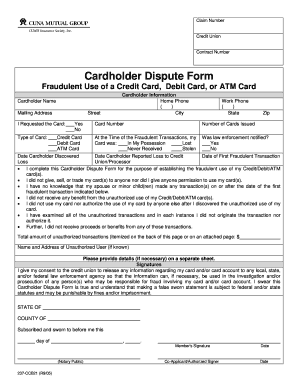
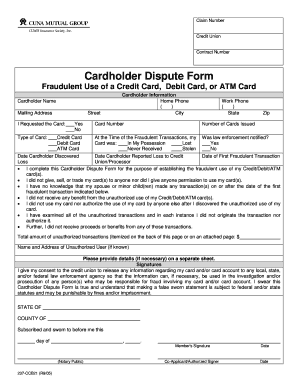
The Cardholder Dispute Form is a document used by cardholders to report unauthorized transactions on credit, debit, or ATM cards.
pdfFiller scores top ratings on review platforms




Who needs Dispute Form?
Explore how professionals across industries use pdfFiller.

Dispute Form is needed by:
-
Cardholders disputing unauthorized charges
-
Financial institutions processing disputes
-
Notary Publics for notarization
-
Credit unions managing fraud cases
-
Individuals filing claims against fraudulent transactions
-
Businesses assisting clients with disputes
Comprehensive Guide to Dispute Form
Understanding the Cardholder Dispute Form
The Cardholder Dispute Form is a vital tool for reporting fraudulent transactions such as credit card fraud and debit card disputes. This document captures critical information about the unauthorized use of cards, helping financial institutions and cardholders resolve issues efficiently. It ensures that users can clarify what transactions are disputed and why, ultimately aiding in the refund process.
This form applies to a range of unauthorized transactions including fraudulent credit card charges, ATM card fraud, and other noteworthy disputes related to debit cards. It provides clear guidelines for users to document each incident systematically.
Purpose and Benefits of Using the Cardholder Dispute Form
Filling out the Cardholder Dispute Form promptly is crucial when unauthorized transactions occur. Timely reporting can significantly affect the outcome of the investigation and the recovery of lost funds. Users benefit from provisional credit acceptance, which may offer immediate relief while investigations are ongoing.
-
Helps in efficiently addressing unauthorized transactions
-
Allows for provisional credit during pending investigations
-
Promotes transparency and quicker resolution
Who Needs the Cardholder Dispute Form?
This form is intended for individuals who have experienced unauthorized transactions on their credit, debit, or ATM cards. Cardholders who notice unusual activity must act quickly by completing the form to notify their financial institutions. The roles involved include the Cardholder who fills out the form and may require a Notary Public to validate their claim.
-
Individuals with unauthorized transactions
-
Cardholders at credit unions
-
Texas residents seeking recourse for credit card disputes
How to Fill Out the Cardholder Dispute Form Online
Completing the Cardholder Dispute Form online involves several straightforward steps. Start by entering required fields such as Cardholder Name, Card Number, and Date of First Fraudulent Transaction. Ensure that all details are accurate to avoid delays in processing.
Here are helpful tips on avoiding errors:
-
Double-check the card number and transaction details
-
Ensure the signature is clear and matches the cardholder’s name
Requirements for Signing and Notarizing the Cardholder Dispute Form
The signature and notarization process is essential for the validity of the Cardholder Dispute Form. Cardholders can choose between a digital signature or a wet signature based on their preference and requirements of the institution. Additionally, notarization adds an extra layer of security by verifying the identity of the signer.
-
Digital signatures must comply with relevant standards
-
Wet signatures need to be witnessed by a Notary Public
-
Notarization helps in affirming the authenticity of the claim
Submission Methods for the Cardholder Dispute Form
After the form is completed and signed, there are several submission methods available. Users can submit the form online through their financial institution's portal, mail a physical copy, or deliver it in person at the nearest branch office.
It is important to keep in mind any deadlines for submissions, as well as associated fees that may apply. Familiarizing oneself with these aspects can help in ensuring a smooth process.
-
Online submissions may be faster—check your institution's portal
-
Mail submissions require proper postage and time for processing
-
In-person submissions provide immediate confirmation of receipt
Tracking Your Submission Status
To confirm and track the status of your Cardholder Dispute Form submission, follow these easy steps. Contact your financial institution or use their online tracking system where available. Be proactive in checking your status to avoid unnecessary delays.
Common reasons for delays or rejections include incomplete forms or discrepancies in reported transactions. Attention to detail when filling out the form can reduce these risks.
Security and Compliance When Using the Cardholder Dispute Form
When using the Cardholder Dispute Form, users can rest assured that their sensitive information is secure. Financial institutions implement stringent security measures to protect personal data during submission.
Compliance with regulations such as HIPAA and GDPR further ensures that data handling meets high standards for privacy and security.
-
Adoption of 256-bit encryption for data protection
-
Regular audits for security compliance
-
Protection of user information against unauthorized access
Sample Completed Cardholder Dispute Form
For reference, a sample completed Cardholder Dispute Form can serve as a valuable guide. Observing an example can help clarify filling out each section accurately.
When using the sample, pay close attention to how details are filled in and ensure your information matches the required format to avoid processing issues.
Using pdfFiller to Complete the Cardholder Dispute Form
pdfFiller offers an efficient way to fill out the Cardholder Dispute Form. With its robust features, users can create, edit, and manage PDF documents seamlessly without the need for downloads.
In addition to filling out forms, pdfFiller provides strong security measures. Users benefit from an intuitive interface that simplifies the form completion process, enabling quick and accurate submissions.
How to fill out the Dispute Form
-
1.To access the Cardholder Dispute Form on pdfFiller, visit the pdfFiller website and log in or create an account if you don't have one.
-
2.Once logged in, use the search bar to find the Cardholder Dispute Form by name. Click on the form to open it for editing.
-
3.Before completing the form, gather essential information such as your card number, details of unauthorized transactions, including their dates, amounts, and merchant names.
-
4.Navigate through the form fields using your mouse or trackpad. Click on each fillable field to enter information such as your name and transaction details.
-
5.Ensure you fill in all required fields, including dates and transaction specifics. Utilize any available checkboxes in the form for clarification or selection.
-
6.After filling out the form, double-check all entries for accuracy, ensuring all necessary information is included and clearly written.
-
7.Once you are satisfied with the details, review the form for completeness. Make sure to sign the form where indicated, as a signature is required.
-
8.The form also requires notarization, so arrange for a Notary Public to review and sign the form after you have completed it.
-
9.Once notarized, save the completed form to your device. You can either download a PDF version or save it directly to your pdfFiller account.
-
10.Finally, if needed, submit the completed form according to your credit union’s specifications. This can often be done via email, fax, or in person.

Who is eligible to use the Cardholder Dispute Form?
The Cardholder Dispute Form is intended for individuals who have experienced unauthorized transactions on their credit, debit, or ATM cards. Cardholders must have sufficient evidence or details regarding the fraudulent charges to fill out the form.
Is there a deadline for submitting this form?
While specific deadlines may vary by financial institution, it is advisable to submit the Cardholder Dispute Form as soon as you notice any unauthorized transactions to facilitate timely investigation and provisional credit.
How do I submit the completed Cardholder Dispute Form?
Submission methods for the Cardholder Dispute Form can include email, postal mail, or fax, depending on your financial institution. Always check your credit union's specific submission instructions to ensure compliance.
What documents do I need to submit with the Cardholder Dispute Form?
Commonly required documents include a copy of your ID, evidence of the unauthorized transactions such as bank statements, and sometimes additional forms or details as requested by your financial institution.
What mistakes should I avoid when filling out the form?
To avoid delays, ensure that all fields are filled out accurately. Common mistakes include omitting signatures, providing incorrect transaction details, and failing to notarize the form.
How long does it take for a dispute to be processed?
The processing time for a Cardholder Dispute can vary, but it usually takes anywhere from a few days to several weeks, depending on the financial institution's policies and the complexity of the dispute.
What are the consequences of submitting a fraudulent dispute?
Submitting a fraudulent dispute can lead to serious consequences, including legal action and penalties. It is crucial to only file a dispute if you are sure that the transaction in question was unauthorized.
Related Forms




Get the latest insights from our blog


If you believe that this page should be taken down, please follow our DMCA take down process
here
.
This form may include fields for payment information. Data entered in these fields is not covered by PCI DSS compliance.