
Last updated on
Oct 31, 2026

Get the free New York Power of Attorney Form POA-1
We are not affiliated with any brand or entity on this form

Fill out
Complete the form online in a simple drag-and-drop editor.

eSign
Add your legally binding signature or send the form for signing.

Share
Share the form via a link, letting anyone fill it out from any device.

Export
Download, print, email, or move the form to your cloud storage.
Why pdfFiller is the best tool for your documents and forms


End-to-end document management
From editing and signing to collaboration and tracking, pdfFiller has everything you need to get your documents done quickly and efficiently.
Accessible from anywhere
pdfFiller is fully cloud-based. This means you can edit, sign, and share documents from anywhere using your computer, smartphone, or tablet.
Secure and compliant
pdfFiller lets you securely manage documents following global laws like ESIGN, CCPA, and GDPR. It's also HIPAA and SOC 2 compliant.
What is NY Tax POA
The New York Power of Attorney Form POA-1 is a legal document used by taxpayers in New York to authorize representatives to handle their tax matters.
pdfFiller scores top ratings on review platforms




Who needs NY Tax POA?
Explore how professionals across industries use pdfFiller.

NY Tax POA is needed by:
-
Taxpayers in New York and New York City
-
Spouses acting on behalf of a taxpayer
-
Tax representatives or professionals
-
Estate planners managing assets
-
Individuals handling tax disputes
Comprehensive Guide to NY Tax POA
What is the New York Power of Attorney Form POA-1?
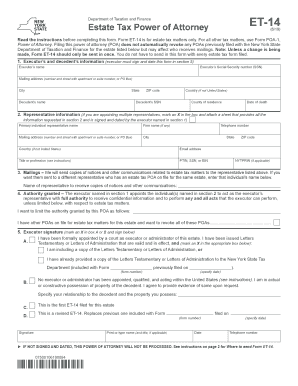
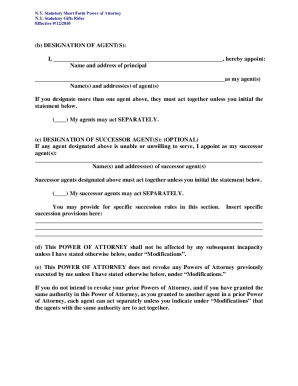
The New York Power of Attorney Form POA-1 is a legal document allowing individuals in New York to authorize representatives to handle tax matters on their behalf. This form holds significant importance for residents, ensuring that appointed individuals are legally recognized by tax authorities. Taxpayers, their spouses, and designated representatives should utilize this form to ensure proper representation in tax-related issues.
This form is essential for anyone needing clarity and legal backing when dealing with New York's complex tax landscape, making it a crucial tool for effective tax management.
Purpose and Benefits of the New York Power of Attorney Form POA-1
The New York Power of Attorney Form POA-1 offers several advantages for taxpayers. By designating a representative through this form, individuals can streamline their interactions with tax authorities, allowing for more efficient handling of tax issues. This form provides the legal authorization necessary to communicate and negotiate with state tax offices, ensuring that taxpayers receive proper support.
Moreover, having a designated representative can alleviate stress around tax obligations, giving individuals the peace of mind that their affairs are being managed competently.
Key Features of the New York Power of Attorney Form POA-1
The form includes various features designed to facilitate its completion. Notably, it has fillable fields for taxpayer and representative information, as well as checkboxes that simplify the selection of specific tax matters. Each section includes clear instructions for what information is required, making the process straightforward.
-
Fillable fields for taxpayer's name and identification number.
-
Designated areas for the representative's details and signatures.
-
Checkbox options to specify the nature of tax issues being addressed.
-
Notarization or witnessing requirements to validate the document.
Who Needs the New York Power of Attorney Form POA-1?
This form is particularly relevant for a wide range of individuals. Taxpayers who are unable to handle their tax matters personally should consider using it, as should spouses acting on behalf of one another during tax negotiations. Additionally, representatives appointed to manage tax-related issues will find this form essential.
In situations such as managing estates or handling tax audits, utilizing the New York Power of Attorney Form POA-1 is vital. Individuals interested in completing the form must meet specific eligibility criteria to ensure a valid authorization.
How to Fill Out the New York Power of Attorney Form POA-1 Online (Step-by-Step)
Filling out the New York Power of Attorney Form POA-1 online can be a straightforward process. Begin by accessing the form through a user-friendly platform designed for PDF document management.
-
Open the online form and read through the provided instructions carefully.
-
Fill in the taxpayer's information, including full name and identification number.
-
Complete the representative's information section, ensuring accuracy.
-
Review the checkboxes to clearly indicate the tax matters involved.
-
Sign and date the form according to requirements.
-
Save and download the completed form for submission.
How to Sign or Notarize the New York Power of Attorney Form POA-1
Signing and notarization of the New York Power of Attorney Form POA-1 involve specific procedures. Taxpayers must understand the implications of both digital signatures and traditional wet signatures. For New York residents, notarization is usually mandatory to ensure that the form is legally binding.
It is important to follow the notarization process correctly, which includes having the form signed in front of a notary public to affirm its authenticity.
Where to Submit the New York Power of Attorney Form POA-1
After completing the New York Power of Attorney Form POA-1, the next step involves submission. The form should be filed with the appropriate tax authority, which could be a state or local tax office, depending on where the taxpayer is located.
-
Submission can typically be done either online or via traditional mail.
-
Be aware that certain submission methods may incur processing fees.
-
Check with local tax offices for specific submission guidelines.
What Happens After You Submit the New York Power of Attorney Form POA-1?
Once the New York Power of Attorney Form POA-1 is submitted, taxpayers can expect a confirmation from the tax authority. Generally, there is a processing timeline during which individuals may experience delays based on the volume of submissions.
After submission, it is important to track the application status regularly, as this will provide insights into any additional steps that may need to be taken for resolution of tax matters.
Security and Compliance for the New York Power of Attorney Form POA-1
Handling sensitive documents like the New York Power of Attorney Form POA-1 requires stringent security measures. Platforms such as pdfFiller implement robust data protection protocols to safeguard personal information during the form-filling process. Adhering to compliance standards such as HIPAA and GDPR is crucial for maintaining confidentiality.
Best practices for ensuring security include using secure connections, regularly updating passwords, and being cautious about sharing personal information during submission.
Experience the Ease of Completing Your New York Power of Attorney Form POA-1 with pdfFiller
For a seamless experience in completing the New York Power of Attorney Form POA-1, pdfFiller offers an intuitive platform that simplifies the process. Users can fill, edit, and sign the form with ease while benefiting from state-of-the-art security features.
With pdfFiller, taxpayers gain access to a comprehensive set of tools for efficient document management, ensuring their tax representation needs are met effectively and securely.
How to fill out the NY Tax POA
-
1.Access the New York Power of Attorney Form POA-1 on pdfFiller by searching for its name in the search bar.
-
2.Open the document to view the fillable fields including taxpayer and representative information.
-
3.Before you start, gather required information like taxpayer’s name, identification number, tax matters details, and the signatories' details.
-
4.Fill in the taxpayer’s name and identification number in the designated fields. Ensure all information is accurate.
-
5.Complete the representative's information section by entering their name and role accurately.
-
6.Specify the tax matters related to the authorization in the provided section, ensuring clarity and completeness.
-
7.Review all fields to ensure the accuracy of the entered information.
-
8.Sign the form where indicated. It may require notary acknowledgment or signatures from two disinterested witnesses.
-
9.Once completed, double-check for any missing signatures or fields.
-
10.Save your work regularly to avoid loss of data while filling out the form.
-
11.After filling, download the completed form in PDF format or save it within your pdfFiller account for future reference.
-
12.Submit the form to the appropriate tax authority as required after confirming compliance with any local guidelines.

Who is eligible to use the New York Power of Attorney Form POA-1?
The New York Power of Attorney Form POA-1 can be used by any taxpayer residing in New York State or New York City who wishes to authorize a representative for their tax matters.
Are there any deadlines for submitting the POA-1 form?
There are typically no specific deadlines for submitting a Power of Attorney form unless requested by tax authorities during an active case. However, it is advisable to submit it promptly to avoid processing delays.
How should the completed POA-1 form be submitted?
The completed POA-1 form should be submitted to the relevant tax authority, either by mail or electronically, depending on local regulations and the instructions provided with the form.
What supporting documents are required with the POA-1 form?
Generally, the POA-1 form must be accompanied by a valid identification for both the taxpayer and the representative, along with any specific documentation mentioning the reason for authorization, if required.
What are common mistakes to avoid when filling out the POA-1 form?
Ensure that all names and identification numbers are accurately entered. Common mistakes include missing signatures, neglecting to have the form notarized, or failing to fill in relevant fields.
What is the processing time for the POA-1 form?
The processing time for the POA-1 form can vary based on the workload of the tax authority. Generally, it may take a few weeks to process, so it’s important to submit it well in advance of any deadlines.
What should I do if I need to revoke a power of attorney created with this form?
To revoke a power of attorney, you must submit a written notice to the tax authority that details the revocation and provide copies to any parties previously involved in the authorization.
Related Forms




Get the latest insights from our blog


If you believe that this page should be taken down, please follow our DMCA take down process
here
.
This form may include fields for payment information. Data entered in these fields is not covered by PCI DSS compliance.