
Last updated on
Nov 6, 2026
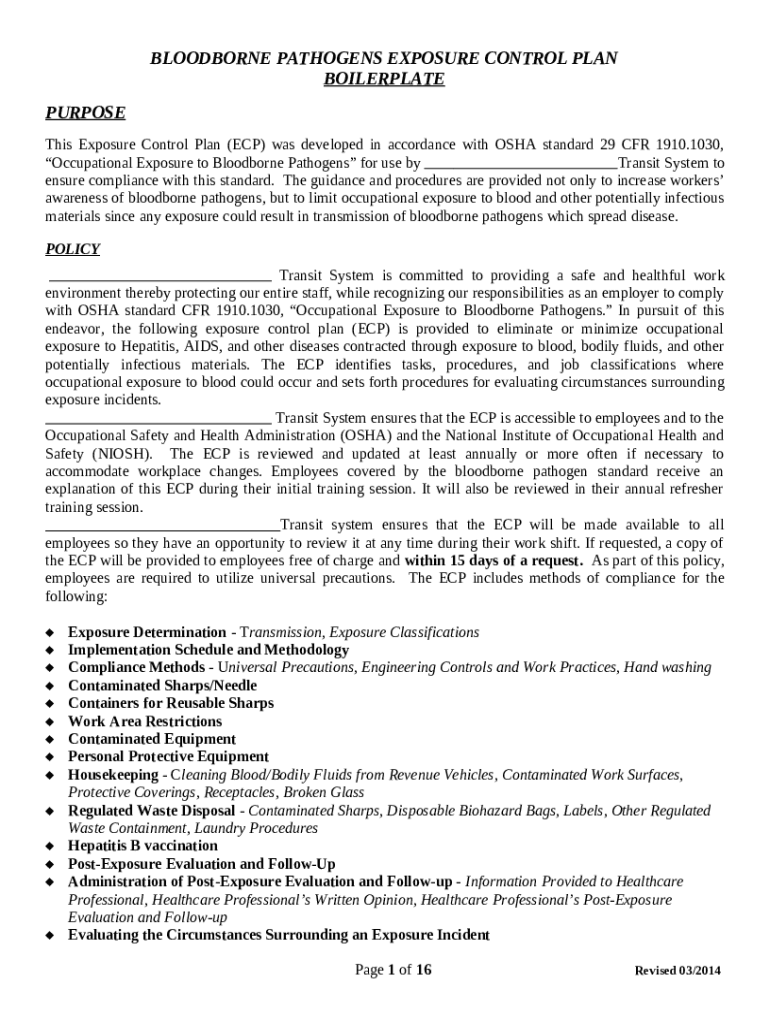
Transit System Bloodborne Pathogens Exposure Control Plan 2014-2026 free printable template
pdfFiller is not affiliated with any government organization

Fill out
Complete the form online in a simple drag-and-drop editor.

eSign
Add your legally binding signature or send the form for signing.

Share
Share the form via a link, letting anyone fill it out from any device.

Export
Download, print, email, or move the form to your cloud storage.
Why pdfFiller is the best tool for your documents and forms


End-to-end document management
From editing and signing to collaboration and tracking, pdfFiller has everything you need to get your documents done quickly and efficiently.
Accessible from anywhere
pdfFiller is fully cloud-based. This means you can edit, sign, and share documents from anywhere using your computer, smartphone, or tablet.
Secure and compliant
pdfFiller lets you securely manage documents following global laws like ESIGN, CCPA, and GDPR. It's also HIPAA and SOC 2 compliant.
What is Transit System Bloodborne Pathogens Exposure Control Plan
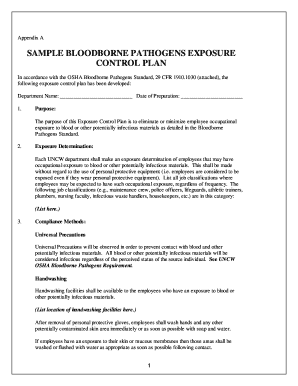
The Bloodborne Pathogens Exposure Control Plan is a safety document used by healthcare employers to establish procedures for minimizing the risk of exposure to bloodborne pathogens in the workplace.
pdfFiller scores top ratings on review platforms




Who needs Transit System Bloodborne Pathogens Exposure Control Plan?
Explore how professionals across industries use pdfFiller.

Transit System Bloodborne Pathogens Exposure Control Plan is needed by:
-
Healthcare employers responsible for employee safety
-
Safety officers overseeing workplace compliance
-
Human resources professionals managing health policies
-
Healthcare professionals handling infectious materials
-
Regulatory compliance teams in healthcare settings
-
Occupational health and safety consultants
Comprehensive Guide to Transit System Bloodborne Pathogens Exposure Control Plan
What is the Bloodborne Pathogens Exposure Control Plan?
The Bloodborne Pathogens Exposure Control Plan is a crucial document designed to outline procedures for managing risks associated with bloodborne pathogens. Developed in accordance with OSHA standard 29 CFR 1910.1030, it establishes protocols to ensure the health and safety of employees who may encounter blood or other potentially infectious materials. This plan plays a vital role in safeguarding workers by minimizing exposure and outlining clear actions in case of incidents involving bloodborne pathogens.
Compliance with this plan not only enhances workplace safety but also aligns organizations with legal requirements, thus promoting a healthier work environment.
Purpose and Benefits of the Bloodborne Pathogens Exposure Control Plan
A detailed exposure control plan significantly contributes to workplace safety by providing structured guidelines and practices to follow. The primary goal is the protection of employees’ health and safety from exposure to blood and infectious materials, which can lead to serious health issues.
-
Reduces risks and mitigates hazards related to bloodborne pathogens.
-
Ensures legal compliance, helping organizations avoid penalties during audits.
-
Fosters a culture of safety within the organization.
Having a comprehensive safety compliance document in place can greatly enhance the security and well-being of every employee in the organization.
Key Features of the Bloodborne Pathogens Exposure Control Plan
The Bloodborne Pathogens Exposure Control Plan encompasses several essential components that form its backbone. These features are vital for the effective management of occupational exposures.
-
Policies outlining universal precautions and the use of personal protective equipment.
-
Implementation of engineering controls designed to enhance workplace safety.
-
Annual reviews to ensure up-to-date practices are accessible to all employees.
These critical elements work together to create a robust framework for preventing exposure to infectious materials.
Who Needs the Bloodborne Pathogens Exposure Control Plan?
This exposure control plan is necessary for various sectors, including healthcare, emergency services, and laboratory environments. It is essential for roles that handle or may be exposed to blood or infectious materials.
-
Healthcare professionals such as nurses, doctors, and lab technicians.
-
Emergency responders including paramedics and EMTs.
-
Workers in laboratories where blood or potentially infectious materials are analyzed.
Additionally, organizations are required to provide training to employees based on the specific roles to ensure all team members understand the exposure control plan and their responsibilities.
How to Fill Out the Bloodborne Pathogens Exposure Control Plan Online
Completing the Bloodborne Pathogens Exposure Control Plan online can be streamlined using tools like pdfFiller. Here’s a general guide on how to proceed:
-
Access the template through a designated platform.
-
Follow the step-by-step instructions for filling out the form.
-
Review each section thoroughly to ensure accuracy.
-
Submit the completed document as per the guidelines provided on the platform.
Pay special attention to the field-by-field breakdown to ensure compliance with OSHA regulations before submission.
Submission Methods and Delivery for the Bloodborne Pathogens Exposure Control Plan
Once completed, submitting the Bloodborne Pathogens Exposure Control Plan requires understanding the available methods. There are several options to choose from for timely delivery.
-
Electronic submission through secure online platforms.
-
Physical delivery options if required by the organization.
-
Proper guidelines must be followed to ensure submission is timely and correctly documented.
Tracking submission status and understanding confirmation processes are crucial steps that facilitate compliance and organizational accountability.
Security and Compliance for the Bloodborne Pathogens Exposure Control Plan
Maintaining the security and compliance of the Bloodborne Pathogens Exposure Control Plan is essential for protecting sensitive information. This includes various security measures that must be in place:
-
256-bit encryption for document security during transmission.
-
Compliance with HIPAA regulations to protect sensitive health information.
-
Assurance of document integrity throughout the submission process.
Organizations must prioritize data protection when handling these critical documents, ensuring that all necessary security protocols are strictly followed.
What Happens After You Submit the Bloodborne Pathogens Exposure Control Plan
Upon submission, several processes take effect that organizations need to be aware of. Understanding the aftermath of submission helps in planning future actions effectively.
-
A timeline for acknowledgment of submission will be established.
-
Follow-up actions required by the employer or relevant authorities may be necessary.
-
Be prepared to address any corrections or amendments as required after submission.
Being proactive in these areas can help alleviate issues related to potential submission rejections or corrections needed in the future.
Utilizing pdfFiller for Your Bloodborne Pathogens Exposure Control Plan
pdfFiller provides an efficient platform for handling the Bloodborne Pathogens Exposure Control Plan with its robust tools and capabilities.
-
Edit text and images easily to ensure clear communication in your documents.
-
Utilize eSigning features for convenient approval processes.
-
Access secure cloud-based document management for efficient storage and sharing.
Utilizing pdfFiller can significantly streamline the process, ensuring compliance and enhancing document management experiences.
How to fill out the Transit System Bloodborne Pathogens Exposure Control Plan
-
1.To access the Bloodborne Pathogens Exposure Control Plan form, visit pdfFiller and search for the form by its name.
-
2.Open the form to review its contents. Familiarize yourself with the relevant policies and procedures it outlines regarding bloodborne pathogens.
-
3.Before starting, gather necessary information such as OSHA compliance guidelines, current health and safety regulations, and organizational policies on exposure controls.
-
4.Using pdfFiller’s interface, you can navigate through the document easily. Use the toolbar to zoom in for better visibility of text and ensure you are reviewing all sections thoroughly.
-
5.As you proceed, follow the outlined procedures in the document. Even though it is a narrative text, make sure to understand the recommended practices such as universal precautions and the use of personal protective equipment.
-
6.Once you've read through the entire document, you'll need to ensure that the plan is up to date. Discuss with relevant personnel if any updates are necessary based on current practices and regulations.
-
7.After gathering all updates or changes, finalize your review to ensure compliance with the policies stated on the form.
-
8.To save or download the completed form, find the appropriate options in pdfFiller. You can choose to submit the document directly from the platform or download it for further actions.

Who is required to complete the Bloodborne Pathogens Exposure Control Plan?
Healthcare employers and safety officers are primarily responsible for completing this plan to ensure workplace safety concerning bloodborne pathogens.
What is the deadline for reviewing this plan?
The Bloodborne Pathogens Exposure Control Plan should be reviewed and updated annually or whenever new procedures emerge that could affect employee safety.
How should the plan be submitted once completed?
After finalizing the Bloodborne Pathogens Exposure Control Plan, it should be made accessible to all employees and can be submitted through your organizational compliance system.
Are there any required supporting documents with this plan?
Typically, no additional supporting documents are required with the Bloodborne Pathogens Exposure Control Plan. However, it's wise to have records of employee training and safety equipment purchase.
What are common mistakes to avoid when filling out this plan?
Avoid overlooking sections of the document. Ensure all policies reflect current practices and that responsible personnel are aware of their roles in executing the plan.
How long does it take to finalize the Bloodborne Pathogens Exposure Control Plan?
Finalizing the plan can vary in time based on updates needed, but a thorough review usually takes a few hours to a few days depending on the complexity of your policies and procedures.
What specific concerns should I address in the plan?
Address elements like employee training on exposure risks, the use of personal protective equipment, and response procedures in case of incidents involving bloodborne pathogens.
Related Forms



Related Catalogs
Get the latest insights from our blog


If you believe that this page should be taken down, please follow our DMCA take down process
here
.
This form may include fields for payment information. Data entered in these fields is not covered by PCI DSS compliance.