
Last updated on
Nov 9, 2026

MI Transfer of Ownership Guidelines 2014 free printable template
pdfFiller is not affiliated with any government organization

Fill out
Complete the form online in a simple drag-and-drop editor.

eSign
Add your legally binding signature or send the form for signing.

Share
Share the form via a link, letting anyone fill it out from any device.

Export
Download, print, email, or move the form to your cloud storage.
Why pdfFiller is the best tool for your documents and forms


End-to-end document management
From editing and signing to collaboration and tracking, pdfFiller has everything you need to get your documents done quickly and efficiently.
Accessible from anywhere
pdfFiller is fully cloud-based. This means you can edit, sign, and share documents from anywhere using your computer, smartphone, or tablet.
Secure and compliant
pdfFiller lets you securely manage documents following global laws like ESIGN, CCPA, and GDPR. It's also HIPAA and SOC 2 compliant.
What is MI Transfer of Ownership Guidelines
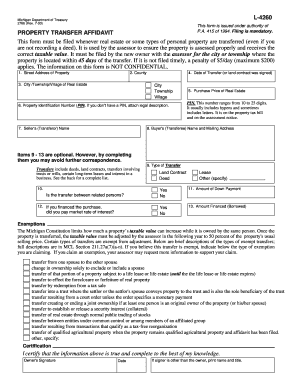
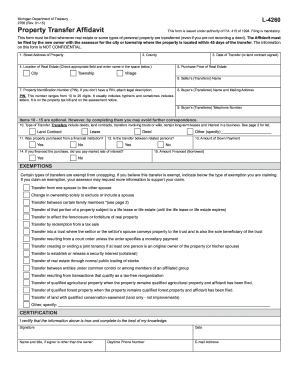
The Michigan Transfer of Ownership Guidelines is a document used by property owners and assessors to understand procedures and definitions related to property ownership transfers and their impact on property taxes.
pdfFiller scores top ratings on review platforms




This is a great package for filling out PDF's
I like being able to erase a single line with ease, draw the arrows and insert text with different colors! The ease of loading and saving is nice. Awesome program! Thanks.
Who needs MI Transfer of Ownership Guidelines?
Explore how professionals across industries use pdfFiller.

MI Transfer of Ownership Guidelines is needed by:
-
Property owners in Michigan seeking guidelines on ownership transfer.
-
Assessors who evaluate property tax implications.
-
Individuals involved in real estate transactions.
-
Estate planners managing property transfers for trusts.
-
People wanting information on Michigan property tax exemptions.
Comprehensive Guide to MI Transfer of Ownership Guidelines
Understanding the Michigan Transfer of Ownership Guidelines
The Michigan Transfer of Ownership Guidelines serve a crucial role in informing property owners about the procedures and regulations involved in property ownership transfers. These guidelines directly impact property taxes by determining how ownership changes can lead to tax reassessments based on state laws. Key definitions relevant to these guidelines include 'transfer of ownership', 'taxable value', and 'exemption', which provide clarity on the financial implications for property owners.
Purpose and Benefits of the Michigan Transfer of Ownership Guidelines
The primary purpose of the Michigan Transfer of Ownership Guidelines is to ensure compliance with state laws. These guidelines benefit property owners by detailing the potential exemptions available and outlining the tax implications of ownership transfers. Understanding the concept of taxable value uncapping is essential, as it can significantly affect a property owner’s tax liabilities following a transfer.
Who Needs the Michigan Transfer of Ownership Guidelines?
Homeowners, real estate professionals, and investors are the main audiences for these guidelines. Various scenarios necessitate adherence to the Michigan property transfer rules, including situations involving deeds, land contracts, and trusts. It is vital for all parties involved to know who is responsible for filing to avoid complications during the transfer process.
How to Use the Michigan Transfer of Ownership Guidelines
Navigating the Michigan Transfer of Ownership Guidelines involves following a step-by-step process to ensure compliance. Key sections to focus on include definitions, procedures, and specific requirements outlined within the document. Adhering to these procedures is essential to prevent any legal issues that may arise from improper filing.
Required Documents for the Michigan Transfer of Ownership
The transfer of ownership requires a collection of necessary documents to validate the process. Important documentation includes property deeds, buyer-seller agreements, and any pertinent trust documents. Maintaining accurate documentation is critical to ensure a smooth filing process. A pre-filing checklist can help confirm that all requirements are met prior to submission.
Filing the Michigan Transfer of Ownership Guidelines: A Step-by-Step Process
Filing the necessary documentation for the Michigan Transfer of Ownership involves detailed instructions to ensure completeness and accuracy. Common errors to avoid during this process include missing signatures or incomplete forms. A field-by-field approach provides clarity, helping users navigate through the filing requirements without oversight.
Implications of Not Filing or Late Filing the Michigan Transfer of Ownership Guidelines
Not filing or submitting the guidelines late can lead to significant consequences such as penalties and increased property taxes. Failure to file on time may negatively impact property tax assessments. Real-life examples illustrate these repercussions, highlighting the importance of timely compliance with the guidelines.
Following Up After Submission: Confirmation and Tracking
After submitting the necessary documentation, applicants can expect a confirmation of receipt and estimated processing times. It is also essential to understand how to track the application status through the appropriate channels. Should there be any rejections, knowing the common rejection reasons allows property owners to make necessary amendments promptly.
Ensuring Security and Compliance with the Michigan Transfer of Ownership Guidelines
Data protection and compliance with regulations are critical while handling the Michigan Transfer of Ownership Guidelines. It is advisable to use secure methods for managing sensitive documents to mitigate risks. Security measures provided by pdfFiller ensure that documents are handled with the highest level of data protection.
Utilizing pdfFiller for Efficient Completion of the Michigan Transfer of Ownership Guidelines
pdfFiller streamlines the completion of the Michigan Transfer of Ownership Guidelines by offering secure editing and eSigning features. Users can benefit from its cloud-based platform, which simplifies document management and enhances workflow efficiency during the transfer process. This solution is particularly beneficial for those needing a seamless experience when navigating through property transfer requirements.
How to fill out the MI Transfer of Ownership Guidelines
-
1.To access the Michigan Transfer of Ownership Guidelines on pdfFiller, visit their website and search for the form by its name.
-
2.Once located, open the form in pdfFiller’s editor. Familiarize yourself with the interface where you will see options for editing and filling.
-
3.Before starting, gather the necessary information including property details, relevant previous ownership documentation, and any applicable tax exemption forms.
-
4.Use the tools provided in pdfFiller to add your information into the appropriate sections of the form. Utilize the text box for narrative entries and highlight key areas.
-
5.Ensure all entered data is accurate. Review each section carefully to confirm that nothing has been overlooked or left incomplete.
-
6.Once completed, utilize the review options available within pdfFiller to check for errors or necessary revisions. Make any adjustments as needed.
-
7.Finally, save your form in pdfFiller by selecting the save option. You can also download a copy directly to your device or submit it electronically through available submission channels within the platform.

Who is eligible to use the Michigan Transfer of Ownership Guidelines?
This form is aimed at Michigan property owners, real estate professionals, and assessors who need guidance on handling ownership transfers and understanding tax implications.
What deadlines should I be aware of when using this form?
While the guidelines do not specify deadlines, it is crucial to complete any property transfer documentation promptly, particularly around property tax deadlines to avoid penalties.
How do I submit the information after completing the guidelines?
The guidelines themselves are not a fillable form. However, you may need to submit any accompanying documentation to your local assessor's office or relevant state agency based on the scenarios discussed in the guidelines.
What supporting documents are required for property ownership transfers?
Common supporting documents include the deed, land contracts, trust documents, and any related tax exemption applications. Having these readily available is vital.
What are common mistakes to avoid when transferring property ownership?
Ensure that all information is accurate, all required documents are submitted, and that you understand the implications of taxable value uncapping to avoid unexpected tax liabilities.
How long does it take to process a property transfer in Michigan?
Processing times for ownership transfers can vary by locality, but it's advisable to allow several weeks for the local assessor's review and any tax adjustments to take effect.
Can I find more information on property tax exemptions related to ownership transfer?
Yes, the Michigan Transfer of Ownership Guidelines cover tax exemptions relevant to ownership transfers, including details on eligibility and application procedures.
MI Transfer of Ownership Guidelines Form Versions
Related Content
Related Forms

Related Catalogs
Get the latest insights from our blog


If you believe that this page should be taken down, please follow our DMCA take down process
here
.
This form may include fields for payment information. Data entered in these fields is not covered by PCI DSS compliance.