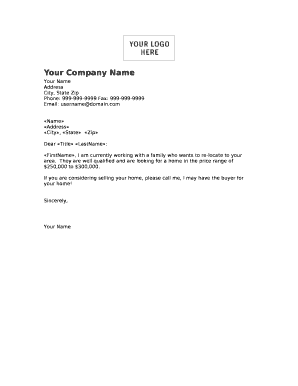
What are Construction Work Order Templates?

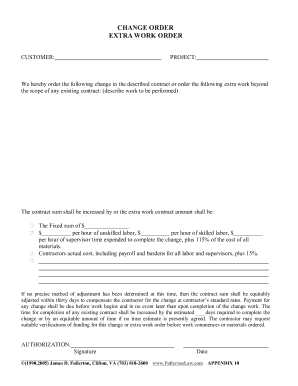
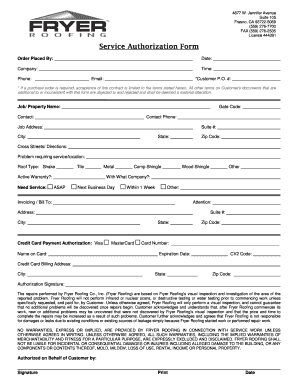
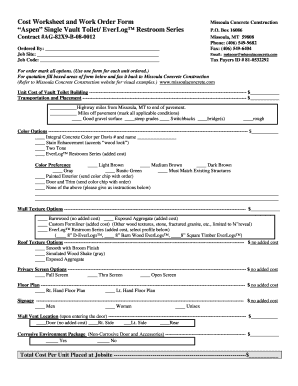
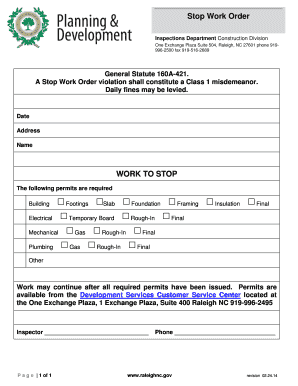
Construction Work Order Templates are pre-designed formats that help streamline the process of creating work orders for construction projects. These templates contain essential information such as project details, tasks to be completed, deadlines, and contact information.

What are the types of Construction Work Order Templates?

There are various types of Construction Work Order Templates available, including: 1. General Construction Work Order Templates 2. Maintenance Work Order Templates 3. Building Construction Work Order Templates 4. Repair Work Order Templates

General Construction Work Order Templates
Maintenance Work Order Templates
Building Construction Work Order Templates
Repair Work Order Templates

How to complete Construction Work Order Templates

Completing Construction Work Order Templates is a simple process that involves the following steps: 1. Fill in the project details, including client information and project description. 2. List down the tasks to be completed, along with deadlines and any special instructions. 3. Include contact information for all parties involved in the project, such as contractors, suppliers, and clients.

01
Fill in project details and client information
02
List tasks with deadlines and instructions
03
Include contact information for all parties involved

pdfFiller empowers users to create, edit, and share documents online. Offering unlimited fillable templates and powerful editing tools, pdfFiller is the only PDF editor users need to get their documents done.

Video Tutorial How to Fill Out Construction Work Order Templates

Thousands of positive reviews can’t be wrong

Read more or give pdfFiller a try to experience the benefits for yourself
5.0
Great PDF platform Great PDF platform, so far it is exceeding my expectations in...
Great PDF platform Great PDF platform, so far it is exceeding my expectations in terms of ease of navigation and utility.
Vaughn Lee
4.0
We use PDF Filler with SignNow for documents for clients and employees.
We use PDF Filler with SignNow for documents for clients and employees. All seems to work very well. I did 6 documents, each several times as the requirements changed. I updated the company logos, just erase the old ones in the PDF and Word documents. So far, I only worked on a Fillable Signable document for clients I used erase, and then inserted better wording.
David K. T
5.0
Could not be happier.
Could not be happier. Could not be happier.The product is amazingly useful and intuitively simple.I'm 70!Mark L.
Mark London

Questions & answers

An example of a general work order could be setting up new equipment in a production facility. Preventive maintenance work order: Preventive maintenance work orders are used to schedule routine maintenance work that needs to be done to keep equipment working at optimal conditions.
A work order is a document that provides all the information about a maintenance task and outlines a process for completing that task. Work orders can include details on who authorized the job, the scope, who it's assigned to, and what is expected.
As any facilities manager knows, scheduling, monitoring, invoicing, and filing work orders is one of the primary job responsibilities.
The most common items to include on a work order are: A description of the task. The name of the person / party requesting the work. Estimated completion time. Name of the party responsible for completing the task. Location of the task / asset where the work is to occur.
A work order is a formal document (digital or paper) that describes maintenance work approved for execution (i.e., an approved work request). Work requests can be submitted to maintenance by any of their many types of customers and staff, depending on the type of business, industry, and facility being managed.
What to include in a work order letter Company name. Start with your company name, typically in one of the upper corners. Company address. Below the company name, include your address. Work order number. Assign a number to the work order. Work order title. Work order description. Priority level. Work location. Worker's name.