Adjust Formula and Box in PDF
Adjust formulas and boxes in your PDF forms using pdfFiller's intuitive interface.
What is Add Fields Mode?
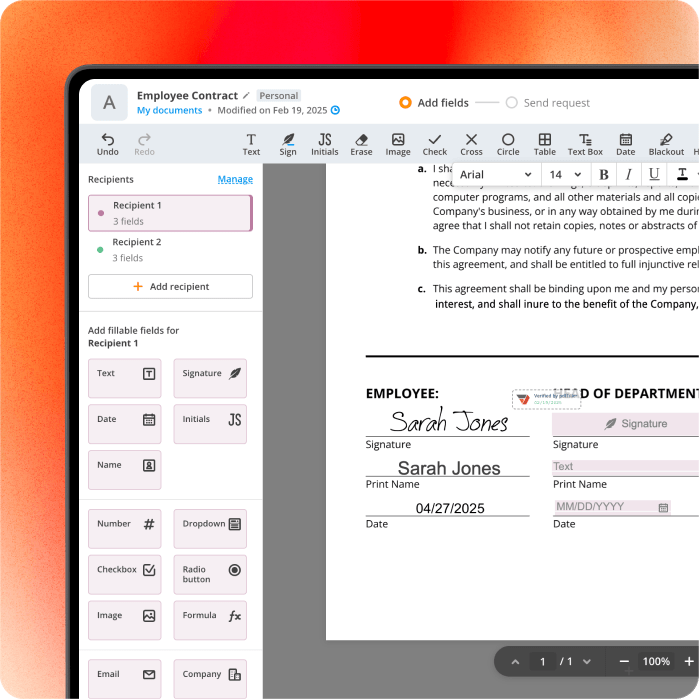
Add Fields mode is a feature in pdfFiller that converts static PDFs to interactive forms. This functionality allows small businesses to create forms that are easy to fill out and manage. With Add Fields mode, users can incorporate multiple field types such as text fields, checkboxes, and signature fields. Accessible via the top bar in the editor, this mode is ideal for those needing quick solutions without the complexity of traditional PDF editing software. By using this feature, businesses can enhance their document workflows and improve user experience with fillable forms.
Why Use Interactive Fields?
Interactive fields offer significant advantages over traditional document methods. They eliminate the need for printing and scanning, which saves time and resources. By enhancing user experience with fillable forms, businesses can streamline their document processing. This is particularly beneficial for invoices and contracts, where quick and accurate completion is essential. Using interactive fields not only simplifies the process but also increases efficiency in managing documents.
How to Access Add Fields Mode
- Open your document in pdfFiller.
- Locate the top bar in the editor interface.
- Click on the Add Fields option, distinct from the Edit Mode pencil icon.
- Access is straightforward and requires no technical setup.
- This feature is available to all users, making it easy to create interactive forms.
Uploading Documents to pdfFiller
To upload documents for field placement, pdfFiller supports various file formats, including DOCX and XLSX. Non-PDF formats are converted automatically, allowing for flexibility in document types. The simple drag-and-drop functionality makes it easy to upload files, which is ideal for business documents. This process ensures that users can quickly start creating interactive forms without dealing with complex file type issues.
Types of Fields Available
- Standard fields include text fields for user input and number fields for numerical data.
- Identity fields allow for the collection of user information, enhancing data accuracy.
- Selection fields enable users to choose from predefined options, improving form usability.
- Signature fields are essential for legal documents, ensuring compliance and authenticity.
Step-by-Step Instructions for Adding Fields
- Select the Add Fields option in the top bar.
- Choose the field type you want to add from the available options.
- Click on the desired location in the document to place the field.
- Resize and reposition the field as needed for optimal placement.
- Mark fields as required to ensure necessary information is collected.
- Integrate with the recipient management feature for streamlined document handling.
Configuring Field Properties
Customizing field properties is essential for creating effective forms. Options include setting labels and placeholders to guide users on what information to enter. Adjusting font sizes can enhance readability, while toggling required fields ensures that critical information is captured. Validation settings for data entry can help maintain data integrity, making the forms more reliable for business use.
Checkboxes vs. Radio Buttons
Checkboxes allow users to select multiple options, providing flexibility in responses. In contrast, radio buttons are grouped, allowing only one selection from a set of choices. Understanding the configuration differences between these two types is crucial for effective form design. Use cases for checkboxes include surveys, while radio buttons are ideal for single-choice questions, ensuring clarity in user choices.
Using Formula Fields
Formula fields enable users to perform calculations within their documents. Setting up these fields is straightforward, but users should be aware of their limitations, such as syntax constraints. Examples of use cases include calculating totals in invoices or summing up costs in contracts. Integration with other fields enhances functionality, allowing for dynamic document creation.
Assigning Fields to Multiple Signers
Managing fields for multiple recipients is essential for collaborative documents. Tagging fields for specific recipients ensures that each signer knows where to provide their input. Managing signing order is crucial for maintaining document flow, and integration with the Recipients panel simplifies this process. Best practices include clearly defining roles and responsibilities for each signer to avoid confusion.
Adding Fields to Scanned PDFs
Overlaying fields on scanned documents is possible without requiring OCR technology. This process allows users to add interactive elements to existing scanned forms. However, limitations exist, such as the inability to edit the underlying content of scanned documents. Use cases for scanned forms include digitizing paper-based processes, making them more accessible for users.
Fillable Fields vs. Annotation Tools
Fillable fields differ significantly from annotation tools. Fillable fields allow users to enter data directly into the document, while annotation tools provide a way to mark up documents without altering the original content. The advantages of fillable fields include improved user experience and data collection efficiency. Understanding when to use each type is vital for effective document management.
Industry-Specific Scenarios for Field Use
In finance, interactive fields can streamline loan applications, reducing processing time. Healthcare providers can use specific field types to collect patient information efficiently, enhancing service delivery. In real estate, interactive forms can facilitate lease agreements, ensuring all necessary details are captured. Each scenario demonstrates the benefits of using interactive fields tailored to specific industry needs, resulting in improved user satisfaction and operational efficiency.
Browser and Device Compatibility
pdfFiller is compatible with various browsers, including Chrome, Firefox, and Safari. Mobile device compatibility ensures that users can access their documents on the go. However, differences in field behavior may occur between mobile and desktop versions, so it's essential to test forms on both platforms. Recommendations for optimal use include ensuring that documents are designed with mobile users in mind.
Known Limitations and Constraints
Users should be aware of the limitations of Add Fields mode. There is a maximum number of fields allowed per document, which varies based on the subscription tier. Formula field syntax has specific constraints that must be followed for calculations to work correctly. Additionally, limitations exist when working with scanned PDFs, which may restrict certain functionalities.
Security and Data Handling
Document security is a priority in pdfFiller. TLS encryption is utilized during document uploads to protect sensitive information. File retention policies ensure that documents are managed responsibly, with automatic deletion timelines in place. Compliance with relevant regulations further enhances the security framework, providing peace of mind for users handling confidential documents.
Comparison with Other Tools
How Does pdfFiller Compare?
Adobe Acrobat offers extensive features but is often more complex and costly for small businesses. Users may find it overwhelming compared to pdfFiller's simplicity.
JotForm provides form-building capabilities but lacks the comprehensive document management features of pdfFiller. Users may need additional tools for complete workflows.
DocuSign focuses primarily on e-signatures, while pdfFiller offers a broader range of document editing and management features. Users may miss out on versatility with DocuSign alone.
Free vs. Paid Access for Fillable Fields
The free plan offers limited field types, while a paid subscription unlocks additional features and capabilities. Benefits of upgrading include access to advanced customization options and enhanced support. User feedback highlights the differences in functionality between the two plans, emphasizing the value of the paid options for businesses with more complex document needs.
Next Steps for Your Document Workflow
To optimize your document workflow, consider saving frequently used documents as templates. Collecting completions from recipients can streamline the process and improve efficiency. Integrating with other pdfFiller features allows for a more cohesive document management experience. Exploring these options will enhance your ability to manage documents effectively.