Compress PDF from KB to Specific Size
Compress your PDF files quickly and efficiently using pdfFiller's browser-based tool, ensuring your documents remain intact while reducing file size.
What is the Compress Tool?
The Compress tool is a feature designed to help you reduce the size of your PDF files without compromising essential content. You can find this tool readily available in the editor header and the All Tools dashboard. It optimizes embedded images and flattens layers while preserving text and form field data, making it an essential tool for anyone needing to Compress PDF files efficiently. Unlike complex software that often frustrates small and medium businesses, pdfFiller's tool is straightforward and user-friendly, ensuring that you can focus on your work without getting bogged down by technical jargon.
Why Compress Your PDF Files?
Reducing the size of your PDF files is crucial for several reasons. Large files can hinder sharing and storage, making it difficult to send documents via email or upload them to online platforms. By using the Compress tool, you can improve upload and download speeds significantly, which is essential for email attachments and online submissions. This means that your documents will be easier to share, and you can avoid the frustration of dealing with file size problems that can arise when working with larger PDFs.
How to Access the Compress Tool
Accessing the Compress tool is straightforward. You can find it via the top toolbar in the editor, which allows you to quickly navigate to the feature when you have a PDF open. Additionally, the Compress tool is available in the All Tools section, even without an open document. This accessibility ensures that you can easily find and use the tool whenever you need to Compress PDF files.
Steps to Compress a PDF
- Open the PDF document you wish to compress in the pdfFiller editor.
- Click the Compress button located in the toolbar at the top of the screen.
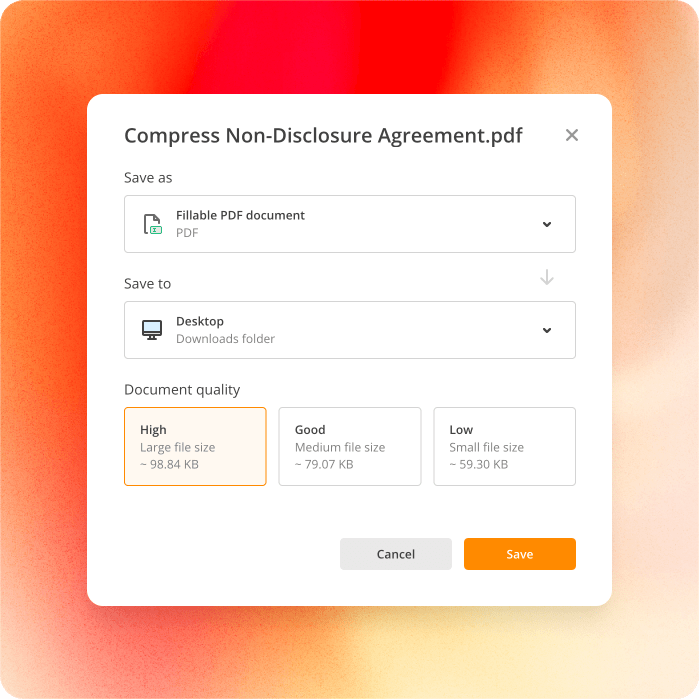
- Select the desired quality level for your compressed file.
- Click the Save button to save the compressed file to your device.
- Review the compressed PDF to ensure it meets your requirements.
- If necessary, repeat the process to achieve a different size or quality.
- Download the compressed file once you are satisfied with the results.
- Consider sharing the compressed PDF directly from pdfFiller if needed.
Choosing a Compression Quality Level
When using the Compress tool, you have options regarding the quality level of your PDF. Selecting a high-quality setting will result in minimal visual change, making it ideal for documents where clarity is essential. A medium setting strikes a balance between size and quality, suitable for most general use cases. Conversely, choosing a low-quality setting maximizes size reduction but may lead to visible quality loss. Understanding these options allows you to make informed decisions about how to Compress PDF files based on your specific needs.
What Changes After Compression?
After compressing your PDF, some changes may occur. Images within the document may lose quality depending on the compression settings you choose. However, text and form fields remain intact, ensuring that the essential content of your document is preserved. The overall structure of the document is also maintained, allowing for a seamless experience when viewing or editing the compressed file.
Expected File Size Reduction
The reduction in file size after compression can vary based on the type of document. Image-heavy PDFs typically compress significantly, resulting in a much smaller file size. In contrast, text-only PDFs may yield minimal size reduction, as there is less data to compress. It's important to have realistic expectations regarding the potential outcomes of using the Compress tool.
After Compression: Download Your File
Once you have compressed your PDF, downloading the file is the next step. Simply follow the on-screen instructions to save the compressed file to your device. If the file is still too large after compression, consider adjusting the quality settings and repeating the compression process to achieve a more manageable size.
Compress vs. Related Size-Reduction Methods
When comparing the Compress tool to other size-reduction methods, such as deleting pages, splitting documents, or using the Save As feature, each option has its unique benefits. The Compress tool specifically focuses on reducing file size while preserving the document's integrity, making it a preferred choice for many users. Understanding these differences can help you select the best method for your specific needs when trying to Compress PDF files.
Industry Scenarios for PDF Compression
PDF compression is particularly beneficial in various industry scenarios. For instance, marketing teams often need to share large reports with clients and stakeholders, making compression essential for efficient communication. Freelancers sending contracts via email can also benefit from smaller file sizes, ensuring that their documents are easily received and opened. Additionally, legal professionals frequently require compact files for case management, making the Compress tool a valuable asset in their document workflows.
Supported Formats and Export Options
The Compress tool supports various input formats for compression, primarily focusing on PDF files. After compression, you can export your files in the same PDF format, ensuring compatibility with most document management systems. This flexibility allows you to work seamlessly with different file types while maintaining the integrity of your documents.
Browser and Device Compatibility
pdfFiller's Compress tool is designed for compatibility with various browsers and devices. Supported browsers include Chrome, Firefox, and Safari, allowing you to access the tool from both mobile and desktop devices. This versatility ensures that you can Compress PDF files anytime and anywhere, making it a convenient option for busy professionals.
Limitations of the Compress Tool
While the Compress tool is highly effective, it does have some limitations. For instance, certain plan tiers may restrict the quality levels available for compression. Additionally, some content types may yield minimal compression results, particularly if the document is primarily text-based. Being aware of these constraints can help you set realistic expectations when using the tool.
Security and Compliance of Compressed Files
Security is a top priority when using the Compress tool. pdfFiller employs encryption practices during the compression process to safeguard your files. Furthermore, the tool complies with industry standards, ensuring that your documents remain secure and confidential throughout the compression process. This commitment to security provides peace of mind for users handling sensitive information.
Comparison with Other PDF Compression Tools
When evaluating pdfFiller against competitors like Smallpdf, ilovepdf, and Adobe Acrobat, several unique benefits stand out. pdfFiller offers a user-friendly interface that simplifies the compression process, making it accessible for small and medium businesses. Additionally, the tool integrates seamlessly with other pdfFiller features, providing a comprehensive document management solution without the need for complex software.
Next Steps After Compression
After compressing your PDF, consider how this process fits into your broader document management strategy. Compression is just one aspect of efficient document workflows, and exploring other pdfFiller features can enhance your productivity. Whether you need to edit, sign, or share documents, pdfFiller offers a range of tools to support your needs.