Create Calculation and Page Number in PDF
Create calculations and page numbers in your PDF documents using pdfFiller's intuitive tools.
What is the Add Fields Feature?
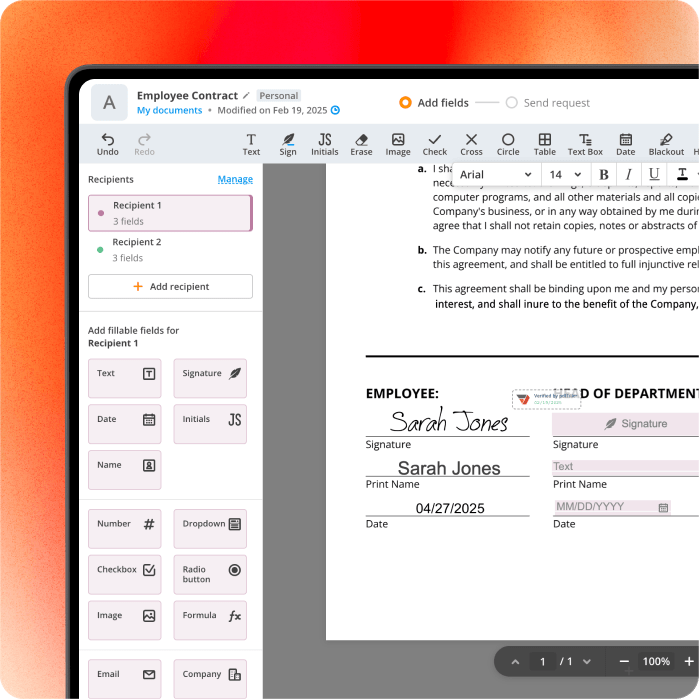
The Add Fields feature in pdfFiller allows you to create calculations and page numbers in PDF documents easily. This feature is distinct from the Edit Mode, as it focuses on adding interactive elements rather than making general edits. The user-friendly interface simplifies the process, enabling you to enhance your PDF documents without needing advanced technical skills. By utilizing the Add Fields feature, you can transform static PDFs into dynamic documents that meet your business needs.
Why Use Interactive Fields in PDFs?
Using interactive fields in PDFs offers significant advantages over traditional methods. When you create calculations and page numbers in PDF documents, you enhance user experience by allowing recipients to interact with the content. This interactivity saves time and reduces errors, making it easier for small businesses to manage their documents effectively. Instead of dealing with static documents, you can provide fillable forms that streamline data entry and improve overall efficiency.
How to Access Add Fields Mode
- Open your PDF document in pdfFiller.
- Locate the Add Fields button on the toolbar at the top of the page.
- Click the button to switch from Edit Mode to Add Fields Mode.
- Familiarize yourself with the available field options displayed on the left side.
- Select the type of field you want to add to your document.
Uploading Documents to pdfFiller
To create calculations and page numbers in PDF documents, you first need to upload your files to pdfFiller. Supported formats include PDF, DOCX, and images. You can upload documents by dragging and dropping them into the designated area or using the upload button. If you have non-PDF files, pdfFiller can convert them into editable PDFs for you. Ensure that your documents are in supported formats to avoid any issues during the upload process.
Types of Fields You Can Add
- Text fields for user input, useful for names and addresses.
- Checkboxes for yes/no options, ideal for surveys and forms.
- Radio buttons for selecting one option from multiple choices.
- Dropdown menus for predefined selections, enhancing user experience.
- Signature fields for digital signatures, ensuring document authenticity.
- Date fields for easy date entry, helpful for contracts and agreements.
- Formula fields for calculations, allowing automatic computations.
Step-by-Step Instructions for Adding Fields
- Access Add Fields Mode by clicking the button on the toolbar.
- Select the type of field you wish to add from the options available.
- Click on the area of the document where you want to place the field.
- Adjust the size and position of the field as needed.
- Configure the properties of the field by clicking on it and selecting settings.
- For calculations, enter the formula in the designated area.
- Repeat the process for additional fields as necessary.
- Save your document to retain all changes made.
Configuring Field Properties
When you create calculations and page numbers in PDF documents, customizing field properties is essential. You can adjust settings such as field size, font style, and validation rules to ensure that the fields function as intended. The user interface provides straightforward options for customization, allowing you to tailor each field to meet specific requirements. Proper configuration enhances the overall functionality of your PDF, making it more effective for your business needs.
Checkboxes vs. Radio Button Groups
Checkboxes and radio buttons serve different purposes in interactive PDFs. Checkboxes allow users to select multiple options, making them suitable for lists where several items can be chosen. In contrast, radio buttons are designed for single selections, ensuring that only one option can be picked from a group. Understanding these differences helps in configuring your document effectively, ensuring that users can interact with it as intended.
Using Formula Fields for Calculations
Formula fields in pdfFiller enable you to implement calculations directly within your PDF documents. For instance, you can create a formula field that sums up values entered in other fields, making it ideal for invoices and financial documents. While formula fields are powerful, they do have limitations, such as not supporting complex mathematical operations. However, for basic calculations, they provide a practical solution for enhancing your PDF functionality.
Assigning Fields to Recipients
Assigning fields to different recipients is crucial for effective document management. In pdfFiller, you can designate who needs to fill out or sign specific fields, ensuring that the process flows smoothly. It's important to consider the order in which fields are assigned, especially in multi-signer scenarios, to avoid confusion. Proper assignment helps maintain clarity and efficiency in document workflows.
Adding Fields to Scanned PDFs
Adding fields to scanned PDFs can be a bit more challenging, but pdfFiller provides tools to handle this effectively. You can upload scanned documents and then add interactive fields as needed. However, be aware of the limitations, such as potential issues with text recognition. To ensure the best results, it's advisable to use high-quality scans and verify that the fields are placed correctly.
How Does pdfFiller Compare?
pdfFiller stands out among PDF editing tools for its user-friendly interface and comprehensive feature set. Unlike Adobe Acrobat, which can be complex and costly for small businesses, pdfFiller offers an intuitive solution that is easy to navigate. JotForm focuses primarily on form creation and lacks advanced PDF editing capabilities, making it less suitable for professionals who need robust document management. DocuSign is primarily an e-signature tool, providing limited PDF editing features, which may require users to seek additional tools for complete document management.
Next Steps for Enhancing Your PDF Workflows
To fully leverage the Add Fields feature, consider integrating it into your broader document workflows. Saving templates for frequently used documents can save time and ensure consistency. Additionally, collecting completions from recipients can streamline your processes, allowing you to manage documents more effectively. By connecting these features, you can create a more efficient and organized approach to document management.