Create Calculation and Stamp in PDF
Create calculations and stamps in your PDFs easily with pdfFiller.
What is Add Fields Mode?
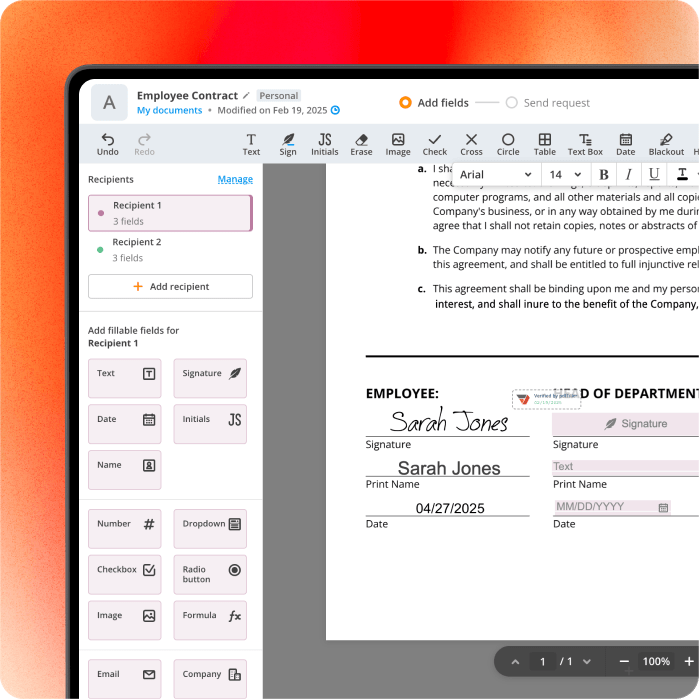
Add Fields mode in pdfFiller allows you to enhance your PDFs by adding interactive elements. This mode is specifically designed for users who want to create calculations and stamps in PDFs without the need for complex software. By using Add Fields mode, you can:
- Add fields to static PDFs, transforming them into interactive documents.
- Convert documents into interactive forms that can be filled out digitally.
- Access this feature easily via the Add Fields toggle in the pdfFiller interface.
- Understand that Add Fields mode is different from Edit Mode, focusing on field creation rather than document alteration.
Utilizing Add Fields mode simplifies your document workflow, making it faster and more efficient.
Why Use Interactive Fields?
Interactive fields offer significant advantages over traditional document handling methods. By incorporating these fields, you can:
- Eliminate the need for printing and scanning, saving both time and resources.
- Speed up document completion, allowing for quicker turnaround times.
- Enhance user experience by providing a straightforward way to fill out forms.
- Ensure legally binding signatures, making your documents more secure and trustworthy.
Transitioning to interactive fields can greatly improve your document workflows, making them more efficient and user-friendly.
How to Access Add Fields Mode
To access Add Fields mode in pdfFiller, follow these simple steps:
- Locate the Add Fields button prominently displayed in the pdfFiller interface.
- Differentiate this mode from Edit Mode to avoid confusion during document preparation.
- Understand that Add Fields mode is compatible with all document types, ensuring versatility.
- Note that no IT setup is required, making it accessible for everyone.
These steps will guide you in navigating to Add Fields mode effortlessly.
Uploading Documents to pdfFiller
When adding fields to your documents, understanding the upload process is crucial. You can:
- Upload PDFs and other formats directly into pdfFiller.
- Handle non-PDF formats before placing fields to ensure compatibility.
- Enjoy a streamlined upload process that saves you time.
- Support scanned documents, allowing for flexibility in document types.
By following these guidelines, you can ensure a smooth upload experience for your documents.
Full Field Library Overview
pdfFiller offers a comprehensive library of field types to enhance your documents. You can explore:
- Standard fields for basic data entry and identity verification.
- Selection fields, including checkboxes and radio buttons for user choices.
- Signature fields for capturing electronic signatures securely.
- Currency and logic fields for calculations and conditional formatting.
This variety allows you to customize your documents effectively, catering to different needs and scenarios.
Step-by-Step Instructions for Adding Fields
- Select the type of field you want to add from the field library.
- Drag and drop the field onto your document where you want it placed.
- Resize and reposition the field as necessary to fit your layout.
- Mark fields as required to ensure essential information is collected.
- Save your changes to ensure all modifications are preserved.
Following these steps will help you add fields to your documents efficiently and accurately.
Configuring Field Properties
Customizing field properties in pdfFiller is straightforward. You can:
- Adjust label and placeholder settings to guide users effectively.
- Set font size and toggle the required option for critical fields.
- Define default values and validation rules to ensure data integrity.
- Explore various field format options to match your document style.
These configurations allow for a tailored document experience, enhancing usability and functionality.
Checkboxes vs. Radio Button Groups
Understanding the differences between checkboxes and radio buttons is essential for effective form design. Here’s how they differ:
- Checkboxes allow for independent selections, enabling multiple choices.
- Radio buttons are mutually exclusive, allowing only one selection from a group.
- Configuration differences are important to understand for proper usage.
- Use cases for each type vary depending on the information being collected.
Recognizing these distinctions will help you choose the right option for your forms.
Using Formula Fields in Your Documents
Formula fields can be powerful tools for calculations within your documents. You can:
- Reference other fields in the same document to perform calculations.
- Be aware of limitations of formula fields to avoid errors.
- Explore examples of use cases to understand practical applications.
- Learn how to set up calculations effectively for accurate results.
Utilizing formula fields can streamline your document processes significantly.
Assigning Fields to Multiple Signers
Tagging fields for multiple recipients is crucial for collaborative documents. You can:
- Tag fields to active recipients to ensure proper assignment.
- Manage signing order effectively to streamline the signing process.
- Integrate with the Recipients panel for better organization.
- Ensure legally binding signatures are captured from all signers.
This approach facilitates efficient document signing for multiple parties.
Adding Fields to Scanned PDFs
Overlaying fields on scanned documents is possible without OCR. You can:
- Overlay fields directly onto scanned PDFs for easy interaction.
- Follow specific steps to add fields to ensure accuracy.
- Be aware of limitations in handling scanned PDFs to avoid issues.
- Ensure document integrity while adding fields to maintain quality.
This method allows you to work with scanned documents effectively.
Fillable Fields vs. Annotation Tools
Clarifying the differences between fillable fields and annotations is important for document design. Consider the following:
- Checkboxes differ from checkmarks in functionality and user interaction.
- Text fields are distinct from text boxes in terms of data entry.
- Use cases for each tool vary based on the document's purpose.
- Fillable fields offer specific benefits that enhance user experience.
Understanding these differences will help you utilize the right tools for your documents.
Industry-Specific Scenarios for Field Use
Fields can significantly enhance workflows in various industries. Here are some practical scenarios:
- Real estate lease agreements benefit from interactive fields for tenant information.
- Invoice processing for small businesses can be streamlined with fillable fields.
- Client intake forms for professionals can collect necessary data efficiently.
- Event registration forms can simplify attendee information collection.
These examples illustrate the versatility of fields in different professional contexts.
Browser Compatibility and Device Support
Understanding the compatibility of pdfFiller across devices is essential. You can expect:
- Supported browsers for optimal performance when using pdfFiller.
- Mobile device functionality to access documents on the go.
- Field behavior differences on mobile versus desktop for user experience.
- Cross-platform accessibility to ensure you can work from any device.
This compatibility ensures that pdfFiller meets your document needs regardless of the device used.
Limitations and Known Constraints
Identifying the limitations of using Add Fields mode is important for effective use. Be aware of the following:
- The maximum number of fields per document can restrict your design.
- Field types may be restricted by your subscription plan, affecting functionality.
- Formula field syntax constraints can limit your calculations.
- Scanned PDF detection limitations may affect field placement.
Understanding these constraints will help you navigate the features of Add Fields mode effectively.
Security and Data Handling Practices
Learning about the security measures in place for document handling is crucial. pdfFiller implements:
- TLS encryption during file transfer to protect your data.
- Document retention and deletion policies to manage your files securely.
- Compliance with industry standards to ensure data protection.
- Audit considerations for document handling to maintain accountability.
These practices ensure that your documents are handled securely throughout the process.
How Does pdfFiller Compare?
Evaluating how pdfFiller compares with competitors reveals its strengths:
Adobe Acrobat is more complex and comes at a higher cost, making it less accessible for small businesses.
JotForm offers limited field types, which may not meet all user needs.
DocuSign focuses primarily on e-signatures, lacking comprehensive document editing features.
Foxit has a less user-friendly interface, which can hinder usability for some users.
Free vs. Paid Access for Fillable Fields
Understanding the differences between free and paid plans is essential for maximizing your use of pdfFiller. You can expect:
- Field types available on the free plan may be limited compared to paid options.
- Advanced features requiring a paid subscription can enhance functionality.
- A comparison of plan tiers will help you choose the best option for your needs.
- Benefits of upgrading include access to more features and better support.
These distinctions will guide you in selecting the right plan for your document needs.
Next Steps for Your Document Workflow
After learning about Add Fields mode, consider how to implement these features in your document workflows. Explore the various functionalities of pdfFiller to optimize your processes and enhance productivity.