Create Calculation and Time in PDF
Create interactive fields for calculations and time in your PDFs using pdfFiller's easy-to-use Add Fields feature.
What is Add Fields Mode?
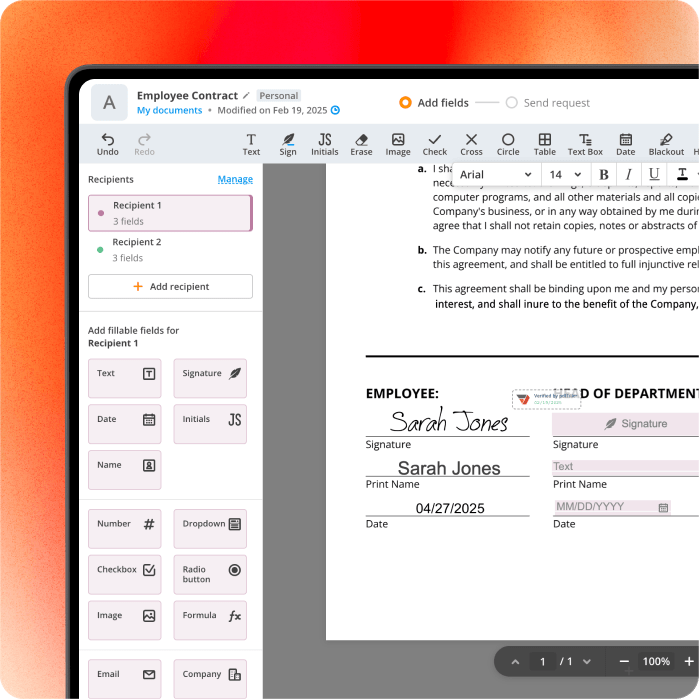
Add Fields mode is a feature that allows you to convert static PDFs into interactive forms. This mode supports various field types, enabling you to create fillable documents that enhance user interaction. Accessible via the top bar in the pdfFiller editor, Add Fields mode requires no technical setup, making it user-friendly for everyone. By utilizing this feature, you can streamline your document workflows and improve the efficiency of your PDF forms.
Why Use Interactive Fields?
Using interactive fields eliminates the need for printing and scanning documents, which can be time-consuming and inefficient. Interactive fields enhance the user experience by allowing users to fill out forms digitally, saving time in document processing. This feature is particularly beneficial for small businesses that need to manage documents quickly and effectively. By adopting interactive fields, you can improve your document workflows and increase productivity.
How to Access Add Fields Mode
- Open your document in the pdfFiller editor.
- Locate the Add Fields button in the top bar of the editor.
- Click on the Add Fields button to enter Add Fields mode.
- Understand the difference between Add Fields mode and Edit Mode.
- Enjoy the user-friendly interface that works on all devices.
Uploading Documents to pdfFiller
To upload documents for field placement, pdfFiller supports various file formats, including PDF, DOCX, and JPG. Begin by clicking the upload button in the editor. Follow the prompts to select your file and upload it. If you have non-PDF formats, pdfFiller can handle these as well, converting them into editable PDFs. For a quick upload, ensure your files are in supported formats to avoid complications.
Field Types Available in Add Fields
In Add Fields mode, you can add various field types to your documents. Standard fields include text fields for inputting information, while structured fields allow for dropdown selections. Each field type has specific usage scenarios; for example, signature fields are essential for contracts, while initials fields are often used in agreements. Selecting the appropriate field type is crucial for ensuring the document meets its intended purpose.
Step-by-Step Instructions for Adding Fields
- Select the type of field you want to add from the toolbar.
- Click on the area of the document where you want to place the field.
- Adjust the size of the field as needed for better visibility.
- Configure the field properties, such as labels and placeholders.
- Repeat for each field type you wish to add, ensuring proper placement.
- Review your document to avoid common mistakes, such as overlapping fields.
- Save your document once all fields are added correctly.
Configuring Field Properties
Customizing field properties is essential for better usability. You can set field labels and placeholder text to guide users on what information to enter. Additionally, toggling required field settings ensures that users complete necessary sections. Formatting options are available to enhance the visual appeal of the fields, and you can also apply validation rules to ensure data accuracy.
Checkboxes vs. Radio Button Groups
Checkboxes allow users to select multiple options, while radio buttons are designed for single selections. Use checkboxes when multiple answers are acceptable, such as in surveys. Radio buttons are ideal for questions where only one answer is correct, like choosing a payment method. Understanding these configuration differences is important for creating effective forms that meet user needs.
Adding Fields to Scanned PDFs
To add fields on scanned PDFs, simply upload the scanned document into pdfFiller. The Add Fields mode allows you to overlay fields without requiring OCR technology. However, be aware of the limitations of scanned PDFs, such as potential inaccuracies in text recognition. The benefits of using Add Fields mode include the ability to create interactive documents without the need for complex setups.
Industry-Specific Scenarios for Using Fields
In the finance sector, forms often require fields for numerical data entry, such as loan applications. Healthcare documents may need signature fields for patient consent. In legal scenarios, initial fields are common in contracts. Each industry benefits from tailored field types that address specific challenges, improving document workflows and ensuring compliance with regulations.
Security and Data Handling
pdfFiller prioritizes document security through TLS encryption, ensuring that your files are protected during transmission. The platform adheres to strict file retention policies and complies with relevant regulations. User data handling practices are designed to maintain confidentiality and integrity, giving you peace of mind when managing sensitive documents.
Comparison with Other Document Solutions
pdfFiller stands out against competitors like Adobe Acrobat, which offers extensive features but can be complex and costly for small and medium-sized businesses. Unlike JotForm, which excels in form creation, pdfFiller combines form creation with document editing seamlessly. While DocuSign focuses primarily on e-signatures, pdfFiller integrates both document editing and signing functions in one platform, providing a more comprehensive solution.
Next Steps for Your Document Workflows
To integrate Add Fields into your workflows, start by saving templates for frequently used documents. Assign recipients for completion to streamline the process of collecting filled forms. Efficiently collect completions to enhance your document management. By following these steps, you can enjoy the benefits of a streamlined workflow that saves time and improves productivity.