Align Form Fields
Align form fields quickly in your documents using pdfFiller.
What is Add Fields Mode?
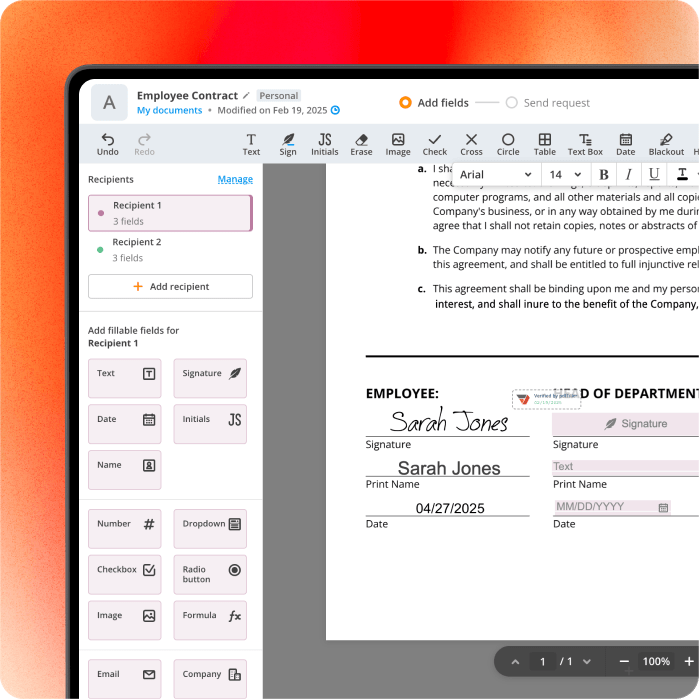
Add Fields mode is a feature that allows you to convert static PDFs into interactive forms effortlessly. This mode enables you to place fields without altering the document's layout, making it user-friendly for those unfamiliar with complex document editing tools. You can use various field types, including text fields, checkboxes, and signature fields, to create a comprehensive interactive experience. Accessible via the editor's top bar, Add Fields mode simplifies the process of adding interactivity to your documents, ensuring that you can create forms quickly and efficiently.
Why Use Interactive Fields?
Using interactive fields offers several advantages over traditional methods of document management. First, it eliminates the need for printing and scanning, which can be time-consuming and inefficient. Interactive fields enhance the user experience by providing fillable forms that are easy to navigate. This approach saves significant time in document processing, making it ideal for small businesses that require quick turnaround times. By adopting interactive fields, you can streamline your workflows and improve overall efficiency in managing documents.
How to Access Add Fields Mode
- Locate the Add Fields button on the editor's top bar.
- Click on the button to enter Add Fields mode, differentiating it from Edit Mode.
- Familiarize yourself with the user-friendly interface designed for easy navigation.
- No technical setup is required; simply start adding fields to your document.
Uploading Documents to pdfFiller
To upload documents for field placement, you need to know the supported file formats, which typically include PDF, DOCX, and images. For non-PDF formats, follow the straightforward steps to upload your files. Ensure your documents are prepared correctly to avoid any issues during the upload process. The user-friendly upload process allows you to quickly get your documents ready for editing and field placement.
Field Types and Their Uses
In Add Fields mode, you can utilize various field types to enhance your forms. Standard fields are used for general information, while identity fields are essential for capturing specific user data. Selection fields are ideal for scenarios where users need to choose from multiple options, such as dropdowns or checkboxes. Signature fields are crucial for legal documents, allowing users to sign contracts electronically. Choosing the right field type is important for ensuring that your forms function as intended and meet the needs of your audience.
Step-by-Step Instructions for Adding Fields
- Select the field type you wish to add from the Add Fields menu.
- Click on the document where you want to position the field.
- Adjust the size of the field as necessary for clarity and usability.
- Label the field appropriately to guide users on what information to provide.
- Set any required field settings to ensure necessary information is captured.
- Preview the document to check the placement and functionality of the fields.
- Save your changes to finalize the document with the added fields.
- Avoid common mistakes by double-checking field placements and labels.
Configuring Field Properties
Customizing field properties is essential for enhancing usability. You can label fields clearly and set placeholders to guide users on what information is needed. Required field settings ensure that users cannot skip essential information. Adjusting font sizes can improve readability, while validation rules help maintain data integrity by ensuring that the input meets specific criteria. These customization options allow you to tailor the form to your specific needs and improve user interaction.
Checkboxes vs. Radio Button Groups
Checkboxes and radio buttons serve different purposes in forms. Checkboxes allow users to select multiple options, making them suitable for surveys or lists where multiple responses are acceptable. In contrast, radio buttons are used when only one option can be selected from a group, such as choosing a payment method. Understanding the configuration differences between these two field types is crucial for creating effective forms that meet user expectations.
Using Formula Fields
Formula fields enable you to perform calculations within your forms. Setting up formula fields involves defining the calculations you want to execute, such as summing totals or calculating percentages. For example, you might use a formula field to automatically calculate the total amount due based on individual item prices. However, it’s important to be aware of the limitations of formula fields, including syntax restrictions and the need for accuracy in your formulas to avoid errors in calculations.
Assigning Fields to Multiple Signers
To assign fields for multi-signer documents, follow these steps: first, select the fields you want to assign to each recipient. Next, manage the signing order to ensure that documents are signed in the correct sequence. Clarity in assignments is vital to avoid confusion among signers. Additionally, consider tips for optimizing multi-signer workflows, such as using clear labels and instructions to guide recipients through the signing process.
Adding Fields to Scanned PDFs
When adding fields to scanned PDFs, you can overlay fields directly onto the document without requiring OCR (Optical Character Recognition). This process allows you to add interactivity to documents that were originally non-editable. However, be mindful of the limitations associated with scanned document handling, such as ensuring accurate field placement to align with the original content. Proper field placement is crucial for maintaining the document's usability.
Fillable Fields vs. Annotation Tools
Fillable fields and annotation tools serve different purposes in document editing. Fillable fields are designed for capturing user input, while annotation tools allow users to add comments or highlights without altering the original content. Each has its use cases; fillable fields are beneficial for forms requiring specific information, whereas annotation tools are useful for feedback and collaboration. Understanding these differences can help you choose the right approach for your document needs.
Real-World Scenarios for Field Types
Different field types can be applied in various business scenarios. For instance, text fields are commonly used in invoices to capture billing information. Checkboxes are effective in surveys for gathering user preferences, while signature fields are essential in contracts to ensure legal compliance. Selecting the appropriate field type is crucial for achieving the desired outcomes in your documents and enhancing the overall user experience.
Browser Compatibility for Fillable Fields
When using pdfFiller, it’s important to consider browser compatibility. Supported browsers include the latest versions of Chrome, Firefox, and Safari. Mobile device compatibility is also a key factor, as field behavior may differ between mobile and desktop environments. Testing your forms across different platforms ensures a consistent user experience and helps identify any issues that may arise due to browser differences.
Limitations of Adding Fields
There are known limitations when adding fields to documents. For example, there is a maximum number of fields allowed per document, which can vary based on your plan tier. Additionally, certain field types may be restricted depending on your subscription level. Formula field syntax can also pose challenges, particularly for complex calculations. Lastly, detection limitations may arise when working with scanned PDFs, affecting the accuracy of field placements.
Security and Data Handling
Security measures are critical when handling user data in pdfFiller. All data is protected with TLS encryption during transit to ensure confidentiality. The file retention and deletion timeline is strictly adhered to, complying with data protection regulations. Establishing user trust in document handling is paramount, and pdfFiller prioritizes security to safeguard sensitive information throughout the document management process.
How Does pdfFiller Compare?
pdfFiller offers a unique set of features that differentiate it from competitors. Adobe Acrobat provides comprehensive features but can be complex and costly for small businesses, often overwhelming users without dedicated support. JotForm focuses on form-building capabilities but lacks the extensive document management features that pdfFiller offers, potentially missing out on integrated workflows. DocuSign specializes in e-signatures but does not provide the same level of document editing, requiring users to seek additional tools for comprehensive document management.
Next Steps and Workflow Connection
After adding fields to your documents, consider saving them as templates for future use. This approach allows you to collect completions from recipients efficiently. Streamlining your workflows is essential for maximizing productivity, and exploring additional features within pdfFiller can further enhance your document management capabilities. Embrace the full potential of pdfFiller to simplify your document processes.