Professional Development Evaluation Form Templates

Get eSignatures done in a snap

Prepare, sign, send, and manage documents from a single cloud-based solution.

What are Professional Development Evaluation Form Templates?

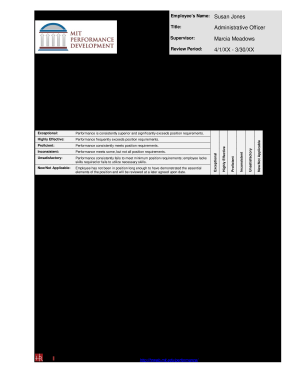
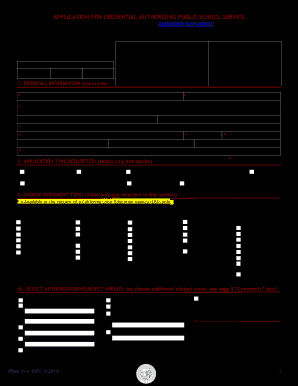
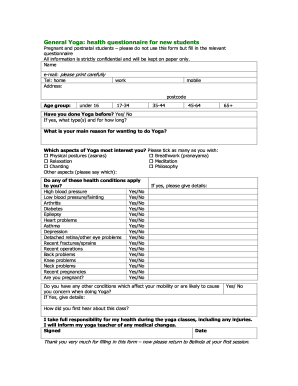
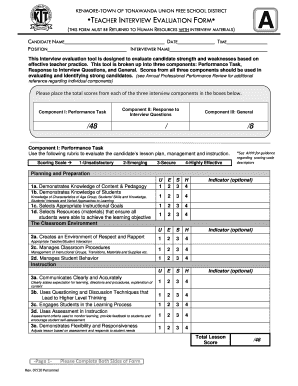
Professional Development Evaluation Form Templates are standardized documents used by organizations to assess the progress and growth of their employees. These forms help evaluate the effectiveness of training programs, identify areas for improvement, and track individual development over time.
What are the types of Professional Development Evaluation Form Templates?

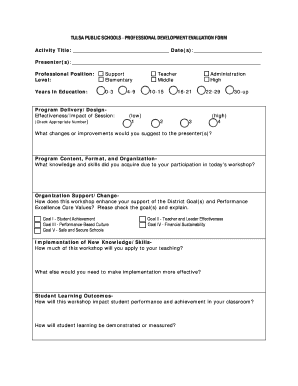
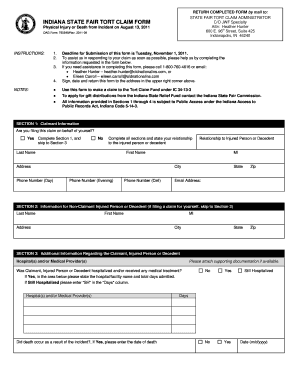
There are several types of Professional Development Evaluation Form Templates available, including: self-evaluation forms, supervisor evaluation forms, peer evaluation forms, and 360-degree feedback forms.
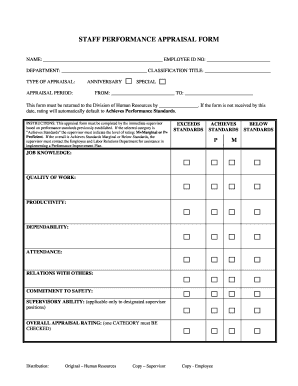
Self-evaluation forms
Supervisor evaluation forms
Peer evaluation forms
360-degree feedback forms

How to complete Professional Development Evaluation Form Templates
Completing Professional Development Evaluation Form Templates is a straightforward process that involves the following steps:
01
Review the form and understand the criteria for evaluation
02
Gather relevant information and examples for each section
03
Provide honest and constructive feedback
04
Seek clarification if needed
05
Submit the completed form on time

pdfFiller empowers users to create, edit, and share documents online. Offering unlimited fillable templates and powerful editing tools, pdfFiller is the only PDF editor users need to get their documents done.

Video Tutorial How to Fill Out Professional Development Evaluation Form Templates
Thousands of positive reviews can’t be wrong

Read more or give pdfFiller a try to experience the benefits for yourself
5.0
This program is easy to use and has.
This program is easy to use and has… This program is easy to use and has offered great help to me when conducting business.
Chernda Pendleton
5.0
Super easy to use!
Super easy to use! PDF filler is so helpful for converting & editing docs as needed for a lower cost than some of the other programs!
mtopp
5.0
First-class customer service!
First-class customer service! I wanted to try out the free trial version but ended signing up for an annual subscription. I contacted the customer service about this error, and they gave me the refund immediately.
Mendels4
5.0
The application worked perfectly for what I needed.
The application worked perfectly for what I needed. Is was a one time need for me but I would highly recommend.
Hagan & Patty H

Questions & answers

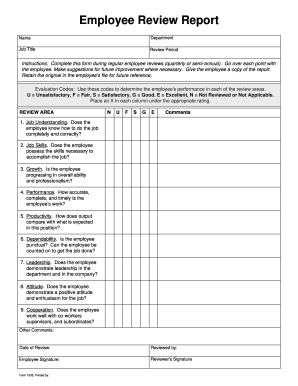
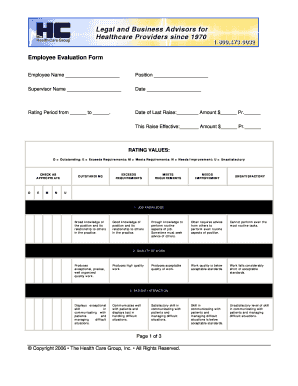
Employee Evaluation Form Template includes fields for employee information (employee name, job title/department, reviewer name/title, review period, today's date), ratings by customizable skill area with comments (work quality, productivity, communication, collaboration, initiative, punctuality), an auto-calculated
This form includes questions or prompts about an employee's job performance, strengths and weaknesses, and goals for improvement. An employee evaluation form may also ask about an employee's attendance record, punctuality, attitude, and ability to work well with others.
A collaborative approach will feel less daunting than a traditional, one-sided performance evaluation form. Identify core competencies. Choose a rating scale. Set an evaluation cycle. Prepare a list of questions. Share questions in advance. Have the conversation. Create a goal-setting framework. Be open to feedback.
Provide clear descriptions: Describe the job responsibilities, goals and rating system in great detail. Choose your rating method wisely: Some roles may be better suited to numerical ratings of competencies while others may need descriptive ratings or even multi-rater feedback.
A good evaluation form provides plenty of space for supervisor comments and suggestions and will include an easily understandable rating system.
How to write an employee evaluation Gather employee information. Gather required information related to the employee to get the full picture of their value to the company. List employee responsibilities. Use objective language. Use action verbs. Compare performance ratings. Ask open-ended questions. Use a point system.