
Last updated on
Oct 31, 2026
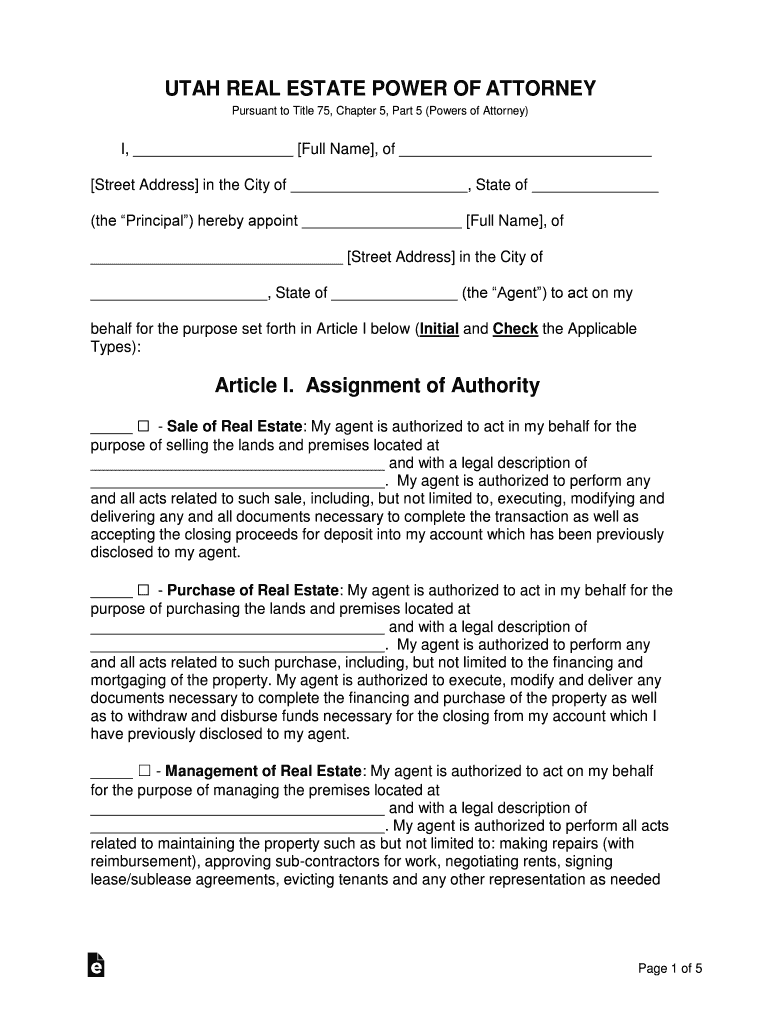
UT Real Estate Power of Attorney free printable template
pdfFiller is not affiliated with any government organization

Fill out
Complete the form online in a simple drag-and-drop editor.

eSign
Add your legally binding signature or send the form for signing.

Share
Share the form via a link, letting anyone fill it out from any device.

Export
Download, print, email, or move the form to your cloud storage.
Why pdfFiller is the best tool for your documents and forms


End-to-end document management
From editing and signing to collaboration and tracking, pdfFiller has everything you need to get your documents done quickly and efficiently.
Accessible from anywhere
pdfFiller is fully cloud-based. This means you can edit, sign, and share documents from anywhere using your computer, smartphone, or tablet.
Secure and compliant
pdfFiller lets you securely manage documents following global laws like ESIGN, CCPA, and GDPR. It's also HIPAA and SOC 2 compliant.
What is UT Real Estate Power of Attorney
The Utah Real Estate Power of Attorney is a legal document used by a principal to authorize an agent to handle real estate transactions on their behalf.
pdfFiller scores top ratings on review platforms




Who needs UT Real Estate Power of Attorney?
Explore how professionals across industries use pdfFiller.

UT Real Estate Power of Attorney is needed by:
-
Homeowners looking to sell or purchase property in Utah
-
Real estate agents needing authority for transactions
-
Individuals managing properties who require formal authorization
-
Parties involved in Utah real estate refinancing
-
Anyone seeking to appoint a trusted person for real estate decisions
Comprehensive Guide to UT Real Estate Power of Attorney
Understanding the Utah Real Estate Power of Attorney
The Utah Real Estate Power of Attorney is a legal document that enables a principal to appoint an agent to represent them in real estate transactions. This form is crucial for facilitating the buying or selling of property while ensuring that the necessary legal authority is granted to the agent. Typically, the principal is the individual granting permission, while the agent is the individual authorized to act on their behalf. Situations demanding this form include transactions where the principal is unable to be present or prefers delegation for efficiency.
Having a clear understanding of the principal and agent roles is essential for effective real estate dealings. The principal must ensure they trust the agent to act in their best interest, especially concerning significant financial commitments. Common keywords include “utah real estate power of attorney” and “utah power of attorney form,” which are essential for locating relevant information about this form.
Key Benefits of Using the Utah Real Estate Power of Attorney
The Utah Real Estate Power of Attorney simplifies the process of appointing an agent for real estate dealings. Several advantages come with using this form:
-
Simplifies the delegation of authority for real estate transactions.
-
Provides flexibility for the principal to make decisions even when unavailable.
-
Ensures compliance with applicable laws in Utah.
Utilizing this form can lead to more straightforward management of real estate transactions, enhancing both convenience and security.
Who Needs the Utah Real Estate Power of Attorney?
This form is primarily relevant for homeowners, buyers, and sellers engaged in real estate transactions. Additionally, agents who represent these individuals, such as real estate professionals or family members, also benefit from access to this authority. Validity is upheld through witnessing and notarization, which are critical components for legality in Utah.
Recognizing who should consider utilizing the Utah Durable Power of Attorney is crucial, as various scenarios may arise that necessitate its completion.
Requirements for the Utah Real Estate Power of Attorney
Completing the Utah Real Estate Power of Attorney requires certain signatories and must adhere to specific guidelines:
-
Signatures from the principal, agent, two witnesses, and a notary.
-
All required fields must be completed thoroughly, including names and addresses.
-
Notarization is mandatory for the document to be legally binding.
Understanding these requirements helps prevent complications during real estate transactions and ensures the document is properly executed.
How to Complete the Utah Real Estate Power of Attorney
Completing the Utah Real Estate Power of Attorney is straightforward, especially when utilizing tools like pdfFiller. Follow these steps to fill out the form correctly:
-
Identify and fill in each specified field, including the principal’s full name and signing details.
-
Double-check each section for accuracy and relevance before finalizing the document.
-
Avoid common errors such as illegible handwriting or missed signatures.
Reviewing the completed form ensures that all details are correct prior to submission, reducing the risk of delays or rejections.
Signing and Notarizing the Utah Real Estate Power of Attorney
Understanding the difference between digital and wet signatures is vital for securing the validity of the document. In Utah, notary requirements entail that the notary must be present during the signing process. Proper signatures are not only a legal formality but also a safeguard against potential disputes, ensuring that the authority granted is recognized and enforceable.
Ensuring compliance with these signing and notarization standards is essential for the integrity of the form.
Submitting the Utah Real Estate Power of Attorney
Once completed, the Utah Real Estate Power of Attorney must be submitted through designated channels. Here are your options:
-
Submit in person to the relevant authorities.
-
Utilize electronic submission methods where applicable.
Be aware of any potential fees associated with submission and the expected processing times. Tracking and confirming the submission status allows for informed follow-up actions.
Post-Submission Steps and Tracking Your Utah Real Estate Power of Attorney
After submitting the Utah Real Estate Power of Attorney, stakeholders must be aware of what to expect:
-
Check the status of your submission through the appropriate channels.
-
If amendments are needed, understand the steps for correction.
Guidance on renewal or resubmission processes is essential in managing this documentation effectively.
Security and Privacy with pdfFiller
When using pdfFiller to handle sensitive documents like the Utah Real Estate Power of Attorney, it's crucial to be aware of the security measures in place. pdfFiller employs 256-bit encryption and complies with standards such as HIPAA and GDPR, assuring document safety throughout the editing and managing processes.
Utilizing a cloud-based platform like pdfFiller not only enhances accessibility but also provides peace of mind regarding data protection and privacy.
Start Your Real Estate Transactions with Confidence
Utilizing pdfFiller for your Utah Real Estate Power of Attorney allows for easy completion of your legal documents. The platform’s tools and intuitive interface make it simple to fill out the form efficiently from any internet browser. This empowers you to initiate your real estate transactions with the confidence that you have the right tools for success.
How to fill out the UT Real Estate Power of Attorney
-
1.Access the Utah Real Estate Power of Attorney form by navigating to pdfFiller's website and searching for the form using its name.
-
2.Once located, click to open the form in the pdfFiller interface for editing.
-
3.Gather all necessary information beforehand, including the full name, address, and other identification details of the principal and agent.
-
4.Start filling out the form by clicking on fillable fields. Enter the principal's name where indicated, and provide the agent's details in the appropriate sections.
-
5.Include the full names and signatures of the two witnesses required in the designated areas of the form.
-
6.Make sure to complete the notary section as well, providing necessary information for proper notarization.
-
7.After completing all fields, review the form thoroughly for any errors or omissions to ensure accuracy.
-
8.Once satisfied with the information entered, save your progress regularly to avoid data loss.
-
9.Opt to download or print the completed form directly from pdfFiller for signing and notarization purposes.
-
10.Finally, submit the form as required, either through electronic submission or physical mailing, depending on the particular needs of your real estate transaction.

Who is eligible to use the Utah Real Estate Power of Attorney?
Any adult individual in Utah can use this form to designate an agent for real estate transactions, provided they have the capacity to grant such authority.
Are there any deadlines for submitting this form?
There are typically no strict deadlines for signing a Power of Attorney; however, it should be completed and executed promptly to facilitate real estate transactions.
How should the completed form be submitted?
The completed Utah Real Estate Power of Attorney must be signed, notarized, and may need to be filed with the local county recorder’s office depending on specific transaction needs.
What supporting documents are required with this form?
Generally, no additional documents are required, but having identification and proof of property ownership is recommended during the signing process.
What are common mistakes to avoid when completing this form?
Ensure all fields are filled out accurately, especially names, signatures, and witness information. Leaving blanks or making alterations can void the document.
How long does it take to process this form once submitted?
Processing times can vary, but notarization can typically happen on the same day, while filing with county offices may take longer based on local regulations.
Do I need a lawyer to complete the Utah Real Estate Power of Attorney?
While it's not legally required, consulting with a lawyer is advisable to ensure compliance with Utah laws and to address any specific legal questions.
Related Forms



Get the latest insights from our blog


If you believe that this page should be taken down, please follow our DMCA take down process
here
.
This form may include fields for payment information. Data entered in these fields is not covered by PCI DSS compliance.