
Last updated on
Oct 19, 2026
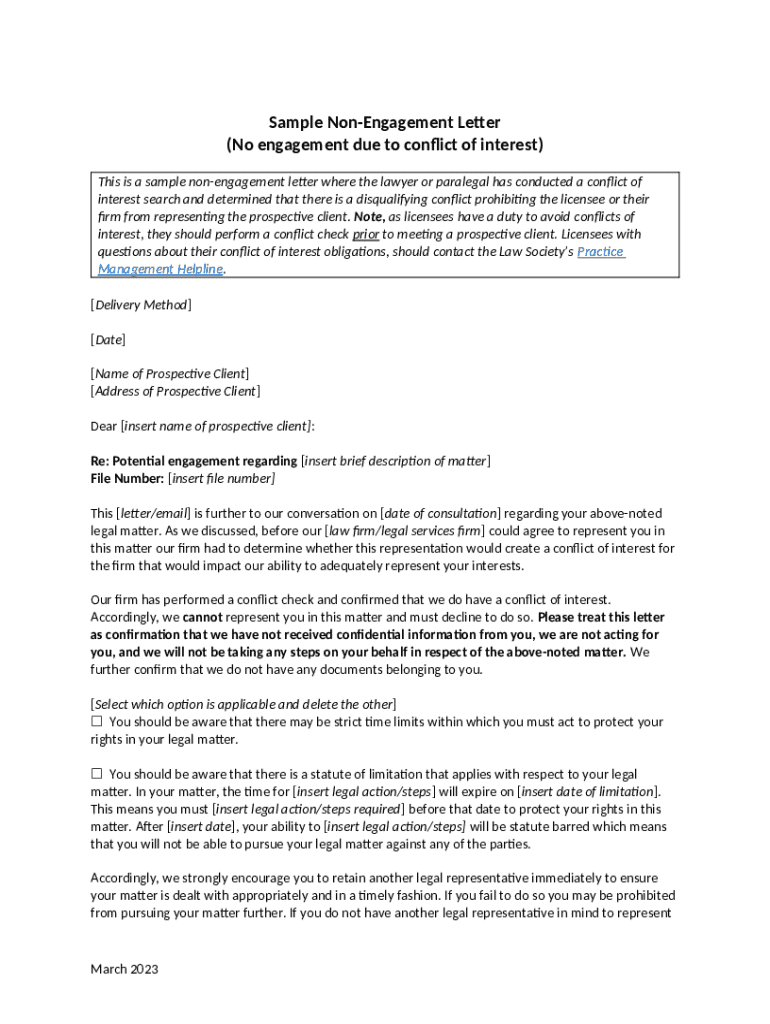
Get the free Non-Engagement Letter
We are not affiliated with any brand or entity on this form
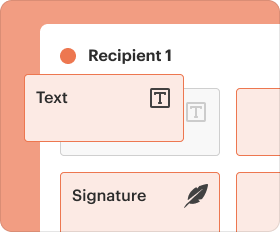
Fill out
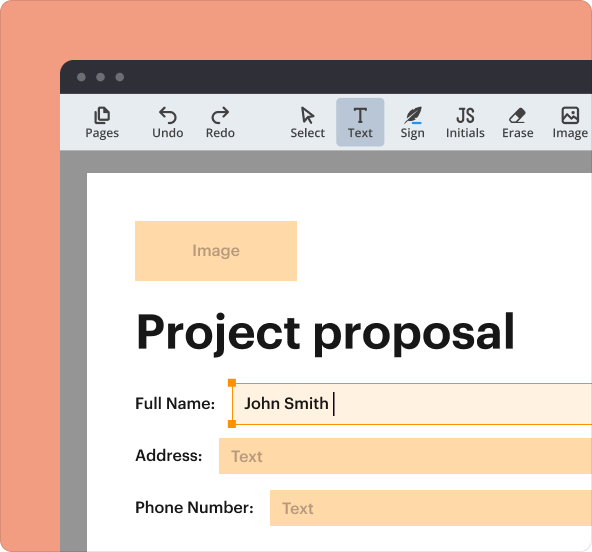
Complete the form online in a simple drag-and-drop editor.
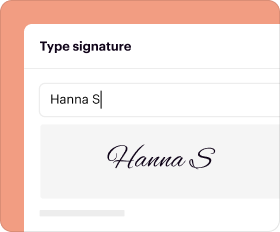
eSign
Add your legally binding signature or send the form for signing.
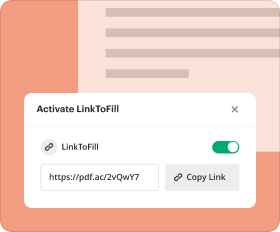
Share
Share the form via a link, letting anyone fill it out from any device.
Export
Download, print, email, or move the form to your cloud storage.
Why pdfFiller is the best tool for your documents and forms


End-to-end document management
From editing and signing to collaboration and tracking, pdfFiller has everything you need to get your documents done quickly and efficiently.
Accessible from anywhere
pdfFiller is fully cloud-based. This means you can edit, sign, and share documents from anywhere using your computer, smartphone, or tablet.
Secure and compliant
pdfFiller lets you securely manage documents following global laws like ESIGN, CCPA, and GDPR. It's also HIPAA and SOC 2 compliant.
What is Conflict Letter
The Non-Engagement Letter is a legal document used by lawyers to inform a prospective client about a conflict of interest, preventing representation.
pdfFiller scores top ratings on review platforms




Who needs Conflict Letter?
Explore how professionals across industries use pdfFiller.

Conflict Letter is needed by:
-
Prospective clients seeking legal advice
-
Lawyers needing to communicate non-engagement
-
Paralegals assisting with legal documentation
-
Law firms managing client relationships
-
Legal professionals addressing conflicts of interest
Comprehensive Guide to Conflict Letter
What is a Non-Engagement Letter?
A non-engagement letter is a crucial document in legal practice, used to formally inform prospective clients that they will not be represented by an attorney due to various reasons, including conflicts of interest. This letter functions to clarify the status of the client and the attorney, ensuring that both parties understand the terms of the non-representation.
Notifying prospective clients about non-representation is essential for maintaining professional integrity and avoiding potential liabilities. Unlike engagement letters, which signify the start of an attorney-client relationship, the non-engagement letter explicitly states that no such relationship exists, providing a shield against misunderstandings regarding representation.
Purpose and Benefits of a Non-Engagement Letter
The primary purpose of a non-engagement letter is to articulate the reasons for the non-representation and protect lawyers from potential conflicts of interest. By clarifying the client's status, these letters help set appropriate expectations and mitigate the risk of liability arising from misunderstandings or miscommunications.
Some benefits include:
-
Protection against conflicts of interest.
-
Clear communication of the client's status.
-
Reduction of potential liability and misunderstandings.
Key Features of the Non-Engagement Letter
A properly structured non-engagement letter includes several key components essential for ensuring clarity and compliance. Typical fields in the letter may include:
-
Prospective client details such as name and address.
-
Description of the legal matter in question.
-
Checkboxes for any applicable legal time limits.
-
Signature requirements for both the licensee and the client.
The inclusion of these features helps streamline the process and maintains a clear record of communications regarding legal matters.
Who Needs a Non-Engagement Letter?
Non-engagement letters are critical for various stakeholders within the legal field, most notably lawyers and paralegals working with prospective clients. Specific scenarios that necessitate these letters include instances where:
-
A conflict of interest arises.
-
Legal representation cannot be provided.
-
Misrepresentation could potentially occur without proper documentation.
Using a non-engagement letter in such situations helps avoid complications related to client expectations and legal obligations.
When and How to Use a Non-Engagement Letter
It is imperative to issue a non-engagement letter at the appropriate time—ideally, as soon as a conflict of interest is identified or when representation cannot be rendered. The steps to properly prepare and execute the form include:
-
Identify the need for the letter when a conflict or non-representation is determined.
-
Complete the letter with relevant details about the prospective client and the legal matter.
-
Ensure both parties sign the document to acknowledge the agreement.
Timely delivery of the non-engagement letter protects the interests of both the attorney and the prospective client, ensuring clear communication of roles.
How to Fill Out a Non-Engagement Letter Online
Filling out a non-engagement letter online is straightforward. Follow these practical steps to ensure accuracy in the completion:
-
Access the online form via a reliable document management platform.
-
Enter required details in fillable fields, including names, descriptions, and dates.
-
Review the completed form for accuracy before submitting.
Ensuring completeness and correctness in submissions is vital to avoid issues later in the process.
Digital Signature vs. Wet Signature Requirements
When it comes to signing a non-engagement letter, the choice between a digital signature and a wet signature can be significant. Understanding the differences is essential:
-
Digital signatures offer convenience and can be executed quickly online.
-
Wet signatures are traditional but may be required in specific jurisdictions to meet legal standards.
Both methods are legally valid, but user considerations such as document security and compliance preferences should guide the decision on what to use.
Security and Compliance of the Non-Engagement Letter
Security and compliance are paramount when handling non-engagement letters. Employing robust security measures ensures that sensitive information is protected. Important aspects include:
-
Security protocols employed by document management tools, such as 256-bit encryption.
-
Compliance with legal regulations such as HIPAA and GDPR.
-
Maintaining confidentiality in all communications related to legal matters.
These measures provide reassurance to both attorneys and clients regarding the protection of personal information.
What Happens After Submitting the Non-Engagement Letter?
Upon submitting a non-engagement letter, it is essential to understand the expected follow-up process. Users should note the following:
-
Confirmation of receipt will typically be provided.
-
Tracking submission status may be necessary to ensure proper handling.
-
Failure to submit the letter correctly may lead to misunderstandings or complications regarding representation.
Being aware of these steps can help mitigate any potential issues after the submission of the letter.
Empower Your Legal Practice with pdfFiller
Utilizing pdfFiller enables lawyers to streamline the process of creating, managing, and executing non-engagement letters effectively. With features such as:
-
A user-friendly interface for ease of access.
-
Robust security measures tailored for legal documentation.
-
Comprehensive tools for editing, eSigning, and sharing documents.
Leveraging this platform can enhance the efficiency and security of legal documentation processes.
How to fill out the Conflict Letter
-
1.Access the Non-Engagement Letter form on pdfFiller by searching for its name in the search bar.
-
2.Open the form by clicking on the title in the results and wait for it to load in the pdfFiller editor.
-
3.To begin, gather necessary information such as the prospective client's name, address, and details about the legal matter.
-
4.Navigate through the form using the fillable fields ensuring each element is correctly populated, such as [insert name of prospective client] and [insert brief description of matter].
-
5.Use the checkboxes to indicate any specific legal time limits applicable to the situation.
-
6.Once all fields are complete, review the information entered for accuracy and clarity.
-
7.Ensure both signature lines are signed by the licensee and the prospective client as required.
-
8.Save the completed document to your pdfFiller account for easy access or click the download button to save it locally.
-
9.To submit the form, choose the email option to forward it directly or print it for mail delivery.
Who is eligible to use the Non-Engagement Letter?
Any licensed attorney or paralegal can use the Non-Engagement Letter to formally notify a prospective client about a conflict of interest preventing representation.
Are there any deadlines associated with this form?
While there are no specific deadlines generally tied to the Non-Engagement Letter, it should be issued promptly when a conflict of interest is identified to maintain professional ethics.
What are the submission methods for the Non-Engagement Letter?
The Non-Engagement Letter can be submitted via email directly from pdfFiller or printed and delivered in person or through the mail as required.
What supporting documents are needed with this form?
Typically, no additional documents are required when submitting the Non-Engagement Letter. However, keeping records of any related communications is advisable.
What are common mistakes to avoid when filling out this letter?
Common mistakes include omitting essential details like the client's information or failing to secure proper signatures from both parties which may invalidate the letter.
How long does it take to finalize the Non-Engagement Letter?
Completing the Non-Engagement Letter generally takes just a few minutes, provided all necessary information is readily available.
What should I do if I have concerns about this letter?
For specific concerns about the Non-Engagement Letter, it's best to consult with a legal expert to ensure compliance with legal standards and practices.
Related Forms



Get the latest insights from our blog


If you believe that this page should be taken down, please follow our DMCA take down process
here
.
This form may include fields for payment information. Data entered in these fields is not covered by PCI DSS compliance.