
Last updated on
Oct 7, 2026

Get the free California Small Estate Declaration Form
We are not affiliated with any brand or entity on this form
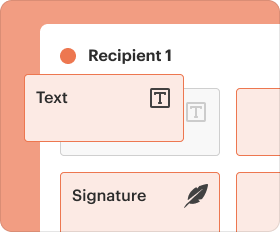
Fill out
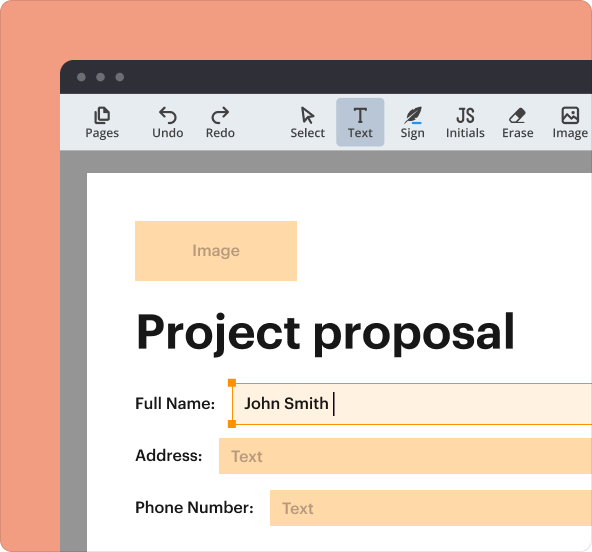
Complete the form online in a simple drag-and-drop editor.
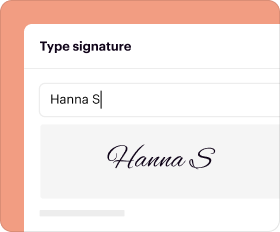
eSign
Add your legally binding signature or send the form for signing.
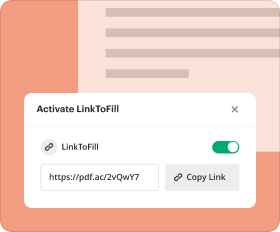
Share
Share the form via a link, letting anyone fill it out from any device.
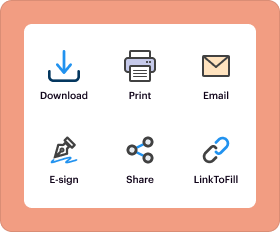
Export
Download, print, email, or move the form to your cloud storage.
Why pdfFiller is the best tool for your documents and forms


End-to-end document management
From editing and signing to collaboration and tracking, pdfFiller has everything you need to get your documents done quickly and efficiently.
Accessible from anywhere
pdfFiller is fully cloud-based. This means you can edit, sign, and share documents from anywhere using your computer, smartphone, or tablet.
Secure and compliant
pdfFiller lets you securely manage documents following global laws like ESIGN, CCPA, and GDPR. It's also HIPAA and SOC 2 compliant.
What is Small Estate Declaration
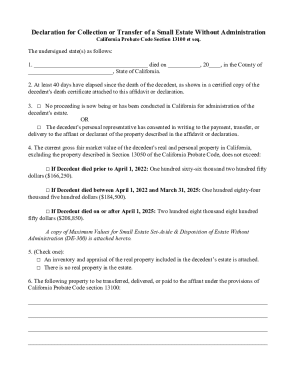
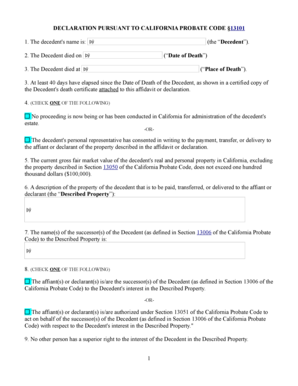
The California Small Estate Declaration Form is a legal document used by individuals to declare the collection or transfer of a small estate without probate under Probate Code 13101.
pdfFiller scores top ratings on review platforms




Who needs Small Estate Declaration?
Explore how professionals across industries use pdfFiller.

Small Estate Declaration is needed by:
-
Heirs of a deceased person in California
-
Estate representatives managing small estates
-
Personal representatives seeking quick estate resolution
-
Individuals needing to transfer property without probate
-
Notary public verifying the form's authenticity
-
Attorneys assisting in estate planning
-
Beneficiaries of small estates
Comprehensive Guide to Small Estate Declaration
What is the California Small Estate Declaration Form?
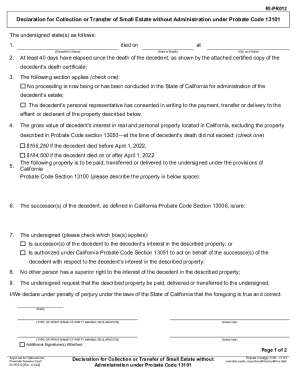
The California Small Estate Declaration Form, also known as the RI-PR012 form, is a legal document used for the transfer of a decedent's assets without the need for a formal probate process. This form is grounded in Probate Code 13101, which allows for a simpler means of managing small estates. By using this document, individuals can effectively facilitate the transfer of assets belonging to a decedent whose estate falls below a specific value threshold.
This document plays a significant role in streamlining the small estate transfer process, allowing heirs to claim their rightful inheritance with minimal legal complications.
Purpose and Benefits of the California Small Estate Declaration Form
The primary purpose of the California Small Estate Declaration Form is to simplify the transfer of a decedent's assets. By using this small estate transfer form, heirs can avoid lengthy probate proceedings, which can be both time-consuming and costly. The benefits of this form include:
-
Reduced legal fees, as formal probate is bypassed.
-
A faster transfer of assets to heirs, allowing for quicker access to finances.
-
Enhanced ease of use, simplifying the experience of managing small estates.
Key Features of the California Small Estate Declaration Form
The California Small Estate Declaration Form comprises several key features that facilitate its use. These include:
-
Fillable fields that prompt users to enter necessary information.
-
Checkboxes to streamline decision-making.
-
Required signatures from both the declarant and a notary.
Additionally, the form mandates the inclusion of specific information regarding the decedent's estate, including estate value and property details, ensuring that all pertinent details are captured accurately. Notarization is crucial to affirm the legitimacy of the document, providing an added layer of security to the transfer process.
Who Needs the California Small Estate Declaration Form?
This form is primarily intended for declarants, heirs, and beneficiaries involved in the transfer of a decedent's small estate. Specific scenarios where this document is applicable include situations where the estate's value remains below the designated threshold, thereby qualifying for expedited processing without formal probate. Anyone looking to efficiently manage a small estate should consider utilizing the California Small Estate Declaration Form.
Eligibility Criteria for the California Small Estate Declaration Form
To be eligible to use the California Small Estate Declaration Form, certain criteria must be met. These include:
-
The total estate value must be below a defined threshold.
-
Eligible assets include personal property, real estate, and financial accounts.
-
No ongoing administration proceedings for the decedent's estate.
How to Fill Out the California Small Estate Declaration Form Online (Step-by-Step)
Filling out the California Small Estate Declaration Form online is a straightforward process. Follow these steps to ensure a smooth completion:
-
Access the form through a digital PDF platform like pdfFiller.
-
Enter the necessary information in each fillable field, ensuring accuracy.
-
Utilize checkboxes where applicable to clarify choices made in the form.
-
Review the completed form for common mistakes, such as incorrect estate values or missing signatures.
-
Submit the form as instructed once all details are correctly filled in.
How to Sign or Notarize the California Small Estate Declaration Form
Obtaining the necessary signatures and notarization for the California Small Estate Declaration Form is essential. The signing process can involve two types of signatures:
-
Digital signatures, which can be done electronically through online platforms.
-
Wet signatures, requiring physical signatures on printed documents.
It is important to ensure that the form is properly notarized. This secures the document's authenticity and confirms the identity of the individuals signing.
Where to Submit the California Small Estate Declaration Form
After completing the California Small Estate Declaration Form, it must be submitted to the appropriate authorities. Submission methods include:
-
Mailing the form to the designated probate court location.
-
Submitting it in person at the court office.
Be mindful of filing deadlines and processing times to avoid delays. Additionally, some submission methods may incur associated fees, so it’s wise to verify costs beforehand.
What Happens After You Submit the California Small Estate Declaration Form
Once the California Small Estate Declaration Form is submitted, the next steps involve tracking the status of the submission. It is important to be aware of:
-
The expected time frame for approval or rejection.
-
The implications of both acceptance and denial of the form on estate proceedings.
Monitoring the submission closely can help in planning the next actions required for the estate.
Enhance Your Experience with pdfFiller when Filling Out the California Small Estate Declaration Form
Utilizing pdfFiller when completing the California Small Estate Declaration Form can enhance the overall experience. Features of this cloud-based platform include:
-
The ability to edit and fill forms seamlessly online.
-
Enhanced document management capabilities for security and organization.
Users can feel reassured about privacy and security, as pdfFiller employs 256-bit encryption and complies with HIPAA and GDPR standards. This ensures that sensitive documents are handled with the utmost care and protection.
How to fill out the Small Estate Declaration
-
1.To start, visit pdfFiller.com and log in to your account. If you don’t have an account, create one to access the form.
-
2.Use the search bar to find the California Small Estate Declaration Form. Click on the form to open it in the pdfFiller editor.
-
3.Before filling out the form, gather necessary information, including the decedent's details, the estate's total value, and the specific property being transferred.
-
4.In the pdfFiller interface, click on each fillable field to enter the required information. Use the checkboxes for any applicable selections.
-
5.Double-check the entered information for accuracy. It’s critical that all details match your gathered documents.
-
6.Once you’ve completed all fields, review the form thoroughly to ensure all sections are filled correctly and no information is missing.
-
7.When satisfied, save your work. Choose the save option in the toolbar to save your progress or the final version of the form.
-
8.To download a copy, click on the download icon and select your preferred format. Ensure it’s saved securely for submission.
-
9.If you need to submit the form, refer to your local jurisdiction for their specific submission methods. You may also send it to a notary for notarization if required.
Who is eligible to use the California Small Estate Declaration Form?
Any individual who is an heir, beneficiary, or representative of a small estate in California, where the estate's value is below the specified threshold, can use this form.
What documents do I need to complete this form?
You will need information about the decedent, the total value of the estate, and details regarding the property intended for transfer. It’s helpful to have a death certificate on hand.
Do I need to have this form notarized?
Yes, the California Small Estate Declaration Form must be signed under penalty of perjury and notarized to be valid.
How long do I have to submit the form after a person's death?
There is no strict deadline for submitting this form, but it’s advisable to complete it as soon as possible to expedite the collection and transfer of the estate.
What are common mistakes to avoid when filling out this form?
Common mistakes include incorrect or incomplete information and failing to sign or notarize the document. Always double-check for accuracy before finalizing.
Where do I submit the completed California Small Estate Declaration Form?
Submit the completed form to the appropriate local authority or court in your area, as per California probate procedures, and ensure any required fees are paid.
How can I ensure my submission is processed quickly?
To ensure quick processing, double-check that all sections are complete, submit any required supporting documents, and include the correct fees as needed.
Related Forms





Get the latest insights from our blog


If you believe that this page should be taken down, please follow our DMCA take down process
here
.
This form may include fields for payment information. Data entered in these fields is not covered by PCI DSS compliance.