Compress PDF to Reduce File Size
Compress PDF files quickly and easily using pdfFiller's online tool to optimize document sharing and storage.
What is the PDF Compression Tool?
The PDF compression tool is designed to reduce the file size of PDF documents, making them easier to share and store. With pdfFiller, you can access this tool directly within the editor, eliminating the need for complex software or IT setup. This tool is especially beneficial for small and medium-sized businesses that frequently handle numerous documents. By using the PDF compression tool, you can ensure that your files remain manageable without sacrificing quality.
Why Compress PDF Files?
Compressing PDF files is essential for several reasons. Large file sizes can hinder document sharing, especially when sending files via email, where attachment limits often apply. Additionally, storing large PDFs can consume valuable space on your devices or cloud storage. By choosing to compress PDF files, you can alleviate these storage concerns and enhance the efficiency of document sharing. The process of file size reduction ultimately leads to smoother workflows and improved productivity for small and medium-sized businesses.
How to Access the Compress Tool
- Open pdfFiller in your web browser.
- Navigate to the editor header button.
- Select the "All Tools" dashboard option.
- No document is required to access the compression feature.
- Locate the PDF compression tool within the available options.
Steps to Compress a PDF
- Upload the PDF file you wish to compress to pdfFiller.
- Click on the compression tool option in the toolbar.
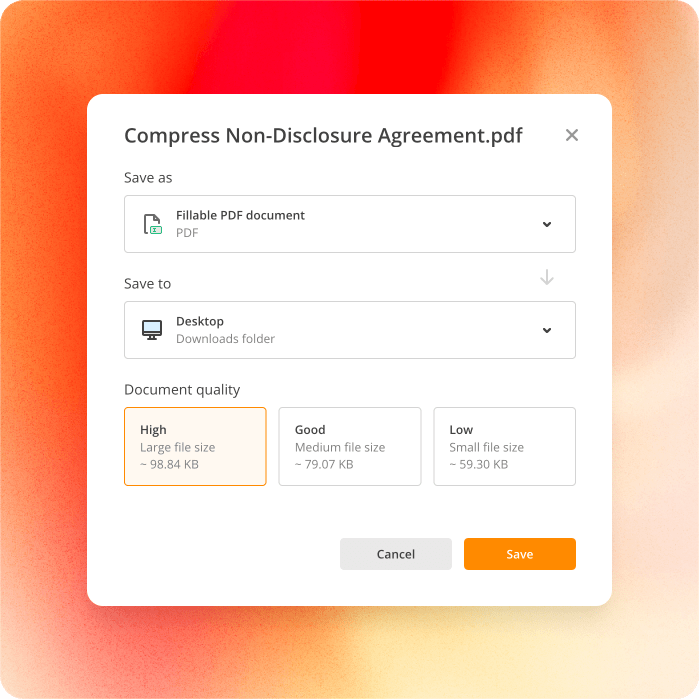
- Select your preferred compression quality level: High, Medium, or Low.
- Review the file size before and after compression.
- Confirm the compression process to begin.
- Wait for the tool to complete the compression.
- Download the compressed PDF file to your device.
- Check the file to ensure all necessary content is preserved.
Choosing Compression Quality Levels
When you compress PDF files, you have the option to choose from different quality settings. The High setting retains the best image quality but results in a larger file size. The Medium setting strikes a balance between quality and size, while the Low setting significantly reduces the file size but may impact image clarity. The choice of compression quality can depend on your specific needs and the type of content within the PDF, such as images or text.
What Changes After Compression?
After you compress a PDF, certain content may be affected while other elements remain intact. Typically, images may lose some quality, especially if a lower compression setting is chosen. However, text and form fields are generally preserved, ensuring that the document remains functional for e-signatures and other interactive elements. Understanding these changes helps you make informed decisions about which files to compress and how to maintain their usability.
Expected Results from Compression
The results of compressing a PDF can vary based on the content type. For instance, a PDF with many images may see a more significant reduction in file size compared to a text-heavy document. While it is difficult to promise specific percentages for file size reduction, you can expect a noticeable decrease that facilitates easier sharing and storage. Setting realistic expectations will help you gauge the effectiveness of the compression process.
Downloading Your Compressed PDF
Once the compression process is complete, you can download your compressed PDF file directly from pdfFiller. You will typically see options for saving the file to your device or sharing it via email. If the file size remains larger than expected, consider revisiting the compression settings to adjust the quality level. This step ensures that you achieve the optimal file size for your needs.
Comparing Compression Methods
Understanding how PDF compression differs from other size-reduction methods is crucial. Unlike simply deleting pages or splitting files, compressing a PDF focuses on reducing the overall file size while maintaining content integrity. Methods like Save As may alter the document format, which can lead to loss of features. Compression specifically targets file size without sacrificing the usability of the document.
Industry Scenarios for PDF Compression
PDF compression is particularly beneficial in various industry scenarios. For small businesses, managing invoices and contracts efficiently is vital, and compressing these documents can streamline workflows. Freelancers often need to send portfolios or proposals via email, where file size limits can be a barrier. In real estate, agents frequently share property listings and contracts, making compression essential for quick and effective communication. These examples illustrate the practical applications of PDF compression across different roles and industries.
How Does pdfFiller Compare?
Smallpdf offers similar compression features but lacks the extensive template library pdfFiller provides. Users may find fewer customization options with Smallpdf. ilovepdf provides basic compression tools but may not integrate as effectively with document management workflows, limiting advanced features. Adobe Acrobat is a comprehensive PDF tool with compression capabilities, but it often comes with a higher price tag and complexity, making it better suited for users needing extensive PDF editing capabilities.