Compress Excel to 195 KB
Compress Excel files quickly and efficiently using pdfFiller's online tool to meet size requirements and enhance sharing.
What is the Compress Tool for Excel?
The Compress tool for Excel is designed to reduce file size, making it ideal for large Excel files. This tool is accessible via any web browser, which means no installation is required. By using this tool, you can effectively manage file size reduction, ensuring your documents are easier to share and store. The simplicity of the tool allows small and medium-sized businesses to handle their Excel documents without the complexity often associated with other solutions.
Why Compress Excel Files?
Reducing Excel file size is essential for several reasons. First, it improves email deliverability, ensuring that your files reach their intended recipients without issues. Second, it saves storage space, which is crucial for small businesses that may have limited resources. Additionally, smaller files enhance collaboration, allowing team members to share and access documents more efficiently. For small businesses, compressing Excel files is not just a convenience; it's a necessity for effective document management.
How to Access the Compress Tool
To access the Compress tool, simply look for it in the editor header of pdfFiller. You can also find it on the All Tools dashboard, making it easy to locate. No document is needed to access the tool, which contributes to a user-friendly interface. This straightforward access ensures that you can start compressing your Excel files without navigating through complicated menus.
Steps to Compress an Excel File
- Upload your Excel file to the pdfFiller platform.
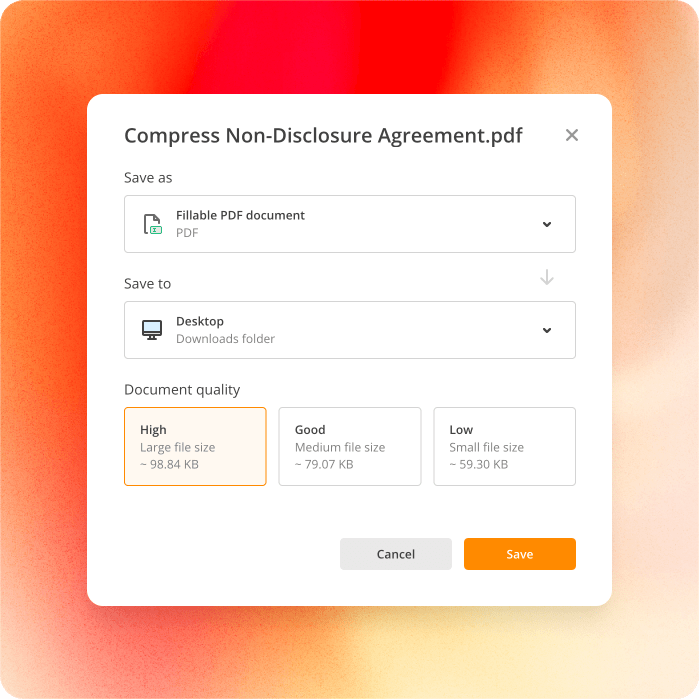
- Select the desired compression level based on your needs.
- Click the compress button to initiate the process.
- Wait for the tool to complete the compression.
- Download the compressed file to your device.
- Check the file size to ensure it meets your requirements.
- Share the compressed file via email or other platforms.
- Repeat the process if further compression is needed.
Choosing a Compression Quality Level
When you compress Excel files, you can choose from high, medium, or low-quality options. Each level impacts the fidelity of images within the document. High quality retains more detail, while lower quality may reduce image clarity. Understanding these options allows you to make informed choices based on your needs. The flexibility in selecting compression quality ensures that you can optimize your files according to specific requirements.
What Changes After Compression?
After you compress an Excel file, some content may be affected. Images within the document may lose quality, while text and structure remain intact. Importantly, form fields are unaffected by the compression process, ensuring that your document's functionality is preserved. This balance allows you to reduce file size without compromising essential content.
Expected File Size Reduction
The amount of file size reduction can vary based on the content type of your Excel file. For example, image-heavy files typically compress more significantly than text-only files. While you can expect some reduction, there are no guarantees on the exact size decrease. Understanding this variability helps set realistic expectations for your compression efforts.
After Compression: What’s Next?
Once you have compressed your Excel file, you have several options for what to do next. You can download the compressed file directly to your device. If the file is still too large, consider sharing it via email or using a file-sharing service. The user-friendly follow-up options ensure that you can easily manage your documents after compression.
Compress vs. Other Size-Reduction Methods
When comparing compression to other size-reduction methods, such as deleting pages or splitting files, there are distinct differences. Compression retains the overall structure and content of your document, while deleting pages removes information entirely. Each method has unique benefits, and understanding when to choose compression over others can help you manage your Excel files more effectively.
Industry-Specific Scenarios for Compression
Compression is particularly essential in various industry scenarios. For accountants needing to send reports, reducing file size ensures timely delivery without email issues. Project managers sharing plans benefit from smaller files that facilitate collaboration. Small businesses managing budgets can streamline their document workflows by compressing Excel files. These real-world examples highlight the importance of compression in everyday business operations.
How Does pdfFiller Compare?
Smallpdf offers similar compression features but lacks the extensive template library of pdfFiller. Users may find fewer customization options. ilovepdf provides basic compression tools but does not integrate as seamlessly with document management workflows and is limited in advanced features. Adobe Acrobat is a comprehensive tool with robust features, but it is often more complex and costly for small businesses, potentially requiring technical setup.