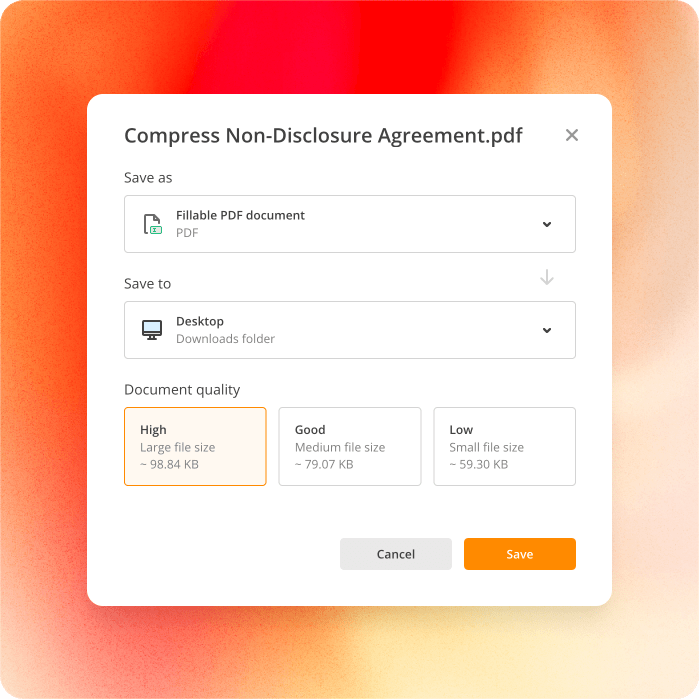
Compress Word to 180 KB
Compress Word documents quickly and efficiently using pdfFiller's browser-based tool, ensuring optimal file size without sacrificing quality.
What Does the Compress Tool Do?
The Compress tool in pdfFiller is designed to optimize your Word documents effectively. It enhances the file by optimizing embedded images and flattening annotations, ensuring that your document remains visually appealing while reducing its size. The tool applies file-level compression, which means that it targets the entire document rather than just specific elements. Importantly, it preserves text and form field data, ensuring that the essential content of your document remains intact. You can access this tool easily in the editor and from the All Tools dashboard, making it convenient for users to manage their documents without encountering vague promises of size reduction.
Why Compress Your Word Documents?
Reducing the size of your Word documents is crucial for several reasons. First, it significantly improves sharing efficiency via email, allowing you to send files without worrying about attachment size limits. Additionally, compressing your documents reduces storage space requirements, which is particularly beneficial for small and medium-sized businesses managing numerous files. It also enhances upload speed for online platforms, making it easier to share documents on various applications. Lastly, compressing your files prevents issues related to file size limits in different applications, ensuring a smoother workflow.
How to Access the Compress Tool
You can easily locate the Compress tool within pdfFiller. It is available in the editor header, allowing for quick access while editing your documents. Additionally, you can find it in the All Tools dashboard, which provides a comprehensive view of all available functionalities. Notably, you do not need to have a document open to access this tool, making navigation straightforward and user-friendly.
Steps to Compress a Word Document
- Open the document you want to compress in pdfFiller.
- Click the Compress button located in the toolbar at the top of the screen.
- Select your desired quality level from the available options.
- Download the compressed file to your device after the process is complete.
Choosing a Compression Quality Level
When using the Compress tool, you have the option to choose from different quality settings. The high-quality setting results in minimal visual change, making it ideal for documents where appearance is crucial. The medium-quality setting offers a balanced tradeoff between file size and visual fidelity. Conversely, the low-quality setting maximizes size reduction but may lead to noticeable quality loss. Keep in mind that the quality levels available may vary depending on your subscription plan, so choose wisely based on your needs.
What Changes After Compression?
After compressing your Word document, certain elements remain unchanged while others may be affected. Text and form fields will remain intact, ensuring that the core content of your document is preserved. However, images within the document may experience some quality loss, which is a common trade-off for achieving a smaller file size. The overall document structure is preserved, allowing for easy navigation, while annotations are flattened to maintain a clean appearance.
Expected File Size Reduction
The extent of file size reduction can vary significantly based on the content of your document. For instance, image-heavy PDFs tend to compress significantly, resulting in a much smaller file size. In contrast, text-only PDFs may yield minimal reduction, as there is less data to compress. Additionally, files that have already been optimized will see little to no change in size. Therefore, the yield of compression largely depends on the type of content within the document.
What to Do After Compression
Once you have compressed your Word document, there are several steps to follow. First, download the compressed file immediately to ensure you have the latest version. Next, check if further compression is needed based on your requirements. If the file is still too large, consider alternative methods for size reduction. Finally, integrate the compressed file into your sharing workflows to streamline document management.
Compress vs. Other Size-Reduction Methods
It's important to understand how compression differs from other size-reduction methods. The Compress tool focuses specifically on reducing file size without altering the content, while deleting pages removes content entirely from the document. Splitting a document divides it into smaller files, which may not be necessary if compression suffices. Each method serves distinct needs, so choose the one that best fits your situation.
Industry Scenarios for Compression
Compression is particularly beneficial in various industry scenarios. Marketing teams often share large presentations that can be cumbersome to send via email. Legal professionals frequently send contracts that need to be both accessible and manageable in size. Freelancers managing client documents benefit from compression to keep files organized and easy to share. Small businesses also find value in optimizing storage by compressing documents, ensuring they can manage their resources effectively.
Supported Formats and Export Options
The Compress tool supports a variety of document formats, including DOCX, making it versatile for different users. After compression, files are typically exported to PDF, which is a widely accepted format for sharing. The tool is compatible with multiple file types, allowing for easy conversion before and after the compression process, ensuring flexibility in document management.
Browser and Device Compatibility
pdfFiller's Compress tool is designed to work on all major web browsers, ensuring accessibility for users regardless of their preferred platform. No installation is required, allowing for immediate use. Additionally, the tool is accessible on mobile devices, providing cross-platform functionality that caters to users on the go.
Limitations of the Compress Tool
While the Compress tool is effective, it does have limitations. Not all files will see significant size reduction, particularly if they are already optimized. Additionally, quality loss may occur with images, which could affect the overall appearance of the document. Plan-tier restrictions may apply, meaning that users on free plans might have limited access to certain features. Lastly, the tool may not be suitable for all document types, so consider the nature of your files before compression.
Security and Compliance of Compression
Security is a top priority when using the Compress tool. pdfFiller employs encryption during file processing to protect your documents. The tool complies with industry standards, ensuring that your data is handled securely. Various data protection measures are in place, providing secure access to your documents throughout the compression process.
How Does pdfFiller Compare?
When comparing pdfFiller's Compress tool with competitors, several key differences emerge. Smallpdf offers limited features compared to pdfFiller, which provides a more comprehensive toolset. ilovepdf has a less user-friendly interface, making navigation more challenging for users. Adobe Acrobat comes with a higher cost for similar features, which may not be feasible for small businesses. Lastly, Foxit lacks a comprehensive template library, limiting its usability for document management.
Free vs. Paid Access for PDF Compression
Understanding the differences between free and paid access to the Compress tool is essential. The free plan has limited compression options, which may not meet all user needs. Paid plans offer more features, providing greater flexibility and functionality. Trial options are available for new users, allowing them to explore the tool before committing to a subscription. Additionally, plan tiers affect compression quality, so users should consider their requirements when selecting a plan.
Next Steps After Compression
After compressing your Word documents, consider how to integrate them into your workflow. Use the compressed files in email and sharing to facilitate communication. If further editing is necessary, consider making those adjustments before finalizing the document. Regularly monitor file sizes to maintain efficiency, and explore other features offered by pdfFiller to enhance your document management processes.