Request Signature
Request signatures quickly and securely from any device.
What is the Request Signature Workflow?
The Request Signature workflow is designed to simplify the process of obtaining e-signatures for important documents. This feature is ideal for contracts and agreements, allowing you to send documents for signing without requiring recipients to have an account. It supports multiple signers, making it easy to manage collaborative agreements. By using this workflow, you can avoid the complexity often associated with competing solutions, ensuring a straightforward experience for all parties involved.
How to Upload Documents for Signing
To upload documents into pdfFiller, you have several options. You can upload from your computer or cloud storage services, ensuring flexibility in accessing your files. Supported formats include PDF and DOCX, allowing you to work with various document types. Additionally, the drag-and-drop functionality makes it easy to add documents to the platform, streamlining the upload process and saving you time.
Assigning Signature and Form Fields
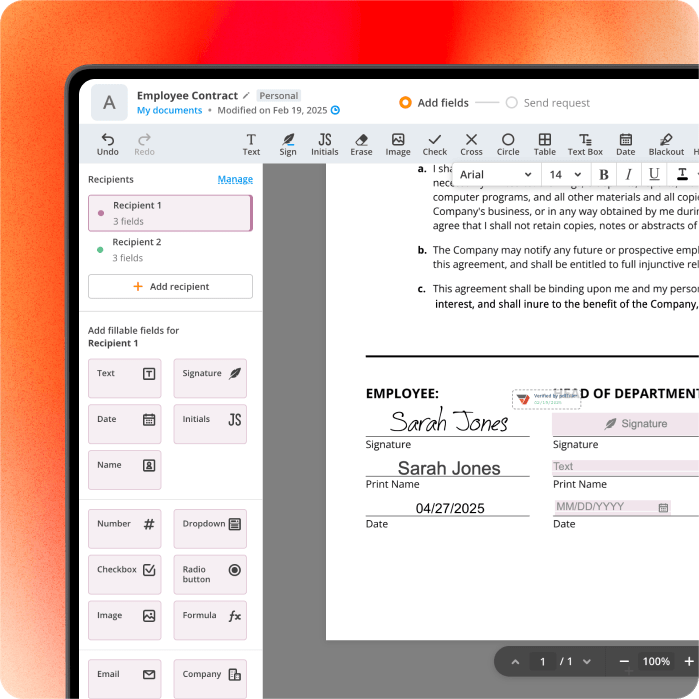
- Switch to Add Fields mode to begin adding signature fields to your document.
- Assign fields to specific recipients by selecting their names from the list.
- Use drag-and-drop functionality to place signature fields and other form fields precisely where needed.
- Ensure each field is clearly labeled to avoid confusion for recipients.
- Review the placement of all fields before finalizing the document.
- Save your changes to keep the assigned fields intact.
- Test the document to ensure all fields function correctly before sending.
Adding and Managing Recipients
To manage recipients effectively, start by adding signers and viewers by their email addresses. Ensure you assign roles before sending the document to clarify each recipient's responsibilities. You can also set signing order preferences, which dictate the sequence in which recipients will receive the document for signing. This ensures a smooth workflow and helps maintain organization throughout the signing process.
Configuring Signing Order
Understanding the signing order is crucial for effective document management. You can choose between sequential and parallel signing methods. Sequential signing requires each signer to complete their part before the next signer receives the document, which is ideal for sensitive agreements. In contrast, parallel signing allows multiple signers to review and sign the document simultaneously, speeding up the process. Knowing when to use each method can significantly impact your document flow.
Step-by-Step Instructions for Requesting Signatures
- Select the document you wish to send for signatures from your pdfFiller account.
- Add the necessary fields for signatures and other inputs as required.
- Include all recipients by entering their email addresses and assigning roles.
- Set the signing order preferences if applicable to your document.
- Review the document to ensure all information is correct and complete.
- Send the signature request to all recipients by clicking the send button.
- Monitor the status of the request to track who has signed and who is pending.
Tracking Signing Progress
To monitor the status of your signature requests, you can view who has signed and who is still pending. This feature allows you to stay informed about the progress of each document. If necessary, you have the option to resend requests to recipients who have not yet signed. Additionally, you can cancel requests if the situation changes or if you need to make adjustments to the document.
Setting Reminders and Expiration Deadlines
Setting reminders for signers is a crucial step in ensuring timely responses. You can configure reminders to notify recipients about pending signatures. It's also important to establish expiration dates for signing, which helps to create urgency and encourages prompt action. Customizing reminders allows you to tailor the communication to fit your needs and improve the likelihood of timely completion.
Understanding the Audit Trail
The audit trail captures essential information about the signing process, including timestamps and IP addresses. This record is vital for legal enforceability, providing a clear history of who signed the document and when. Accessing the audit trail is straightforward, allowing you to review the signing history whenever necessary for compliance or verification purposes.
Legal Validity of E-Signatures
Understanding the legal validity of e-signatures is important for businesses. Compliance with the ESIGN Act and UETA ensures that e-signatures are legally enforceable. This legal standing is crucial for protecting your agreements and contracts, making it essential for any business that relies on digital signatures to understand these regulations.
Common Use Cases for Requesting Signatures
- Sending service contracts to clients for approval and signature.
- Routing employment agreements to new hires for quick onboarding.
- Collecting NDAs from partners or vendors to protect sensitive information.
Next Steps for Using pdfFiller
To continue using pdfFiller effectively, explore other features that enhance your document management capabilities. Consider integrating pdfFiller with your existing workflows to maximize efficiency. Additionally, access support resources to help you navigate any challenges and make the most of the platform.
How Does pdfFiller Compare?
DocuSign offers extensive features but can be costly for SMBs. Tradeoff: Higher price point for advanced functionalities.
Adobe Acrobat Sign integrates well with Adobe products but may require more technical setup. Tradeoff: Complexity can deter non-technical users.
PandaDoc provides robust document management features but lacks some e-signature capabilities. Tradeoff: Limited e-signature focus compared to pdfFiller.