
Last updated on
Oct 2, 2026

Get the free Ex Parte Application and Order to Serve Summons by Posting
We are not affiliated with any brand or entity on this form

Fill out
Complete the form online in a simple drag-and-drop editor.

eSign
Add your legally binding signature or send the form for signing.

Share
Share the form via a link, letting anyone fill it out from any device.

Export
Download, print, email, or move the form to your cloud storage.
Why pdfFiller is the best tool for your documents and forms


End-to-end document management
From editing and signing to collaboration and tracking, pdfFiller has everything you need to get your documents done quickly and efficiently.
Accessible from anywhere
pdfFiller is fully cloud-based. This means you can edit, sign, and share documents from anywhere using your computer, smartphone, or tablet.
Secure and compliant
pdfFiller lets you securely manage documents following global laws like ESIGN, CCPA, and GDPR. It's also HIPAA and SOC 2 compliant.
What is Ex Parte Summons Posting
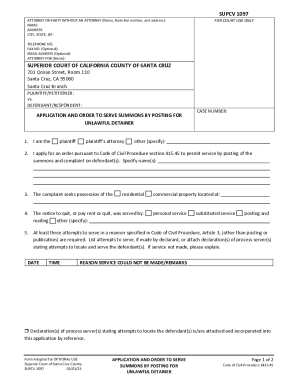
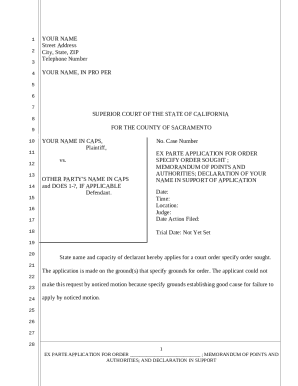
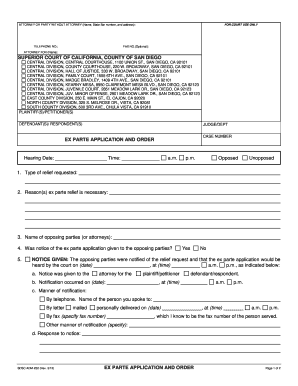
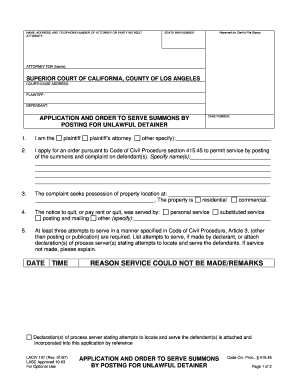
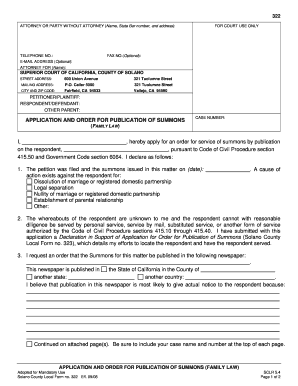
The Ex Parte Application and Order to Serve Summons by Posting is a legal document used by landlord-tenant plaintiffs in California to request authorization to serve a summons and complaint through posting on the defendant's property.
pdfFiller scores top ratings on review platforms




Who needs Ex Parte Summons Posting?
Explore how professionals across industries use pdfFiller.

Ex Parte Summons Posting is needed by:
-
Landlords needing to evict tenants
-
Attorneys representing plaintiffs in civil cases
-
Process servers authorized to deliver legal documents
-
Individuals involved in landlord-tenant disputes
-
Housing advocates assisting tenants
-
Court clerks handling legal filings
Comprehensive Guide to Ex Parte Summons Posting
What is the Ex Parte Application and Order to Serve Summons by Posting?
The Ex Parte Application and Order to Serve Summons by Posting is a legal document utilized in California landlord-tenant cases. Its primary function is to facilitate the serving of legal summons and complaints through posting on the defendant's property in certain eviction scenarios. This method is permitted under specific legal grounds, allowing landlords to bypass traditional service methods when circumstances necessitate it.
This form becomes necessary when standard attempts to serve summons fail, ensuring that landlords can continue their eviction processes without undue delay. Understanding the appropriate contexts for its use is crucial for both plaintiffs and their attorneys seeking enforcement of legal rights.
Benefits of Using the Ex Parte Application and Order to Serve Summons by Posting
Utilizing the Ex Parte Application and Order to Serve Summons by Posting presents several advantages
-
Expedites the eviction process by allowing a more efficient service method.
-
Ensures legal protection by adhering to California laws surrounding evictions.
-
Avoids potential delays that may arise from unsuccessful service attempts.
These benefits make it an essential tool for plaintiffs and process servers who seek to navigate the complexities of civil court effectively.
Who Should Use the Ex Parte Application and Order to Serve Summons by Posting?
This form is particularly relevant for individuals classified as plaintiffs, such as landlords seeking to regain possession of their properties, as well as process servers who are responsible for delivering legal documents. It is also applicable in scenarios involving attorneys representing landlords in eviction cases.
Key considerations include understanding when it is appropriate to file this application, as well as the implications for both landlords and tenants involved in the eviction process.
Eligibility Criteria for Filing the Ex Parte Application and Order to Serve Summons by Posting
To qualify for filing the Ex Parte Application and Order to Serve Summons by Posting, applicants must demonstrate specific eligibility criteria. This includes:
-
Proof of property ownership or legal entitlement to initiate eviction proceedings.
-
Evidencing prior attempts to serve the summons in compliance with legal requirements.
-
Acknowledgment of the legal consequences of inadequately meeting these criteria.
These requirements help safeguard the legal integrity of eviction processes within California's judicial system.
How to Fill Out the Ex Parte Application and Order to Serve Summons by Posting: Step-by-Step Guide
Completing the Ex Parte Application and Order to Serve Summons by Posting involves a detailed process that must be followed accurately to ensure acceptance. Users should:
-
Begin by entering personal details as the plaintiff or process server.
-
Provide accurate information about the defendant and the property related to the case.
-
Include any previous service attempts, detailing dates and methods used.
-
Review the form for potential errors that could lead to rejection.
-
Sign the application ensure both the plaintiff and process server have signed.
Paying attention to detail during this process is critical for a smooth submission.
Submission Process for the Ex Parte Application and Order to Serve Summons by Posting
Once the Ex Parte Application is completed, users have several submission methods available:
-
Online submission through the appropriate court's website.
-
In-person submission at the designated court office.
It is essential to be aware of important deadlines and associated processing times to avoid delays. Additionally, users should consider any potential fees that may be incurred during the submission process.
Understanding Post-Submission Procedures for the Ex Parte Application and Order to Serve Summons by Posting
After submitting the Ex Parte Application, users should track their submission status. This involves:
-
Checking for confirmation of receipt from the court.
-
Understanding the subsequent steps in the eviction process.
-
Recognizing potential avenues to correct or amend the form if issues arise.
Being proactive in following these post-submission procedures can greatly enhance the efficiency of the eviction process.
Security and Compliance Considerations for the Ex Parte Application and Order to Serve Summons by Posting
The handling of the Ex Parte Application and Order to Serve Summons by Posting requires adherence to strict security measures. Users should be aware of pdfFiller's commitment to data protection, including:
-
Implementation of 256-bit encryption to safeguard documents.
-
Compliance with SOC 2 Type II, HIPAA, and GDPR regulations.
This focus on security ensures that sensitive information remains confidential during the entire process.
How pdfFiller Simplifies the Process of Completing the Ex Parte Application and Order to Serve Summons by Posting
pdfFiller’s platform offers numerous features that streamline the completion of the Ex Parte Application and Order to Serve Summons by Posting. Users benefit from:
-
An online environment for filling and signing forms effortlessly.
-
Auto-saving and easy editing capabilities.
-
User-friendly interface that enhances the form-filling experience.
These functionalities make the process more accessible and efficient for users.
Explore the Sample of a Completed Ex Parte Application and Order to Serve Summons by Posting
Viewing a sample of a completed Ex Parte Application and Order to Serve Summons by Posting can greatly aid users in understanding how to properly fill out the form. The sample provides:
-
A visual representation of a filled-out form with annotated explanations.
-
Insights into common pitfalls to avoid while completing the form.
-
Encouragement to utilize pdfFiller for creating personal versions of the form based on the sample.
This resource acts as a valuable reference point for effective form completion.
How to fill out the Ex Parte Summons Posting
-
1.To begin, access pdfFiller and search for 'Ex Parte Application and Order to Serve Summons by Posting'.
-
2.Once you find the form, click on it to open within the pdfFiller editor.
-
3.Familiarize yourself with the form layout, ensuring that you understand the fillable fields and checkboxes.
-
4.Before starting, gather the necessary information, including details about the plaintiff, the defendant, and the property address in question.
-
5.In the editor, begin filling in your name and contact information in the designated fields.
-
6.Next, provide defendant details, including their name and statement of attempts to serve them.
-
7.Continue by accurately filling out the property details where the summons posting will occur.
-
8.Use checkboxes to specify your role as the plaintiff or other relevant role, if applicable.
-
9.Review all information entered to ensure accuracy, paying special attention to spelling and legal terminology.
-
10.Once satisfied, utilize the tools available in pdfFiller to electronically sign the form.
-
11.After completing the form, check for any prompts regarding missing information or errors.
-
12.To save your progress, click the save icon, or download the completed document to your device.
-
13.If required, submit the form electronically through the court's filing system as instructed.

Who is eligible to use this form?
This form is primarily for landlords or their attorneys who need to serve a summons to a tenant in California. Process servers may also use it when acting on behalf of plaintiffs.
What supporting documents are needed with this form?
Typically, you'll need to include a complaint, any proof of previous service attempts, and possibly a declaration of service if required by the court.
How do I submit the completed form?
After completing the form on pdfFiller, you can download it and submit it in person at the court or follow local guidelines for electronic submission via the court's online system.
Are there deadlines for submitting this application?
There are no strict deadlines for the application itself; however, timing may be essential based on eviction timelines and local court procedures. Be sure to act promptly to avoid delays in your case.
What are some common mistakes to avoid?
Ensure you double-check all information for accuracy, particularly the defendant's name and property details. Failing to properly sign the form or submit required supporting documents is another common error.
What happens after submitting this form?
After submission, the court will review your application. If approved, you will receive the order allowing you to serve summons by posting.
Is notarization required for this form?
No, notarization is not required for the Ex Parte Application and Order to Serve Summons by Posting; however, signatures from the plaintiff and process server are mandatory.
Related Content
Related Forms





Get the latest insights from our blog


If you believe that this page should be taken down, please follow our DMCA take down process
here
.
This form may include fields for payment information. Data entered in these fields is not covered by PCI DSS compliance.