
Last updated on
Nov 6, 2026

Tenants 30 Day Notice to Landlord free printable template
pdfFiller is not affiliated with any government organization

Fill out
Complete the form online in a simple drag-and-drop editor.

eSign
Add your legally binding signature or send the form for signing.

Share
Share the form via a link, letting anyone fill it out from any device.

Export
Download, print, email, or move the form to your cloud storage.
Why pdfFiller is the best tool for your documents and forms


End-to-end document management
From editing and signing to collaboration and tracking, pdfFiller has everything you need to get your documents done quickly and efficiently.
Accessible from anywhere
pdfFiller is fully cloud-based. This means you can edit, sign, and share documents from anywhere using your computer, smartphone, or tablet.
Secure and compliant
pdfFiller lets you securely manage documents following global laws like ESIGN, CCPA, and GDPR. It's also HIPAA and SOC 2 compliant.
What is Tenants 30 Day Notice to Landlord
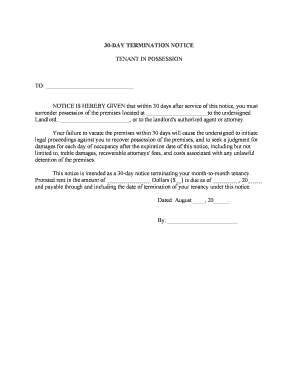
The Tenant’s 30 Day Notice to Landlord is a legal document used by tenants in the United States to formally notify their landlord of intentions to vacate the rental unit within a 30-day timeframe.
pdfFiller scores top ratings on review platforms




Who needs Tenants 30 Day Notice to Landlord?
Explore how professionals across industries use pdfFiller.

Tenants 30 Day Notice to Landlord is needed by:
-
Tenants planning to move out of their rental units
-
Landlords requiring written notice from tenants
-
Property management companies overseeing rental agreements
-
Real estate agents advising clients on lease terminations
-
Legal professionals assisting tenants with housing issues
Comprehensive Guide to Tenants 30 Day Notice to Landlord
What is the Tenant’s 30 Day Notice to Landlord?
The Tenant’s 30 Day Notice to Landlord is a form utilized by tenants to formally communicate their intent to vacate a rental unit within a specified timeframe of 30 days. This notice is essential for individuals wishing to terminate a residential lease agreement. Tenants must submit this form to their landlord to comply with lease requirements and avoid potential legal complications.
Using the tenant 30 day notice form is vital for ensuring that both tenants and landlords are on the same page regarding the move-out process. The form serves as a legally recognized document that outlines the tenant’s last day of occupancy, thus formally documenting their intent to leave.
Purpose and Benefits of the Tenant’s 30 Day Notice to Landlord
The Tenant’s 30 Day Notice serves several important purposes within the rental process. First and foremost, it's crucial for legally notifying the landlord of the tenant's intention to move out. By providing this notice, tenants can mitigate misunderstandings regarding the lease termination date.
Another significant benefit is the facilitation of the return of the security deposit. When landlords receive the notice, they can arrange for a walkthrough of the rental unit, reducing disputes over deductions from the deposit. Additionally, using this formal notification can help tenants avoid potential legal issues that may arise from orally communicating their move-out plans.
Who Needs the Tenant’s 30 Day Notice to Landlord?
The Tenant’s 30 Day Notice is necessary for all types of renters who intend to terminate their residential lease. Situations that may prompt its use include job relocations, financial difficulties, or personal choices such as moving in with family or purchasing a home.
Both tenants and landlords play essential roles in this process. Tenants must provide clear communication about their intent, while landlords must acknowledge receipt and ensure compliance with local regulations surrounding notice periods.
Key Features of the Tenant’s 30 Day Notice to Landlord
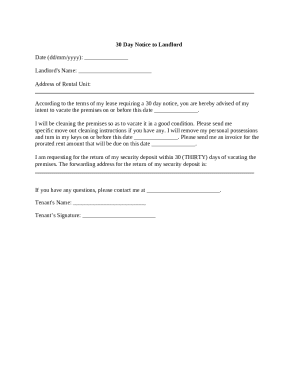
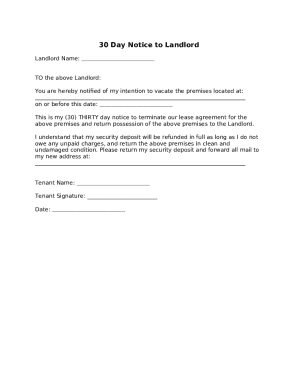
This notice form comprises several essential fields that tenants must accurately complete. Key features include:
-
Landlord's Name
-
Address of Rental Unit
-
Date of Vacating
-
Forwarding Address for Security Deposit
-
Tenant's Signature
Additionally, the form contains instructions such as requesting any specific move-out cleaning requirements from the landlord. Understanding security and compliance features related to using this form is also crucial for tenant protection.
How to Fill Out the Tenant’s 30 Day Notice to Landlord Online (Step-by-Step)
Completing the Tenant’s 30 Day Notice online is straightforward. Follow this step-by-step guide to ensure accuracy:
-
Access the notice form via pdfFiller.
-
Enter the current date in the designated field.
-
Fill in the landlord's name and the rental unit's address.
-
Specify your intended move-out date.
-
Add your forwarding address for the security deposit.
-
Sign the form electronically.
Having complete and accurate information in each fillable field is critical for a smooth submission process. Double-check all entries before finalizing the form.
Submission Methods for the Tenant’s 30 Day Notice to Landlord
Various methods can be employed to submit the completed Tenant’s 30 Day Notice to the landlord. Options include:
-
Emailing the notice directly to the landlord.
-
Mailing a hard copy of the notice.
-
Delivering it in person during business hours.
Landlords should provide acknowledgment of receipt, which is essential for the tenant’s records. In some cases, there may be fees associated with mailing the notice, depending on the mailing service used.
What Happens After You Submit the Tenant’s 30 Day Notice to Landlord?
After submitting the Tenant’s 30 Day Notice, tenants can expect to enter the next phase of their move-out process. Landlords will typically arrange a walkthrough of the rental unit to assess its condition. This activity is essential for determining the status of the security deposit return.
It's crucial for tenants to maintain communication with their landlords post-submission to confirm any details regarding the move-out procedure and to clarify expectations for the condition of the property.
Common Errors and How to Avoid Them When Using the Tenant’s 30 Day Notice to Landlord
While filling out the Tenant’s 30 Day Notice, tenants may encounter several common errors. Here are some pitfalls to avoid:
-
Omitting any personal or rental unit details.
-
Failing to sign or date the notice.
To minimize errors, it is advisable to review the completed form before submission. Utilizing tools like pdfFiller can streamline this process, offering features that ensure all required fields are filled out correctly.
Security and Compliance When Using the Tenant’s 30 Day Notice to Landlord
Security is a paramount concern when handling sensitive documents like the Tenant’s 30 Day Notice. pdfFiller employs security features such as 256-bit encryption to protect user data. Understanding compliance with relevant regulations, including HIPAA and GDPR, further adds to the peace of mind for users.
Ensuring that personal information remains confidential is essential when submitting the Tenant’s 30 Day Notice, affirming the importance of choosing a secure platform for such transactions.
Start Completing Your Tenant’s 30 Day Notice to Landlord
If you are ready to complete your Tenant’s 30 Day Notice, consider utilizing pdfFiller for a user-friendly online experience. The platform offers an efficient way to fill out and submit your notice securely, ensuring that you stay compliant with your lease requirements.
With pdfFiller's tailored tools and resources, you can streamline the process of document management, making it easier to focus on your upcoming move.
How to fill out the Tenants 30 Day Notice to Landlord
-
1.To access the Tenant’s 30 Day Notice to Landlord form on pdfFiller, visit the pdfFiller website and search for the form by name in the search bar.
-
2.Once you find the form, click on it to open it in the pdfFiller editor.
-
3.Begin gathering essential information, including the landlord’s name, the address of your rental unit, and your intended vacating date.
-
4.In the pdfFiller interface, click on the first fillable field to enter the date as per the specified format (dd/mm/yyyy).
-
5.Next, move to the field labeled ‘Landlord's Name’ and input the name accurately to ensure clear communication.
-
6.Continue filling out the ‘Address of Rental Unit’ section with the complete and correct address to prevent any confusion.
-
7.Be sure to provide your forwarding address where the security deposit should be sent after your move.
-
8.After completing all required fields, review the form to check for any errors or missing information to ensure accuracy.
-
9.Once verified, go to the options provided by pdfFiller to save the document, either by downloading it or submitting it directly to your landlord via email.
-
10.Make sure to retain a copy for your records by saving the completed form to your device.

What is the purpose of the Tenant's 30 Day Notice to Landlord?
The Tenant's 30 Day Notice to Landlord serves as a formal notification from tenants indicating their intention to vacate a rental unit within a specified period of 30 days.
Who is eligible to use this form?
Only tenants currently renting a property and intending to end their lease can use this form to notify their landlord formally.
Are there any deadlines for submitting this notice?
Yes, tenants must submit the notice at least 30 days before their planned move-out date to comply with typical lease agreements.
What should I include when completing the form?
Make sure to include your name, the landlord’s name, the address of the rental unit, the date of vacating, and a forwarding address for security deposit return.
How do I submit the completed notice?
You can submit the completed notice via email to your landlord or deliver it in person. Additionally, ensure you keep a copy for your records.
What common mistakes should I avoid when filling out the form?
Avoid leaving any fields blank, and double-check the accuracy of the addresses and names provided to prevent disputes.
Is notarization required for this form?
No, notarization is not required for the Tenant’s 30 Day Notice to Landlord; however, it is advisable to keep a signed copy for your records.



Related Catalogs
Get the latest insights from our blog


If you believe that this page should be taken down, please follow our DMCA take down process
here
.
This form may include fields for payment information. Data entered in these fields is not covered by PCI DSS compliance.