
Last updated on
Nov 9, 2026

CA Third Party Claim 2013-2026 free printable template
pdfFiller is not affiliated with any government organization

Fill out
Complete the form online in a simple drag-and-drop editor.

eSign
Add your legally binding signature or send the form for signing.

Share
Share the form via a link, letting anyone fill it out from any device.

Export
Download, print, email, or move the form to your cloud storage.
Why pdfFiller is the best tool for your documents and forms


End-to-end document management
From editing and signing to collaboration and tracking, pdfFiller has everything you need to get your documents done quickly and efficiently.
Accessible from anywhere
pdfFiller is fully cloud-based. This means you can edit, sign, and share documents from anywhere using your computer, smartphone, or tablet.
Secure and compliant
pdfFiller lets you securely manage documents following global laws like ESIGN, CCPA, and GDPR. It's also HIPAA and SOC 2 compliant.
What is CA Third Party Claim
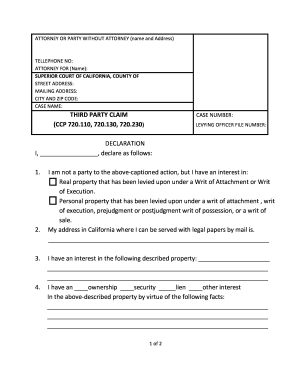
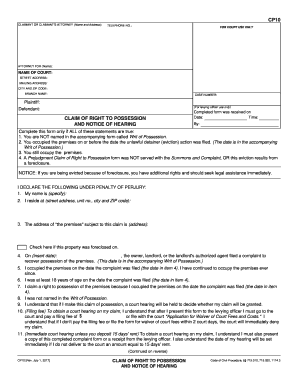
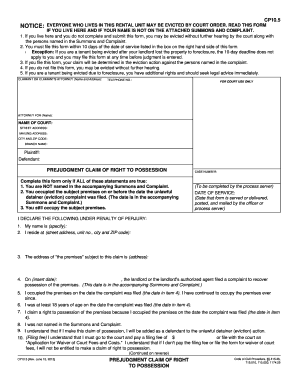
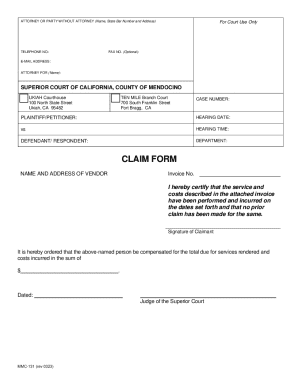
The California Third Party Claim Form is a legal document used by individuals with an interest in property to assert their claim against property that has been levied upon.
pdfFiller scores top ratings on review platforms




Who needs CA Third Party Claim?
Explore how professionals across industries use pdfFiller.

CA Third Party Claim is needed by:
-
Property owners seeking to reclaim their asset.
-
Individuals affected by a writ of attachment or execution.
-
Legal representatives acting on behalf of a claimant.
-
Tenants with a claim on levied property.
-
Creditors with interest in assets subject to court action.
Comprehensive Guide to CA Third Party Claim
Understanding the California Third Party Claim Form
The California Third Party Claim Form serves as a crucial document for individuals who have a legitimate interest in property subjected to legal levies. It allows claimants to assert their rights in situations involving a writ of attachment, execution, or possession. By recognizing the importance of this form, third parties can protect their vested interests effectively.
This form addresses scenarios where claims arise due to liens or other legal actions impacting property ownership. Understanding the purpose of the California Third Party Claim Form is essential for anyone maneuvering through legal processes related to levied property.
Purpose and Benefits of the California Third Party Claim Form
The primary purpose of using the California Third Party Claim Form is to secure a legal declaration of interest in property that has been levied. Filing this form correctly carries significant legal implications, providing claimants with a structured way to present their case.
Among the benefits of this form is the ability to protect interests in property and pursue rightful claims. Moreover, utilizing this form can lead to more efficient legal procedures, potentially minimizing disputes and facilitating smoother resolution processes.
Who Needs the California Third Party Claim Form?
The California Third Party Claim Form is essential for individuals or entities with a legitimate stake in property levied upon by the court. This includes creditors seeking to reclaim assets or parties who believe their rights may be infringed upon.
Third parties such as business partners, family members, or other stakeholders may need to file this claim under relevant circumstances. Eligibility criteria require an established interest in the property and qualifications defined by California's legal standards.
Step-by-Step Guide to Filling Out the California Third Party Claim Form
Filling out the California Third Party Claim Form requires adherence to clear and systematic steps. Begin by gathering necessary information about the claim, including the name and address of the claimant.
-
Obtain the California Third Party Claim Form from an official source.
-
Complete essential fields: claimant's name, address, and property description.
-
Detail the type of interest in the property and estimated market value.
-
Prepare any required supporting documents for accuracy.
-
Review the completed form before submission for potential errors.
-
Sign and date the form to validate the claim.
Each step is vital in ensuring that the form is filled out correctly and comprehensively.
Common Mistakes When Filing the California Third Party Claim Form
Many claimants make frequent errors during the submission of the California Third Party Claim Form. Common mistakes include leaving fields blank, incorrect property valuation, and inadequate supporting documentation.
To avoid these pitfalls, it is advisable to validate the form prior to submission. Review the completed document against the requirements and consult available resources for support if complications arise during the filing process.
How to Submit the California Third Party Claim Form
Submitting the California Third Party Claim Form can be accomplished through various methods. Users have the option to file online or via traditional mail depending on preference and availability.
When submitting online, ensure to track the submission status, while mailed forms should be sent via a reliable service with delivery confirmation. Be aware of any associated fees for processing and understand the expected response time for your claim.
What Happens After You Submit the California Third Party Claim Form?
Once submitted, the California Third Party Claim Form undergoes a thorough review process. Claimants will be notified regarding the status of their submission, which may be accepted or rejected based on compliance with legal standards.
If faced with rejection, claimants can amend their claims according to provided guidelines. Additionally, keeping track of submission status through appropriate channels is recommended for timely follow-up.
Leveraging pdfFiller for Your California Third Party Claim Form Needs
pdfFiller significantly enhances the experience of filling out the California Third Party Claim Form. Its features, such as online editing and eSigning, streamline the process for users, allowing them to manage documents effectively from any device.
The platform's user-friendly interface simplifies navigating through necessary fields and supports individuals in completing their claims. Security features safeguard sensitive information, ensuring a safe submission process.
Ensuring Compliance and Security When Filling Out the California Third Party Claim Form
When utilizing pdfFiller for the California Third Party Claim Form, users can feel confident in the security measures implemented, such as data encryption and compliance with state and federal regulations.
Adhering to California's legal standards is essential for a successful filing. pdfFiller prioritizes data protection practices, aiming to keep user information secure and confidential throughout the process.
Start Filing Your California Third Party Claim Form Effortlessly
With pdfFiller, individuals are encouraged to utilize the platform for a convenient approach to filling out the California Third Party Claim Form. The tool allows users to complete and manage documents easily, enhancing their filing experience.
Users can engage with the platform from any device, enjoy positive outcomes, and leverage testimonials from others benefiting from the service to feel assured in their choices.
How to fill out the CA Third Party Claim
-
1.Access the California Third Party Claim Form on pdfFiller by searching for the form name in the site’s search bar or navigating to the legal forms section.
-
2.Once the form is open, familiarize yourself with the fields including name, address, property description, type of interest, and estimated market value.
-
3.Before starting, gather essential information such as your personal details, property specifics, and any supporting documents that will substantiate your claim.
-
4.Begin by inputting your full name and address in the allocated fields. Ensure the information is accurate as it will be used for legal correspondence.
-
5.Next, provide a detailed description of the property in question along with the type of interest you hold. Be specific and clear about your claim to avoid confusion.
-
6.Estimate the market value of the property and enter that information in the designated field. You may want to consult property records or appraisals for accuracy.
-
7.Upload any necessary supporting documents through pdfFiller's file upload feature. Ensure these documents are relevant and strengthen your claim.
-
8.Review all entered information carefully, checking for errors or omissions. It is crucial that your claim is presented accurately to the court.
-
9.Once satisfied with the form, proceed to sign and date the document. This signature confirms your assertion and authenticity of the claim.
-
10.Finally, save your completed form within pdfFiller. You can download it as a PDF or submit it directly through the platform according to the court's requirements.

Who is eligible to file the California Third Party Claim Form?
Anyone who has a legitimate interest in the property being claimed can file this form. This includes property owners, tenants, or legal representatives acting on behalf of a claimant.
What documents do I need to support my claim?
You will need to gather documents that can demonstrate your interest in the property, such as property deeds, agreements, or any correspondence linking you to the asset in question.
How do I submit the completed form?
You can submit the completed California Third Party Claim Form by mailing it to the appropriate court or by following submission guidelines through pdfFiller for direct filing.
Are there deadlines for submitting this claim form?
Yes, there may be deadlines for submitting claims based on the court's schedule and the nature of the levy. It is advisable to check the court's specific requirements to ensure timely submission.
What are common mistakes to avoid when filling out this form?
Common errors include incomplete fields, incorrect property descriptions, and missing supporting documents. Always double-check your form before submission to prevent delays.
What is the processing time for claims filed with this form?
Processing times can vary depending on the court's workload and specific case details. Typically, expect a few weeks for the court to review and respond to your filed claim.
Is notarization required for this form?
No, the California Third Party Claim Form does not require notarization. However, ensure you sign it before submission as your signature verifies its validity.

Get the latest insights from our blog


If you believe that this page should be taken down, please follow our DMCA take down process
here
.
This form may include fields for payment information. Data entered in these fields is not covered by PCI DSS compliance.