
Last updated on
Oct 31, 2026
Get the free Bladder Diary Frequency/Volume Chart
We are not affiliated with any brand or entity on this form

Fill out
Complete the form online in a simple drag-and-drop editor.

eSign
Add your legally binding signature or send the form for signing.

Share
Share the form via a link, letting anyone fill it out from any device.

Export
Download, print, email, or move the form to your cloud storage.
Why pdfFiller is the best tool for your documents and forms


End-to-end document management
From editing and signing to collaboration and tracking, pdfFiller has everything you need to get your documents done quickly and efficiently.
Accessible from anywhere
pdfFiller is fully cloud-based. This means you can edit, sign, and share documents from anywhere using your computer, smartphone, or tablet.
Secure and compliant
pdfFiller lets you securely manage documents following global laws like ESIGN, CCPA, and GDPR. It's also HIPAA and SOC 2 compliant.
What is Bladder Diary
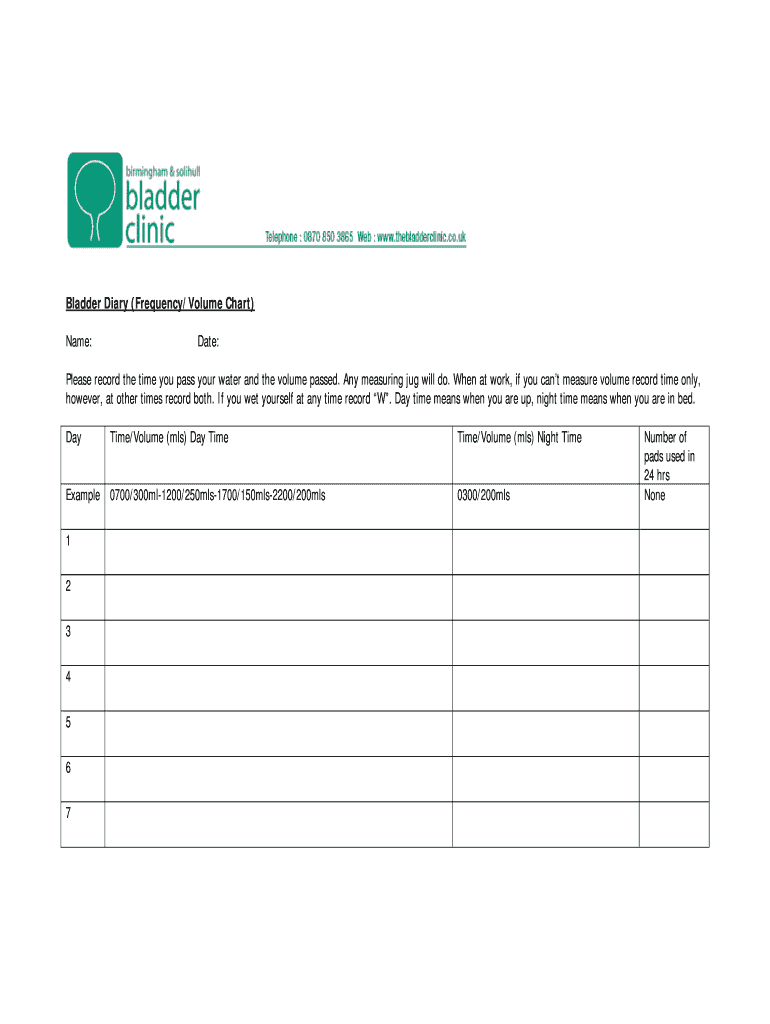
The Bladder Diary Frequency/Volume Chart is a healthcare form used by patients to monitor their bladder function by recording the time and volume of urine passed throughout the day and night.
pdfFiller scores top ratings on review platforms




Who needs Bladder Diary?
Explore how professionals across industries use pdfFiller.

Bladder Diary is needed by:
-
Patients monitoring bladder health
-
Healthcare providers assessing urinary function
-
Specialists in urology or nephrology
-
Caregivers assisting patients with tracking
-
Researchers studying urinary patterns
-
Clinics requiring patient data for treatment
Comprehensive Guide to Bladder Diary
What is the Bladder Diary Frequency/Volume Chart?
The Bladder Diary Frequency/Volume Chart is a healthcare tool designed for monitoring bladder function. This bladder diary template serves a critical role in tracking patients' urinary habits, helping healthcare providers diagnose and treat urinary issues effectively. By documenting details such as frequency and volume of urination, this form aids in creating a comprehensive view of a patient’s bladder health.
Utilizing a bladder function chart allows for a systematic approach to identifying patterns and potential problems related to urinary function. This patient-centric approach enhances communication between patients and healthcare providers.
Purpose and Benefits of Using the Bladder Diary Frequency/Volume Chart
Patients who utilize the bladder diary frequency/volume chart gain invaluable insights into their urinary habits. Tracking urination over a specified period provides measurable data that assists healthcare professionals in understanding an individual's bladder health. This form encourages a proactive approach to health management.
-
Identify irregularities in urination patterns.
-
Facilitate discussions with healthcare providers based on accurate data.
-
Empower patients to take charge of their bladder health.
Key Features of the Bladder Diary Frequency/Volume Chart
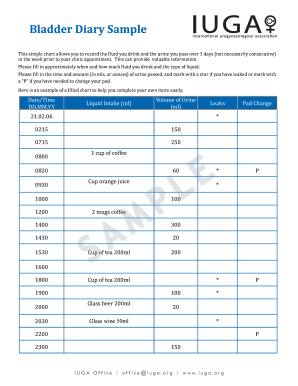
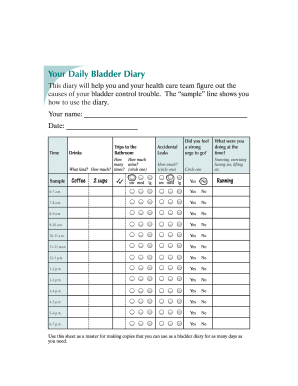
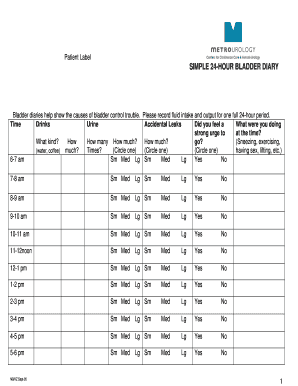
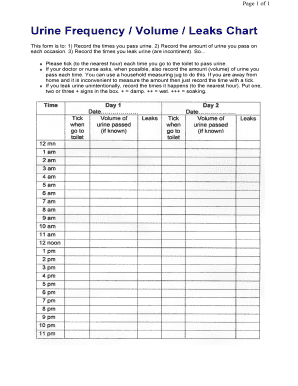
The bladder diary frequency/volume chart includes essential fields designed for user-friendliness. Patients enter the time and volume of urine passed and can check pad usage via convenient checkboxes. This structured format simplifies the recording process and aids in maintaining consistent entries across days.
-
Time and volume fields for each entry.
-
Pad usage checkboxes for better tracking.
-
Clear instructions available for accurate use.
Who Should Use the Bladder Diary Frequency/Volume Chart?
The bladder diary frequency/volume chart is beneficial for individuals experiencing symptoms related to their urinary patterns. Conditions like frequent urination, incontinence, or urinary retention may require careful observation of one’s urination habits. Healthcare providers, including urologists and general practitioners, often recommend this form to patients experiencing such symptoms.
This urinary tracking form is applicable to a wide demographic, ensuring that various health conditions related to bladder function are monitored appropriately.
How to Fill Out the Bladder Diary Frequency/Volume Chart: Step-by-Step Guide
To ensure accurate data collection when using the bladder diary frequency/volume chart, follow these steps:
-
Record the time of each urination as it occurs throughout the day and night.
-
Note the volume of urine passed in milliliters for each entry.
-
Indicate any pad usage by checking the relevant box.
-
Maintain consistency in entering data at regular intervals (e.g., every hour).
Accurate recording helps both patients and healthcare providers assess bladder function effectively. Consistency in tracking enhances the reliability of the information provided.
Common Errors When Completing the Bladder Diary Frequency/Volume Chart
When filling out the bladder diary frequency/volume chart, users may encounter several common errors. Frequent mistakes include inaccurate time entries and volume measurements. These inaccuracies can lead to misinterpretation of data.
-
Double-check the time to ensure accuracy.
-
Use a measuring cup for precise volume entries.
-
Regularly review entries to maintain consistency.
How to Submit Your Bladder Diary Frequency/Volume Chart
After completing the bladder diary frequency/volume chart, users can submit their forms to healthcare providers through various methods. Submissions can be made in person as a physical document or sent electronically as a scanned file or through a secure email.
It is essential to follow up with healthcare providers to confirm receipt and clarify any questions regarding the submitted information.
Security and Compliance When Using the Bladder Diary Frequency/Volume Chart
Maintaining the privacy and security of health-related information is crucial when using the bladder diary frequency/volume chart. Users must ensure that submitted forms are secured and compliant with regulations such as HIPAA.
pdfFiller implements robust security measures, including 256-bit encryption and adherence to regulatory standards, ensuring that user data remains protected throughout the entire process.
Easily Complete Your Bladder Diary Frequency/Volume Chart with pdfFiller
pdfFiller simplifies the process of completing the bladder diary frequency/volume chart by offering intuitive features such as eSigning and secure document management. Users can edit, fill, and sign forms directly in their browser, making it convenient and efficient.
With over 100 million users, pdfFiller has a proven track record that enhances the experience of completing important healthcare forms like the bladder function chart, fostering a smoother interaction between patients and their healthcare providers.
How to fill out the Bladder Diary
-
1.Access the Bladder Diary Frequency/Volume Chart on pdfFiller by navigating to the pdfFiller library and searching for the form name.
-
2.Once opened, familiarize yourself with the layout of the form, which includes blank fields for each time interval and volume recorded.
-
3.Gather necessary information before starting, such as your usual daily urination patterns and any specific instructions from your healthcare provider.
-
4.Begin filling in the form by entering the exact time you urinate in the designated time field. Be as precise as possible.
-
5.Next, enter the volume of urine in the corresponding field. This may require a measuring cup or urinal to ensure accuracy.
-
6.For nighttime usage, check the appropriate box to indicate whether the urination occurred during the night.
-
7.If you use pads, indicate your usage by marking the checkbox provided for pad usage during the specified times.
-
8.After completing all fields, take a moment to review your entries for accuracy and completeness, ensuring no information is left out.
-
9.Once satisfied with your entries, finalize the form by clicking the save button on pdfFiller to store your data.
-
10.You can download the completed form or submit it electronically via the submission options provided in the pdfFiller platform.

Who should complete the Bladder Diary?
The Bladder Diary should be completed by patients who are monitoring their urinary habits, as well as by caregivers assisting these patients. Healthcare providers may also require patients to maintain this record for effective diagnosis.
How often should I fill out the form?
It is recommended to fill out the Bladder Diary at regular intervals throughout the day and night, logging every instance of urination to provide comprehensive data for your healthcare provider.
Can I submit the completed form electronically?
Yes, once you have completed the Bladder Diary on pdfFiller, you can submit it electronically through the platform’s built-in submission feature, ensuring your data reaches the intended healthcare provider.
What if I forget to log an entry?
If you forget to log an entry in the Bladder Diary, simply do your best to estimate the volume and time based on your memory. Consistency is key, so be mindful to log entries as closely as possible.
Are there any special instructions for filling out the form?
Yes, it’s important to carefully note the times and volumes accurately. Ensure proper usage of checkboxes for nighttime and pad usage. Review all entries for completeness before submission.
How long should I keep the completed form?
It is advisable to keep the completed Bladder Diary for your records and any potential follow-up appointments. Your healthcare provider may request to see this information during consultations.
What are common mistakes to avoid when using the form?
Common mistakes include forgetting to log entries or misestimating volumes. Ensure to use a measuring device for accuracy and check all boxes correctly. Double-check your entries before submission.
Related Forms



Get the latest insights from our blog


If you believe that this page should be taken down, please follow our DMCA take down process
here
.
This form may include fields for payment information. Data entered in these fields is not covered by PCI DSS compliance.