
Last updated on
Oct 19, 2026

Get the free Informed Consent for Orthodontic Treatment
We are not affiliated with any brand or entity on this form

Fill out
Complete the form online in a simple drag-and-drop editor.

eSign
Add your legally binding signature or send the form for signing.

Share
Share the form via a link, letting anyone fill it out from any device.

Export
Download, print, email, or move the form to your cloud storage.
Why pdfFiller is the best tool for your documents and forms


End-to-end document management
From editing and signing to collaboration and tracking, pdfFiller has everything you need to get your documents done quickly and efficiently.
Accessible from anywhere
pdfFiller is fully cloud-based. This means you can edit, sign, and share documents from anywhere using your computer, smartphone, or tablet.
Secure and compliant
pdfFiller lets you securely manage documents following global laws like ESIGN, CCPA, and GDPR. It's also HIPAA and SOC 2 compliant.
What is Orthodontic Consent
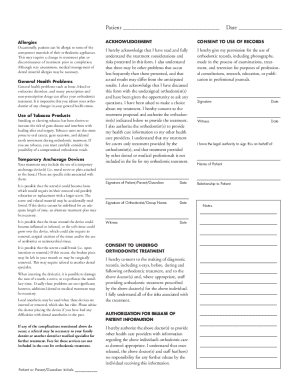
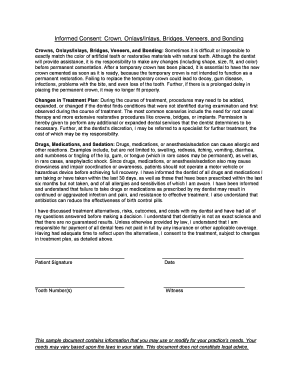
The Informed Consent for Orthodontic Treatment is a patient consent form used by patients and their parents/guardians to acknowledge understanding of the risks and processes involved in orthodontic treatment.
pdfFiller scores top ratings on review platforms




Who needs Orthodontic Consent?
Explore how professionals across industries use pdfFiller.

Orthodontic Consent is needed by:
-
Patients undergoing orthodontic treatment
-
Parents or guardians of minor patients
-
Orthodontists administering treatment
-
Witnesses to the consent process
-
Dental health professionals involved in the treatment
-
Legal guardians responsible for patient consent
Comprehensive Guide to Orthodontic Consent
What is the Informed Consent for Orthodontic Treatment?
The Informed Consent for Orthodontic Treatment is a crucial document that outlines the risks and benefits associated with orthodontic care. This consent form provides a clear understanding of its role, ensuring that patients and guardians acknowledge the treatment expectations and potential outcomes. Recognizing the importance of this document helps foster informed decision-making in the realm of orthodontics.
An informed consent form is foundational to orthodontic practice, necessitating the acknowledgment of risks, benefits, and expected treatment outcomes. Patients are empowered to make educated choices regarding their treatment plans, thus aligning their expectations with the orthodontist's recommendations.
Purpose and Benefits of the Informed Consent for Orthodontic Treatment
The informed consent form serves several critical purposes in orthodontic care, primarily safeguarding both the patient and the orthodontist. By outlining the treatment details and potential risks, this document enhances transparency and builds trust between the parties involved.
Additionally, informed consent plays a significant role in facilitating clear communication, ensuring that everyone involved understands the treatment plan, including its implications. This mutual understanding reinforces the patient-orthodontist relationship, emphasizing the importance of informed decisions.
Key Features of the Informed Consent for Orthodontic Treatment
The Informed Consent for Orthodontic Treatment includes several essential components critical for compliance. Fillable fields such as patient initials, allergies, and signature dates are vital for personalization and accuracy. Furthermore, key sections outline risks, treatment expectations, and required signatures.
-
Patient or Parent/Guardian Initials
-
Date of completion
-
Sections for allergies and relevant medical history
-
Checkboxes for patient acknowledgment
Who Needs the Informed Consent for Orthodontic Treatment?
Several key stakeholders must participate in signing the informed consent form. Primary roles include the patient, parent or guardian, witness, and the orthodontist, each fulfilling a unique responsibility in the consent process.
Specific scenarios may require additional consent or tailored considerations, such as treating minors or patients with special medical needs. Understanding the roles and requirements enhances compliance and thoroughness in the consent process.
How to Fill Out the Informed Consent for Orthodontic Treatment Online (Step-by-Step)
Completing the informed consent form online through pdfFiller is a straightforward process that can be done with these simple steps:
-
Access the informed consent form on pdfFiller's platform.
-
Fill in required fields such as patient information, including allergies.
-
Use checkboxes to confirm understanding of treatment expectations.
-
Ensure all signatures are completed, including that of the orthodontist.
Each step is designed to guide users through the form completion, making the process seamless and efficient.
Digital Signature vs. Wet Signature Requirements
Understanding the signature requirements for the consent form is essential. Digital signatures are generally accepted in the context of medical consent, providing consistency and convenience for users.
However, certain scenarios may still necessitate a wet signature. Examples include situations where specific legal requirements are in place or where physical documentation is preferred for formal records.
Security and Compliance for the Informed Consent for Orthodontic Treatment
User confidence in submitting sensitive information is paramount. pdfFiller ensures compliance with regulations such as HIPAA and GDPR, implementing rigorous security measures to protect patient data. This commitment to privacy reinforces the critical nature of safeguarding private health information.
Patients can trust that their information is handled securely throughout the informed consent process, aligning with best practices in healthcare data management.
How to Download, Print, and Submit the Informed Consent for Orthodontic Treatment
Users can easily download, print, and submit the informed consent form through these methods:
-
Select the download option on the pdfFiller platform to obtain the form.
-
Print the downloaded form for physical signatures if necessary.
-
Submit the completed form to the orthodontist's office via email or in person.
This straightforward approach ensures the form is accessible and easily manageable for users.
What Happens After You Submit the Informed Consent for Orthodontic Treatment?
Understanding the post-submission process is vital for users. After submitting the informed consent form, patients can expect potential follow-up actions from the orthodontist, such as confirming receipt of the document or discussing further steps in the treatment process.
It is crucial for users to remain aware of any additional steps that may be required, ensuring a smooth transition to the next phase of orthodontic treatment.
Enhance Your Experience with pdfFiller
Utilizing pdfFiller significantly enhances the experience of filling out the informed consent form. This platform streamlines the entire process, allowing users to fill, sign, and manage their documents with ease.
By prioritizing security, compliance, and user efficiency, pdfFiller transforms the way patients interact with essential documentation, reinforcing the importance of modern, digital solutions in healthcare.
How to fill out the Orthodontic Consent
-
1.To access the Informed Consent for Orthodontic Treatment form on pdfFiller, visit their website and use the search bar to locate the form by its name.
-
2.Once you've found the form, open it by clicking on the relevant link. This will load the form in pdfFiller's editing interface.
-
3.Before you begin filling it out, gather necessary information including the patient's name, date of birth, allergies, and contact details. Ensure that a parent or guardian is present if the patient is a minor.
-
4.Start completing the fillable fields by clicking on each section indicated. For example, enter the patient or parent/guardian initials in the designated field.
-
5.Fill in the patient’s name, along with any required details such as allergies and the agreed treatment date. Use dropdowns or checkboxes as provided to specify options.
-
6.Review the provided instructions on the form carefully, ensuring all required signatures are obtained from the patient, parent/guardian, witness, and orthodontist.
-
7.Once all fields are filled, double-check the information entered for accuracy. Ensure that all signatures indicated are completed.
-
8.Save your work frequently to avoid losing any progress. Once you're finished, click on the save or submit button to finalize the document.
-
9.You have the option to download the completed form or submit it directly through pdfFiller as needed, following any additional submission guidelines provided by your orthodontist.

Who is required to sign the Informed Consent for Orthodontic Treatment?
The form requires signatures from the patient, their parent or guardian, a witness, and the orthodontist to validate consent and ensure understanding of the treatment.
When should I submit the Informed Consent form?
The Informed Consent form should be submitted before the commencement of orthodontic treatment to ensure all parties are in agreement and informed about the procedure.
What happens if the form is not signed by a witness?
A witness signature is often required to validate the consent. If not signed, the form may be considered incomplete, which could delay the treatment process.
Are there any common mistakes to avoid when filling out this form?
Common mistakes include missing signatures, not providing complete patient information, and failing to check necessary boxes. It's crucial to review the form thoroughly before submission.
Can the Informed Consent form be filled out online?
Yes, the Informed Consent for Orthodontic Treatment can be filled out online using platforms like pdfFiller, which provides a user-friendly interface for completing and saving the document.
Is there a deadline for submitting this consent form?
While a specific deadline may vary by orthodontist, submitting the form promptly before the scheduled treatment is essential to avoid delays.
What information is typically required in the Allergies section?
In the Allergies section, you should list any known allergies the patient has, particularly those that could affect orthodontic treatment or the use of specific dental materials.
Related Forms





Get the latest insights from our blog


If you believe that this page should be taken down, please follow our DMCA take down process
here
.
This form may include fields for payment information. Data entered in these fields is not covered by PCI DSS compliance.