
Last updated on
Nov 9, 2026
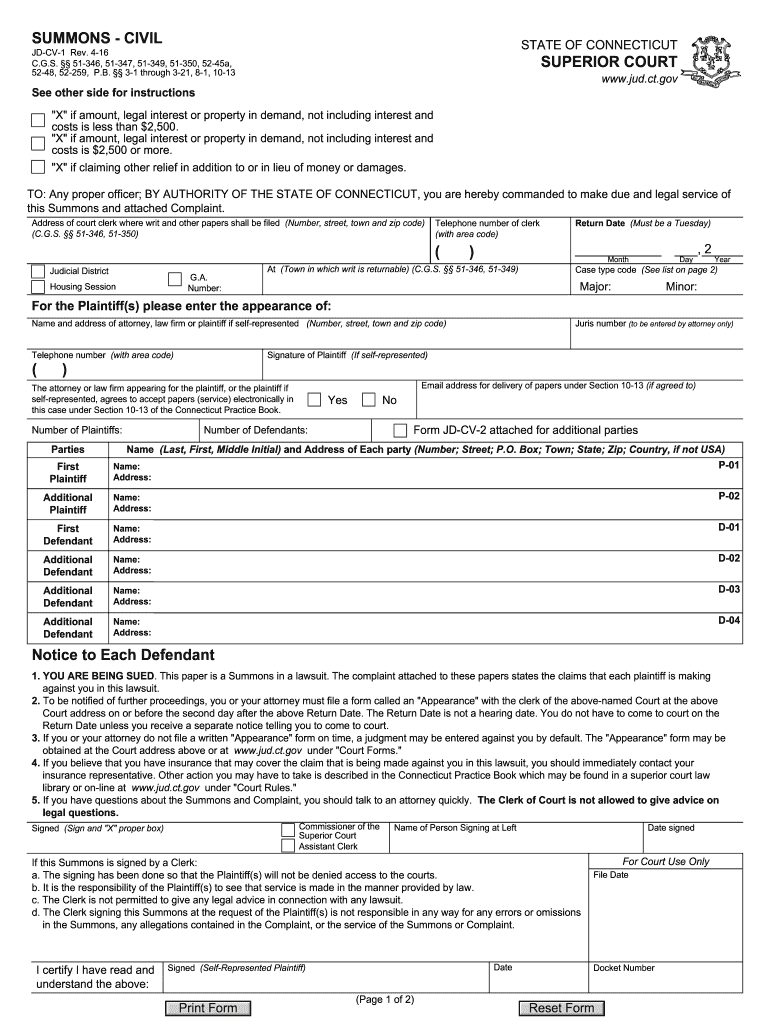
CT JD-CV-1 2016 free printable template
pdfFiller is not affiliated with any government organization
Fill out
Complete the form online in a simple drag-and-drop editor.
eSign
Add your legally binding signature or send the form for signing.
Share
Share the form via a link, letting anyone fill it out from any device.
Export
Download, print, email, or move the form to your cloud storage.
Why pdfFiller is the best tool for your documents and forms


End-to-end document management
From editing and signing to collaboration and tracking, pdfFiller has everything you need to get your documents done quickly and efficiently.
Accessible from anywhere
pdfFiller is fully cloud-based. This means you can edit, sign, and share documents from anywhere using your computer, smartphone, or tablet.
Secure and compliant
pdfFiller lets you securely manage documents following global laws like ESIGN, CCPA, and GDPR. It's also HIPAA and SOC 2 compliant.
What is CT JD-CV-1
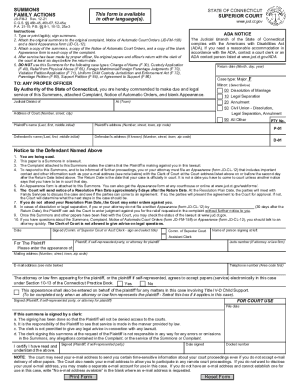
The Connecticut Civil Summons is a legal document used by plaintiffs in Connecticut to initiate a civil lawsuit against defendants.
pdfFiller scores top ratings on review platforms




Who needs CT JD-CV-1?
Explore how professionals across industries use pdfFiller.

CT JD-CV-1 is needed by:
-
Individuals initiating a civil lawsuit in Connecticut
-
Attorneys representing plaintiffs or defendants
-
Commissioners of the Superior Court for legal proceedings
-
Parties involved in civil disputes such as contracts or property
-
Legal professionals preparing court documents
-
Anyone needing to notify defendants of legal actions
Comprehensive Guide to CT JD-CV-1
What is the Connecticut Civil Summons?
The Connecticut Civil Summons is a legal document utilized to initiate a civil lawsuit within the state of Connecticut. This formal notification serves to inform the defendant about the lawsuit and the claims being made against them. In this context, the plaintiff is the individual or entity bringing the lawsuit, while the Commissioner of the Superior Court oversees the procedural aspects. The summons is pertinent in various civil cases, including disputes involving contracts, torts, and property matters.
Purpose and Benefits of the Connecticut Civil Summons
The Connecticut Civil Summons plays a crucial role in the legal process by ensuring that defendants are adequately notified of the lawsuit and the specifics of the claims against them. It provides legal protection for the plaintiff while granting the defendant an opportunity to respond to the allegations. This form is vital for maintaining compliance with Connecticut’s legal procedures, facilitating a fair process for all parties involved.
Who Needs the Connecticut Civil Summons?
Individuals who qualify as plaintiffs or defendants in civil lawsuits must utilize the Connecticut Civil Summons. Typically, plaintiffs are those seeking to resolve disputes over contracts or property. It is essential to understand any age or legal status requirements for plaintiffs wishing to file the document, as these factors can influence the legitimacy of a claim.
How to Fill Out the Connecticut Civil Summons Online (Step-by-Step)
Filling out the Connecticut Civil Summons online involves a precise, step-by-step approach to ensure accuracy and compliance. Begin by following these instructions:
-
Access the online form through a reliable platform.
-
Fill in the 'Name' field with the plaintiff's name.
-
Complete the 'Address' section with accurate contact information.
-
Add the necessary details regarding the case.
-
Sign the document electronically, ensuring all required signatures are included.
Be mindful of common errors, such as leaving out crucial information or misidentifying parties involved, to avoid complications in the filing process.
When and How to Submit the Connecticut Civil Summons
After completing the Connecticut Civil Summons, it is critical to understand the timeline for submission. The summons should be submitted shortly after filing a lawsuit to ensure prompt notification of the defendant. Typically, submissions can be made at designated court locations or through online submission options. It is advisable to keep copies of the submitted documents and maintain a record of submissions to ensure accountability.
Understanding Fees and Processing Times for the Connecticut Civil Summons
Filing the Connecticut Civil Summons may involve certain fees, which vary depending on the court and type of case. Accepted payment methods should be verified during the filing process. Processing times can also vary, often influenced by the specifics of the case and jurisdiction. For qualified individuals, information about potential fee waivers is available and can alleviate some financial burdens associated with legal filing.
What Happens After You Submit the Connecticut Civil Summons?
Once the Connecticut Civil Summons is submitted, the next steps for both plaintiffs and defendants come into play. Defendants will receive notification of the lawsuit and are typically given a set timeframe to respond. Subsequent outcomes may include hearings or further filings, depending on how the case progresses. Plaintiffs must remain proactive regarding their responsibilities following submission to ensure proper handling of their claims.
Security and Privacy Considerations for the Connecticut Civil Summons
Handling the Connecticut Civil Summons necessitates careful attention to security and privacy standards. pdfFiller implements robust security measures when processing legal documents to protect sensitive information. Individuals must also understand the privacy regulations governing legal filings in Connecticut. Maintaining data integrity during the submission process is crucial; practical tips may include using secure networks and verifying the authenticity of submitted documents.
Examples and Templates of a Completed Connecticut Civil Summons
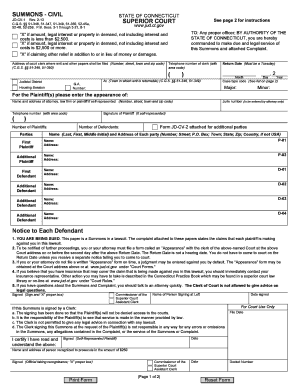
For users seeking guidance on completing the Connecticut Civil Summons, visual representations can be invaluable. A filled example of the summons offers clarity on how to interpret the various sections and the information typically included. Utilizing pdfFiller’s template options can streamline the process, making it easier to fill out the form accurately and efficiently.
Using pdfFiller to Complete the Connecticut Civil Summons
pdfFiller provides an accessible platform for completing the Connecticut Civil Summons online. Users benefit from features such as editing, saving, and electronically signing documents within a secure environment. By leveraging pdfFiller's capabilities, users can fill out their Connecticut Civil Summons with ease, ensuring a more manageable and efficient experience.
How to fill out the CT JD-CV-1
-
1.To begin, access pdfFiller and search for the Connecticut Civil Summons form in the document library. Once you find it, click to open the form.
-
2.Navigate through the interface, where you will see the fillable fields. Start by entering your details in the 'Plaintiff' section, including your name and address.
-
3.Gather all necessary information prior to completing the form. This includes the defendant's information, details about your case, and any relevant case numbers or dates.
-
4.Proceed to fill in the 'Defendant' section, ensuring accuracy with names and addresses. Complete all fields meticulously to avoid errors.
-
5.Review the completed form for any missing information or mistakes. Ensure that all required details are correctly filled in, including signatures.
-
6.Once satisfied, use the options provided by pdfFiller to save or download your filled form. You can also choose to submit the form electronically if needed.
-
7.Finally, follow the submission procedures as dictated by Connecticut court guidelines, and keep a copy for your records.

Who is eligible to use the Connecticut Civil Summons?
Any individual or legal entity that is initiating a civil lawsuit in Connecticut can use the Connecticut Civil Summons. Typically, this includes plaintiffs and their attorneys.
What is the deadline for submitting the Connecticut Civil Summons?
There isn't a universal deadline, as submission depends on the specifics of the case. However, it's important to serve the summons within a reasonable time after filing to avoid delays.
How should I submit the completed Connecticut Civil Summons?
The completed Connecticut Civil Summons can typically be submitted in person at the appropriate court or electronically if the court permits. Make sure to follow the specific submission guidelines provided by the court.
Are there any required supporting documents when filing a Civil Summons?
Yes, it's essential to include any necessary supporting documents that relate to your case. This may include additional forms or evidence that substantiate your claims against the defendant.
What common mistakes should I avoid when completing this form?
Common mistakes include inaccurate or incomplete information, missing signatures, and failing to provide proper addresses for all parties. Carefully reviewing the form can help avoid such errors.
How long does it take for the court to process the Civil Summons?
Processing times vary by court, but typically, you can expect it to take a few days to a couple of weeks, depending on the court's workload and the complexity of your case.
What happens if the defendant doesn't respond to the Civil Summons?
If the defendant does not respond to the Civil Summons, the plaintiff may seek a default judgment against them. This means that the court may rule in favor of the plaintiff without the defendant's input.
CT JD-CV-1 Form Versions
Related Content
Related Forms




Get the latest insights from our blog


If you believe that this page should be taken down, please follow our DMCA take down process
here
.
This form may include fields for payment information. Data entered in these fields is not covered by PCI DSS compliance.