
Last updated on
Oct 31, 2026

IS STEF Music Synchronization License Agreement 2017-2026 free printable template
We are not affiliated with any brand or entity on this form

Fill out
Complete the form online in a simple drag-and-drop editor.

eSign
Add your legally binding signature or send the form for signing.

Share
Share the form via a link, letting anyone fill it out from any device.

Export
Download, print, email, or move the form to your cloud storage.
Why pdfFiller is the best tool for your documents and forms


End-to-end document management
From editing and signing to collaboration and tracking, pdfFiller has everything you need to get your documents done quickly and efficiently.
Accessible from anywhere
pdfFiller is fully cloud-based. This means you can edit, sign, and share documents from anywhere using your computer, smartphone, or tablet.
Secure and compliant
pdfFiller lets you securely manage documents following global laws like ESIGN, CCPA, and GDPR. It's also HIPAA and SOC 2 compliant.
What is IS STEF Music Synchronization License Agreement
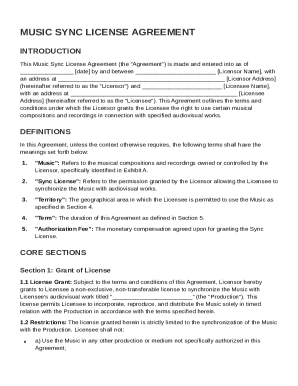
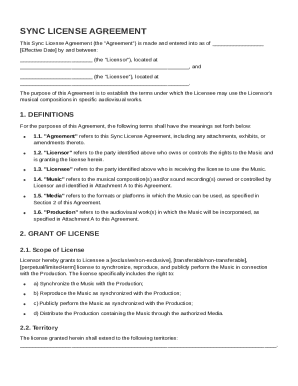
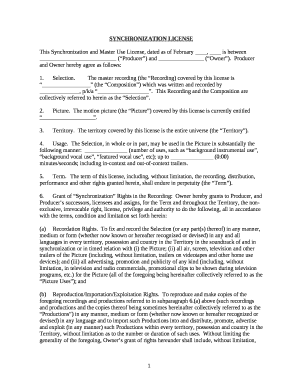
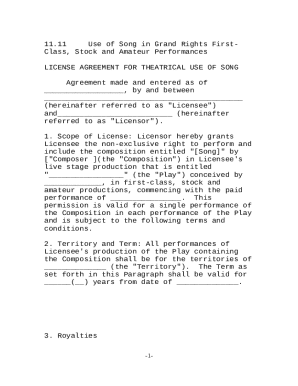
The Music Synchronization License Agreement is a legal document used by rightholders to grant a company the rights to use a musical composition in a film.
pdfFiller scores top ratings on review platforms




Who needs IS STEF Music Synchronization License Agreement?
Explore how professionals across industries use pdfFiller.

IS STEF Music Synchronization License Agreement is needed by:
-
Independent musicians seeking to license their music
-
Production companies needing music for film projects
-
Music publishers managing rights for songs
-
Advertisers incorporating music into promotional videos
-
Film directors requiring licensed soundtracks
Comprehensive Guide to IS STEF Music Synchronization License Agreement
What is the Music Synchronization License Agreement?
The Music Synchronization License Agreement is a pivotal legal document that facilitates the use of a musical composition in various visual media, including films and television. This agreement outlines the intent of both parties regarding the synchronization rights agreement, allowing the rightholder to grant specific permissions to the company. Key elements of this agreement encompass the scope of usage, significance in protecting intellectual property, and the overall intent to create a mutually beneficial relationship.
Purpose and Benefits of the Music Synchronization License Agreement
This agreement is vital for protecting both the rightholder’s rights and the company’s interests. A film music license agreement ensures that all parties are aware of their rights and obligations, promoting a clear understanding of the legal framework surrounding music usage. Among the primary benefits of the music licensing contract are legal protection against unauthorized use, defined rights related to music, and structured payment details that benefit both parties.
Key Features of the Music Synchronization License Agreement
The Music Synchronization License Agreement comprises several significant features that delineate its structure. Key components include the duration of the license, the geographic territory of use, and the types of media where the music can be utilized. Furthermore, it specifies the obligations of both the rightholder and the company, particularly regarding payment arrangements and proper crediting of the music. These features ensure clarity and transparency in the licensing process.
Who Needs the Music Synchronization License Agreement?
This agreement is essential for various professionals and industries involved in visual storytelling. Filmmakers, music producers, advertisers, and content creators are primary users who benefit from this legal framework, allowing them to secure the necessary permissions for using music in their projects. Understanding the significance of a film music rights contract is essential for anyone involved in producing multimedia content.
How to Fill Out the Music Synchronization License Agreement Online (Step-by-Step)
Completing the Music Synchronization License Agreement online involves several key steps. Follow this detailed guide:
-
Begin by collecting necessary information about the rightholder and the company.
-
Access the digital form within your preferred PDF editing platform.
-
Fill in each section accurately, ensuring all information is correct and complete.
-
Review the agreement for any potential errors or fields that may have been overlooked.
-
Submit the completed form for review and digital signing.
Information You'll Need to Gather for the Music Synchronization License Agreement
Before initiating the completion of the Music Synchronization License Agreement, it's crucial to gather pertinent information. Essential details include:
-
The name and contact information of the rightholder.
-
The company’s name and details for proper identification.
-
Specific information about the musical composition, including title and composer.
-
Any supporting documents that validate rights ownership or usage permissions.
How to Sign the Music Synchronization License Agreement Safely
Signing the Music Synchronization License Agreement securely is vital to protect sensitive information. Consider the following aspects:
-
Decide between a digital signature or a wet signature based on legal requirements.
-
Ensure that all parties securely store signed documents to prevent unauthorized access.
-
Use trusted platforms that offer encrypted signing options to enhance document security.
Submission Methods and Delivery for the Music Synchronization License Agreement
After completing the agreement, it is essential to submit it properly for processing. The following submission methods are typically available:
-
Emailing the completed document directly to the involved parties.
-
Uploading the document to a designated online portal for review.
-
Utilizing secure cloud storage services to share and track submissions efficiently.
Security and Compliance When Using the Music Synchronization License Agreement
Document security and compliance are paramount when handling the Music Synchronization License Agreement. Users should be mindful of:
-
Utilizing platforms that provide 256-bit encryption to protect sensitive information.
-
Ensuring compliance with standards like HIPAA and GDPR for document handling.
-
Regularly reviewing security policies to maintain confidentiality and document integrity.
Maximize Your Use of the Music Synchronization License Agreement with pdfFiller
Leveraging pdfFiller's features can streamline the completion and management of the Music Synchronization License Agreement. Users can take advantage of functionalities such as:
-
eSigning capabilities for efficient collaboration.
-
Editing tools for making necessary changes to the agreement.
-
Secure sharing options to ensure only authorized individuals have access.
How to fill out the IS STEF Music Synchronization License Agreement
-
1.Access pdfFiller and log in to your account or create a new account if you don’t have one. Search for 'Music Synchronization License Agreement' in the form directory.
-
2.Once you find the form, click on it to open it in the pdfFiller interface. Familiarize yourself with the layout and available tools.
-
3.Before you complete the form, gather all necessary information, including the musical composition details, the rightholder’s information, and the terms of use you wish to specify.
-
4.Begin filling in the form by clicking on each field. Input the required information accurately. Use clear and concise wording to describe the music usage terms.
-
5.Ensure that both the rightholder and company sections are completed with correct names and signatures, keeping in mind any specific roles that require signing.
-
6.Review the entire document for accuracy. Check that all terms, obligations, and conditions are stated clearly and that there are no empty fields.
-
7.After finalizing the content, click the 'Save' button to preserve your document. You can also download the form in various formats or submit it directly from pdfFiller.

Who is eligible to use the Music Synchronization License Agreement?
The Music Synchronization License Agreement is suitable for independent musicians, rightholders, and companies looking to license music for film or advertising projects.
Are there deadlines for submitting this agreement?
There are typically no strict deadlines for submitting this agreement, but it should be executed before the music is used in any project to ensure legal protection.
How do I submit the Music Synchronization License Agreement?
You can submit the completed Music Synchronization License Agreement by saving it or downloading it from pdfFiller, then sending it via email or physical mail to the relevant parties.
What supporting documents are required with this agreement?
It is advisable to include any original music scores, evidence of ownership, or previous agreements that pertain to the composition when submitting the Music Synchronization License Agreement.
What common mistakes should I avoid when filling out the agreement?
Common mistakes include leaving fields blank, misspelling names, or not clearly defining usage terms. Always double-check your entries for accuracy.
How long does it typically take to process this agreement?
The processing time for the Music Synchronization License Agreement can vary, but it usually takes a few days to finalize once all parties have reviewed and signed it.
Are notarization or witnesses required for this agreement?
No, notarization is not required for the Music Synchronization License Agreement, but having witnesses can be beneficial for additional validation.
Related Forms

Related Catalogs
Get the latest insights from our blog


If you believe that this page should be taken down, please follow our DMCA take down process
here
.
This form may include fields for payment information. Data entered in these fields is not covered by PCI DSS compliance.