
Last updated on
Nov 9, 2026
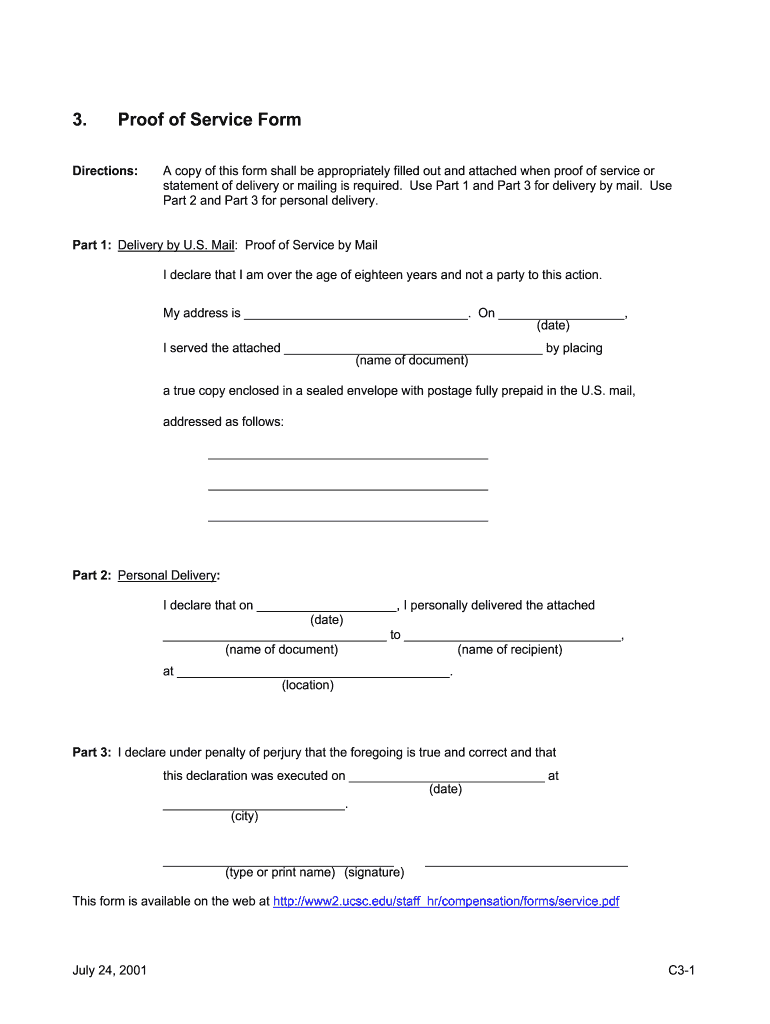
USCS C3-1 2001 free printable template
We are not affiliated with any brand or entity on this form

Fill out
Complete the form online in a simple drag-and-drop editor.

eSign
Add your legally binding signature or send the form for signing.

Share
Share the form via a link, letting anyone fill it out from any device.

Export
Download, print, email, or move the form to your cloud storage.
Why pdfFiller is the best tool for your documents and forms


End-to-end document management
From editing and signing to collaboration and tracking, pdfFiller has everything you need to get your documents done quickly and efficiently.
Accessible from anywhere
pdfFiller is fully cloud-based. This means you can edit, sign, and share documents from anywhere using your computer, smartphone, or tablet.
Secure and compliant
pdfFiller lets you securely manage documents following global laws like ESIGN, CCPA, and GDPR. It's also HIPAA and SOC 2 compliant.
What is USCS C3-1
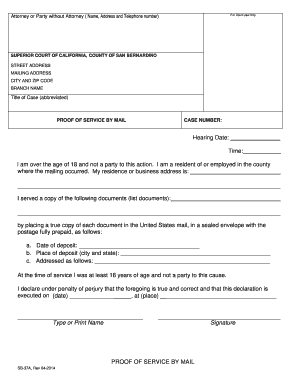
The Proof of Service Form is a legal document used by declarants to provide evidence of service or delivery of a document in legal proceedings.
pdfFiller scores top ratings on review platforms




Who needs USCS C3-1?
Explore how professionals across industries use pdfFiller.

USCS C3-1 is needed by:
-
Individuals filing court documents
-
Legal representatives preparing service declarations
-
Parties involved in legal disputes requiring proof of service
-
Businesses needing to submit legal notices
-
Anyone handling court filings involving delivery or mailing
Comprehensive Guide to USCS C3-1
What is the Proof of Service Form?
The Proof of Service Form serves as a legal declaration to confirm the delivery of legal documents. This document is crucial in various legal procedures, ensuring that entities comply with legal requirements for notifying involved parties. It includes critical aspects like the requirement for the declarant's signature under penalty of perjury, which reinforces the integrity of the information provided.
Essentially, it acts as a safeguard for individuals and entities, demonstrating that they have fulfilled their obligation to inform others about legal matters. This form is synonymous with terms such as legal declaration form and legal service form, underlining its importance in legal frameworks.
Purpose and Benefits of the Proof of Service Form
The Proof of Service Form is indispensable in legal matters due to its function in verifying service completion. Its primary advantages include:
-
Ensuring legal compliance with established laws and regulations.
-
Protecting the rights of involved parties by establishing a record of service.
-
Facilitating the resolution of disputes by documenting the delivery of legal entities.
Scenarios where this form is crucial include divorce proceedings, eviction notices, and any case requiring validation of document delivery, enhancing procedural accuracy.
Key Features of the Proof of Service Form
This form features several important characteristics that enhance its utility. Users will find:
-
Fillable fields for necessary details such as recipient's address and date of service.
-
Checkboxes to select the method of service, like mail or personal delivery.
-
Requirements that emphasize the importance of accurate and complete information to prevent complications in legal proceedings.
Each element within the form is designed to streamline the process of documenting service, reinforcing its role as a reliable court document form.
Who Needs the Proof of Service Form?
The target audience for the Proof of Service Form includes a variety of individuals involved in legal processes. This encompasses:
-
Individuals engaged in legal actions who must confirm that documents have been served.
-
Legal professionals, such as lawyers and paralegals, assisting clients with necessary filings.
-
Parties involved in delivering legal documents to opposing entities, ensuring compliance and clarity.
Each group relies on this form to ensure that due process is upheld, reinforcing its status as a legal declaration form.
How to Fill Out the Proof of Service Form Online (Step-by-Step)
Completing the Proof of Service Form online is a straightforward process. Here are the steps to follow:
-
Access the form from your designated platform, such as pdfFiller.
-
Fill out the declarant's details and the specifics regarding the document served.
-
Ensure all required fields, including the recipient's address and service date, are accurately completed.
-
Review the filled information to avoid common pitfalls such as typos or incomplete details.
-
Sign and date the form, acknowledging the truth of the provided information under penalty of perjury.
By following these steps, users can effectively complete the service declaration form with confidence.
Submission Methods for the Proof of Service Form
Submitting the completed Proof of Service Form can be done through various methods. Users can choose from:
-
Online submission via legal platforms, ensuring immediate processing.
-
Physical mailing to the appropriate court or entity to comply with legal requirements.
-
Utilizing tracking options to confirm the delivery and receipt of the served documents.
Timeliness is essential in filing this document to avoid potential legal consequences, making effective submission crucial.
Consequences of Not Filing or Late Filing the Proof of Service Form
Failure to file the Proof of Service Form or doing so late can lead to serious repercussions, such as:
-
Legal penalties that may impede the progress of a case.
-
Complications in maintaining legal rights and protections.
Examples of such consequences include dismissal of a case or unfavorable judgments, underscoring the necessity of timely submission.
Security and Compliance for the Proof of Service Form
When handling the Proof of Service Form, security and compliance are paramount. pdfFiller ensures user safety through:
-
256-bit encryption to secure sensitive information.
-
Compliance with regulations such as HIPAA and GDPR, ensuring data privacy.
This emphasis on document security provides users with the confidence needed to handle and store their legal documents securely.
Use pdfFiller to Complete Your Proof of Service Form Easily
With pdfFiller, users can easily fill out their Proof of Service Form leveraging the platform's capabilities, including:
-
Edit text and images, ensuring clarity in documentation.
-
Access forms from any device, enhancing usability and convenience.
-
Utilize features that enable efficient workflow and accurate completion.
By choosing pdfFiller, users streamline their form-filling process, facilitating legal compliance with ease.
How to fill out the USCS C3-1
-
1.To access the Proof of Service Form on pdfFiller, visit their website and search for the form using the search bar.
-
2.Once located, click on the form to open it in the fillable editor interface, allowing you to start entering your information.
-
3.Gather necessary details such as your address, the date of service, the name of the document you are serving, and the recipient's address before starting to fill out the form.
-
4.Begin by entering your name and address in the designated fields, ensuring all information is accurate and up to date.
-
5.Next, specify the date on which the service was completed, making sure to clearly note the correct day, month, and year.
-
6.Fill in the name of the document that you have served, as it's crucial for identifying the nature of the service provided.
-
7.Provide the recipient's address in the appropriate area, double-checking for any typos or errors to ensure delivery confirmation.
-
8.Review the completed form for any missing or incorrect information, confirming all required fields are filled properly.
-
9.Once everything looks correct, navigate to the signature field where you will need to sign and date the form under penalty of perjury.
-
10.After signing, save your work on pdfFiller by clicking the save button, allowing you to return to the form if needed.
-
11.You can download the completed Proof of Service Form to your device or choose the option to submit it directly to the appropriate party via pdfFiller.

Who is eligible to use the Proof of Service Form?
Anyone who needs to provide proof that a legal document has been served can use the Proof of Service Form, including individuals and legal representatives involved in court cases.
Are there any deadlines for submitting the Proof of Service Form?
Typically, the Proof of Service Form should be submitted promptly after the service is completed to ensure that it meets the court's deadlines for filing related documents.
How do I submit the completed Proof of Service Form?
You can submit the form by filing it in person at the appropriate court office or mailing it per the court's submission guidelines, depending on jurisdictional requirements.
What information do I need to complete the Proof of Service Form?
You will need your address, the date the service occurred, the name of the served document, and the recipient's address to accurately fill out the form.
What are common mistakes to avoid when filling out this form?
Common mistakes include omitting required information, misspelling names or addresses, and forgetting to sign and date the form, all of which can delay processing.
How long does it take to process the Proof of Service Form?
Processing times vary by court but generally, once submitted, the Proof of Service Form is reviewed within a few days to a week, depending on the court's workload.
Do I need notarization for the Proof of Service Form?
No, notarization is not required for the Proof of Service Form, but it must be signed under penalty of perjury by the declarant to validate the service.
USCS C3-1 Form Versions
Related Content
Related Forms






Related Catalogs
Get the latest insights from our blog


If you believe that this page should be taken down, please follow our DMCA take down process
here
.
This form may include fields for payment information. Data entered in these fields is not covered by PCI DSS compliance.