Reduce 71 MB Word to 30 MB
Reduce PDF file size quickly and easily using pdfFiller's Compress tool.
What is the Compress Tool?
The Compress tool in pdfFiller is designed to help you reduce PDF file size efficiently. This tool is available directly in the editor, allowing you to optimize embedded images and annotations while maintaining the integrity of text and form fields. It is particularly ideal for image-heavy PDFs, ensuring that you can share and store documents without compromising quality. The tool avoids vague descriptions of compression, focusing instead on providing clear functionality and results.
Why Compress Your PDFs?
Reducing PDF file size is essential for several reasons. First, smaller files are easier to attach to emails, which is crucial for effective communication. Second, compressing PDFs can significantly impact storage costs, especially for small businesses that manage numerous documents. Large file sizes can lead to delays in sharing and accessing important information. Therefore, understanding the relevance of file size reduction is vital for small businesses aiming to streamline their document management processes.
How to Access the Compress Tool
- Open pdfFiller and navigate to the editor header.
- Locate the Compress tool in the All Tools dashboard.
- You do not need a document open to access the Compress tool.
- The interface is user-friendly, making it easy to find and use.
Steps to Compress a PDF
- Open your PDF document in pdfFiller.
- Select the Compress tool from the toolbar.
- Choose the desired compression quality level based on your needs.
- Click on the 'Compress' button to start the process.
- Wait for the tool to process your document; this usually takes a few seconds.
- Once completed, download the compressed PDF file to your device.
- If necessary, repeat the process with different settings for optimal results.
- Ensure the file type is supported for compression to avoid errors.
Choosing Compression Quality Levels
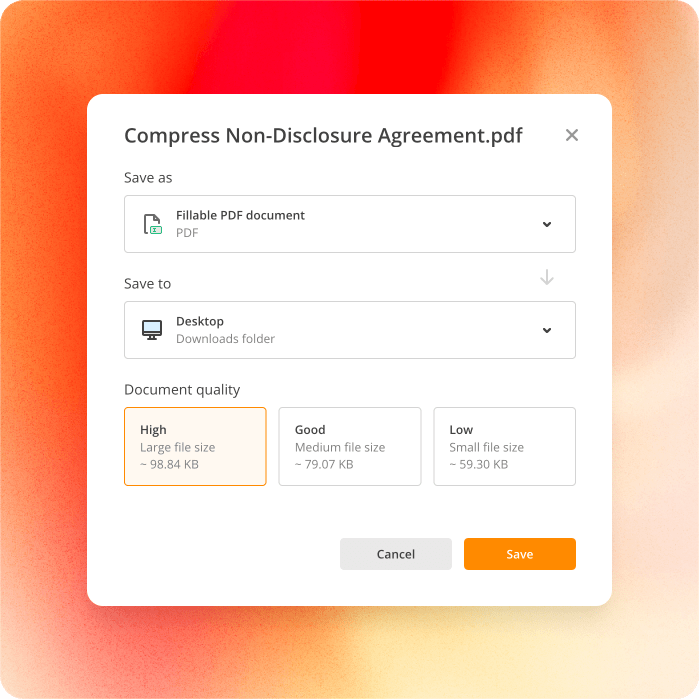
When using the Compress tool, you will encounter three quality settings: High, Medium, and Low. The High setting maintains the best image quality but results in a larger file size. The Medium setting offers a balance between size and quality, making it suitable for most documents. The Low setting significantly reduces file size but may impact image fidelity. Understanding these options helps you select the best quality level based on your specific needs and the nature of your documents.
What Changes After Compression?
After compressing a PDF, various content types are affected differently. Images may lose some quality, while text remains largely intact. Annotations and form fields are preserved, ensuring that the document's structure is maintained. It is essential to review the compressed file to confirm that all necessary content is present and that the document remains functional.
Expected File Size Reduction
The amount of file size reduction you can expect varies based on the content of your document. For instance, image-heavy PDFs may see more significant reductions compared to text-based files. Typical size reductions can range from 20% to 70%, depending on the quality settings chosen. Factors influencing compression effectiveness include the original file size and the types of content included. Always test the compressed file before sharing to ensure it meets your needs.
Next Steps After Compression
Once you have compressed your PDF, the next steps include downloading the compressed file to your device. If the file is still too large, consider adjusting the compression settings and trying again. Integrating the compressed PDF into your sharing workflows is crucial for maintaining efficiency. Always review the compressed file to ensure it meets your requirements before distribution.
Compress vs. Other Size-Reduction Methods
Unlike methods such as deleting pages or splitting documents, the Compress tool focuses specifically on reducing file size without losing essential content. This unique benefit makes it ideal for maintaining document integrity while facilitating easier sharing. Each method has its scenarios; for example, compressing is best for image-heavy documents, while splitting may be more appropriate for lengthy reports. pdfFiller's user-friendly interface simplifies the process, making it accessible for all users.
Industry Scenarios for PDF Compression
Small businesses across various industries can benefit from PDF compression. For instance, a marketing agency may find that compressing large promotional materials allows for quicker email distribution. A legal firm can reduce the size of case files, making them easier to share with clients. Without compression, these businesses face challenges such as slow file transfers and increased storage costs. By implementing compression, they can streamline their workflows and enhance productivity.
Supported Formats and Export Options
pdfFiller supports various file formats for compression, including PDF, DOCX, and images. After compression, you can export your files in multiple formats, ensuring compatibility with different document types. Selecting the right format is crucial for maintaining the integrity of your documents and ensuring they are usable across different platforms.