
Last updated on
Nov 7, 2026
NJ L-4 2008 free printable template
We are not affiliated with any brand or entity on this form

Fill out
Complete the form online in a simple drag-and-drop editor.

eSign
Add your legally binding signature or send the form for signing.

Share
Share the form via a link, letting anyone fill it out from any device.

Export
Download, print, email, or move the form to your cloud storage.
Why pdfFiller is the best tool for your documents and forms


End-to-end document management
From editing and signing to collaboration and tracking, pdfFiller has everything you need to get your documents done quickly and efficiently.
Accessible from anywhere
pdfFiller is fully cloud-based. This means you can edit, sign, and share documents from anywhere using your computer, smartphone, or tablet.
Secure and compliant
pdfFiller lets you securely manage documents following global laws like ESIGN, CCPA, and GDPR. It's also HIPAA and SOC 2 compliant.
What is NJ L-4
The New Jersey Form L-4 Resident-Decedent is a state tax form used by executors, administrators, and heirs to secure consents for asset transfer prior to filing a detailed inheritance tax return.
pdfFiller scores top ratings on review platforms




Who needs NJ L-4?
Explore how professionals across industries use pdfFiller.

NJ L-4 is needed by:
-
Executors managing a deceased person's estate
-
Administrators responsible for estate administration
-
Heirs-at-law and next of kin seeking asset transfer
-
Tax professionals assisting with inheritance tax matters
-
New Jersey residents handling estate tax issues
-
Individuals involved in property transfers in accordance with inheritance laws
Comprehensive Guide to NJ L-4
What is the New Jersey Form L-4 Resident-Decedent?
The New Jersey Form L-4 is a crucial document utilized to secure consent for the transfer of assets from a deceased resident's estate. This form plays a significant role in relation to inheritance tax and the overall transfer of an estate, ensuring proper compliance with state regulations.
By filing the New Jersey Form L-4, executors, administrators, or heirs-at-law can effectively facilitate the legal transfer of assets while complying with inheritance tax obligations. Completing this form is essential for avoiding unnecessary delays in executing estate transfers.
Purpose and Benefits of the New Jersey Form L-4 Resident-Decedent
This form serves as a critical component for executors, administrators, and heirs, as it helps in managing the estate smoothly. Correctly completing the L-4 can lead to significant benefits, including the potential waiving of certain taxes tied to the estate.
Moreover, compliance with New Jersey tax regulations is vital for preventing penalties that could arise from errors in estate processing. Utilizing this form ensures that all parties involved understand their responsibilities and the tax implications of the estate.
Who Needs to Fill Out the New Jersey Form L-4 Resident-Decedent?
The primary roles required to fill out the New Jersey Form L-4 include the Executor, Administrator, and Heir-at-Law. Each of these roles carries specific responsibilities regarding the completion and submission of the form.
Individuals must meet eligibility criteria to fill out the form, ensuring they are authorized to declare details about the decedent's estate. This structured approach guarantees that all stakeholders are involved in the estate management process effectively.
When and How to Submit the New Jersey Form L-4 Resident-Decedent
The New Jersey Form L-4 must be filed promptly following the death of a resident to ensure the timely transfer of the estate's assets. The submission process is straightforward, with multiple available methods for filing.
-
Online through the New Jersey Division of Taxation portal
-
By mail to the appropriate tax office
-
In person at specified locations
Each submission method has its requirements and timelines, so choosing the most suitable option is essential for efficient estate processing.
How to Fill Out the New Jersey Form L-4 Resident-Decedent Online (Step-by-Step)
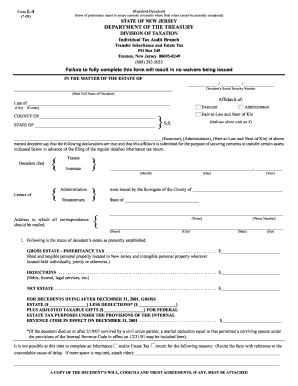
Completing the New Jersey Form L-4 online entails following a structured, guided approach. The form is divided into manageable sections, each requiring specific details filled in accurately.
-
Decedent’s Social Security Number
-
Gross Estate - Inheritance Tax
-
Deductions
Users should pay close attention to fillable fields and checkbox instructions, ensuring all necessary information is provided to avoid delays in processing.
Common Errors and How to Avoid Them
When filling out the New Jersey Form L-4, many users encounter frequent mistakes that can lead to processing challenges. Common errors include misreporting values and failing to sign the form.
-
Ensure all sections are completed thoroughly
-
Double-check numeric entries for accuracy
Taking the time to verify all entries before submission significantly reduces the risk of delays and ensures compliance with tax regulations.
What Happens After You Submit the New Jersey Form L-4 Resident-Decedent?
After the form is submitted to the New Jersey Division of Taxation, the processing steps begin, and tracking the submission status is essential for all parties involved. Understanding potential outcomes associated with the submission can prepare executors and administrators for any necessary follow-up actions.
In the event that corrections or amendments are needed, knowing the process to amend the form is crucial for maintaining compliance and ensuring the timely transfer of assets.
Security and Compliance for the New Jersey Form L-4 Resident-Decedent
When handling sensitive information through the New Jersey Form L-4, robust security measures are in place to protect documents. Compliance with state regulations and federal data protection laws is paramount to safeguarding personal and financial information.
Utilizing tools like pdfFiller enhances security, offering encryption and ensuring user data is handled according to the highest standards of privacy and protection.
How pdfFiller Can Assist You with the New Jersey Form L-4 Resident-Decedent
pdfFiller provides comprehensive capabilities for filling out and managing the New Jersey Form L-4, making the process more accessible for users. The platform simplifies form completion with its intuitive interface and efficient document management features.
Notable features of pdfFiller include the ability to eSign documents, secure storage, and easy document sharing, which can facilitate the overall management of tax forms.
Get Started with the New Jersey Form L-4 Resident-Decedent Today!
Given the benefits of proper estate management, users are encouraged to begin filling out the New Jersey Form L-4 without delay. Leveraging the capabilities of pdfFiller can streamline this process, helping to avoid potential delays associated with estate transfers.
How to fill out the NJ L-4
-
1.Access the New Jersey Form L-4 on pdfFiller by searching for 'New Jersey Form L-4 Resident-Decedent' in the template library.
-
2.Once you locate the form, click to open it in the pdfFiller interface where you will see editable fields.
-
3.Gather all necessary information related to the decedent’s estate, including Social Security Number, gross estate value, deductions, and details about real estate holdings.
-
4.Fill in the required fields using pdfFiller's user-friendly interface, ensuring all information is accurate and complete.
-
5.Utilize the checkboxes for eligibility and conditions as well as any prompts to guide you through completion.
-
6.Review the filled form thoroughly to ensure all fields are completed correctly; double-check for any missing information.
-
7.After completing the form, click on the save option to keep a copy or choose to download the completed document to your device.
-
8.Submit the form electronically via pdfFiller or print it out for physical submission to the New Jersey Division of Taxation as needed.

Who is eligible to use Form L-4?
Form L-4 can be used by executors, administrators, and heirs-at-law of a deceased New Jersey resident who need to secure consents to transfer assets related to the estate.
What is the deadline for submitting Form L-4?
There isn't a strict deadline for Form L-4 submission, but it is recommended to complete it promptly after death to ensure timely processing of estate taxes and asset transfers.
How can I submit Form L-4 once completed?
After completing Form L-4, it can be submitted electronically through pdfFiller or printed and mailed directly to the New Jersey Division of Taxation.
What supporting documents are required with Form L-4?
Generally, you may need to provide details of the decedent's estate, including property valuations and financial information, although specific supporting documents might be requested based on estate details.
What mistakes should I avoid when filling out Form L-4?
Common mistakes to avoid include incomplete fields, inaccurate information about the decedent’s estate, and failure to sign the form, as each of these can delay processing.
How long does it take to process Form L-4?
Processing times for Form L-4 can vary, but it typically takes several weeks depending on the New Jersey Division of Taxation's workload and the complexity of the estate.
What happens if I do not complete Form L-4 accurately?
Failure to complete Form L-4 accurately can result in delays in waivers being issued, which may impede the transfer of assets and settlement of the estate.
NJ L-4 Form Versions
Related Content
Related Forms


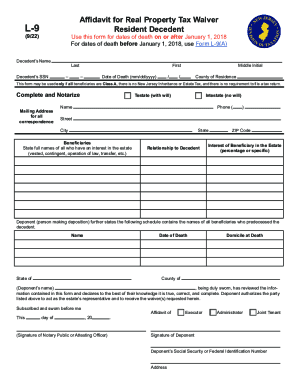

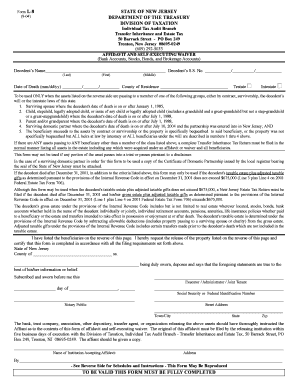


Get the latest insights from our blog


If you believe that this page should be taken down, please follow our DMCA take down process
here
.
This form may include fields for payment information. Data entered in these fields is not covered by PCI DSS compliance.