
Last updated on
Nov 9, 2026

NY A-420 2018-2026 free printable template
pdfFiller is not affiliated with any government organization

Fill out
Complete the form online in a simple drag-and-drop editor.

eSign
Add your legally binding signature or send the form for signing.

Share
Share the form via a link, letting anyone fill it out from any device.

Export
Download, print, email, or move the form to your cloud storage.
Why pdfFiller is the best tool for your documents and forms


End-to-end document management
From editing and signing to collaboration and tracking, pdfFiller has everything you need to get your documents done quickly and efficiently.
Accessible from anywhere
pdfFiller is fully cloud-based. This means you can edit, sign, and share documents from anywhere using your computer, smartphone, or tablet.
Secure and compliant
pdfFiller lets you securely manage documents following global laws like ESIGN, CCPA, and GDPR. It's also HIPAA and SOC 2 compliant.
What is NY A-420
The Pupil Behavior and Discipline – Corporal Punishment Regulation is a regulatory document used by New York City's Department of Education to define and prohibit corporal punishment against students.
pdfFiller scores top ratings on review platforms




Who needs NY A-420?
Explore how professionals across industries use pdfFiller.

NY A-420 is needed by:
-
Educators in New York City
-
School administrators and principals
-
Parents and guardians of students
-
Advocacy groups for student rights
-
Legal professionals specializing in education law
Comprehensive Guide to NY A-420
Understanding the Pupil Behavior and Discipline – Corporal Punishment Regulation
The pupil behavior and discipline regulation establishes critical guidelines regarding corporal punishment within the New York City Department of Education. It defines corporal punishment, which is prohibited to ensure that all students are treated with respect and dignity. This regulation emphasizes the importance of fostering a positive educational environment by protecting students and guiding staff behavior.
The implications of this regulation extend to both students and staff, affecting disciplinary measures and the overall school culture. Familiarity with the NYC corporal punishment regulation is crucial for all educational stakeholders.
Purpose and Benefits of the Corporal Punishment Regulation
The overarching aim of the corporal punishment regulation is to enhance student safety and promote a supportive learning atmosphere. Protecting students from physical and emotional harm aligns with ethical and legal standards, making it beneficial not only for students but also for parents and educational staff.
By implementing this regulation, schools contribute to a nurturing environment that prioritizes student well-being, thereby fostering trust and cooperation among all parties involved.
Key Features of the Pupil Behavior and Discipline – Corporal Punishment Regulation
This regulation encompasses several key components relevant to handling corporal punishment allegations. These include detailed reporting procedures, assigned responsibilities of principals and designated staff, and the disciplinary actions that may be imposed for violations.
-
Documentation requirements for reporting incidents
-
Defined roles for educators and staff in addressing allegations
-
Consequences for staff who do not adhere to the regulation
Who Needs to Know About the Corporal Punishment Regulation?
Understanding the corporal punishment regulation is essential for all members of the school community, including educators, administrators, parents, and students. Each group's awareness impacts their roles and responsibilities in ensuring the regulation is upheld.
A comprehensive understanding fosters a positive school culture and encourages open communication, which is vital for the regulation's success.
When and How to Report Incidents of Corporal Punishment
Reporting allegations of corporal punishment involves a clear process to ensure compliance with established standards. Stakeholders must be aware of specific timelines for reporting incidents and the necessary steps to follow.
-
Determine the incident's details for accurate reporting
-
Follow the established protocol for submitting allegations
-
Utilize school resources for assistance during the reporting process
Filing Procedures for Allegations Under the Corporal Punishment Regulation
The regulation provides structured methods for submitting reports of corporal punishment allegations, including electronic and in-person options. Upon filing, it is important to understand the processing timeframe and what can be expected next.
-
Submit written allegations via official channels
-
Prepare for follow-up inquiries by investigative personnel
-
Be informed of potential outcomes after the inquiry
Addressing Violations of the Corporal Punishment Regulation
Consequences for failing to adhere to the corporal punishment regulation can be severe, including disciplinary action against those involved. Support measures for victims are also crucial, ensuring they have access to necessary resources.
-
Reporting mechanisms for impacted students
-
External referrals for ongoing support
-
Investigative procedures for addressing staff violations
Security and Compliance When Handling Corporal Punishment Reports
Maintaining confidentiality and security surrounding corporal punishment reports is paramount. Robust security measures are necessary to uphold the integrity of sensitive information, aligning with legal obligations for data protection.
pdfFiller provides significant security features such as 256-bit encryption and SOC 2 Type II compliance, making it a reliable tool when managing these documents.
Utilizing pdfFiller to Manage the Corporal Punishment Regulation Documents
pdfFiller streamlines the completion and submission of required documents related to the corporal punishment regulation. With features that facilitate eSigning, editing, and converting documents, it aids users in efficiently managing the reporting process.
Practical tips for using pdfFiller include leveraging its collaborative tools for easier communication and access to necessary forms.
Final Steps and Resources for the Corporal Punishment Regulation
Users are encouraged to explore additional resources for comprehensive information regarding the corporal punishment regulation. Official pages from the NYC Department of Education provide valuable insights and guidance.
Starting with pdfFiller can simplify documentation needs related to the regulation, ensuring a secure and user-friendly experience.
How to fill out the NY A-420
-
1.Access the Pupil Behavior and Discipline – Corporal Punishment Regulation form on pdfFiller by searching for its title or navigating through the Education Forms section.
-
2.Open the document in pdfFiller. Familiarize yourself with the interface, including the toolbar and field options available for use.
-
3.Before starting, gather essential information, such as the details of any incidents related to corporal punishment. This may include dates, involved parties, and any witnesses.
-
4.Review each section of the regulation. Although there are no fillable fields, understanding the content is critical for accurate reporting and compliance.
-
5.After reviewing the entire document, take notes on important points or procedural steps to keep track of the regulatory requirements.
-
6.Finalize your comprehension by re-reading critical sections, ensuring all necessary details about responsibilities and reporting procedures are noted.
-
7.Save your final notes or summaries in pdfFiller. You can download the document as a PDF for your records or share it with others directly from the platform.

What is the purpose of the Pupil Behavior and Discipline document?
The document outlines regulations prohibiting corporal punishment within New York City's schools, detailing reporting procedures, roles involved, and disciplinary actions for violations.
Who is eligible to report instances of corporal punishment?
Any staff member, including teachers, principals, and support staff, is eligible to report incidents of corporal punishment as outlined by the New York City Department of Education regulations.
What should I do if I suspect a violation of the corporal punishment regulation?
If you suspect a violation, you should follow the reporting procedures as specified in the regulation. It's essential to document what you know and notify the appropriate authority within your school.
Are there specific deadlines for reporting allegations of corporal punishment?
While specific deadlines may not be detailed in the regulation, it is vital to report incidents as soon as possible to ensure appropriate investigation and response.
What are common mistakes to avoid when reporting incidents?
Common mistakes include failing to gather all relevant information before reporting and not following the established reporting procedures. Ensure you know the proper channels for your report.
How can I access updates or changes to this regulation?
Updates to the regulation can typically be found through the New York City Department of Education's official website under the policies section. It is essential to stay informed about any revisions.
Is notarization required for documents related to corporal punishment cases?
No, notarization is not required for the Pupil Behavior and Discipline Regulation or its reporting procedures. Follow the guides specified in the document for proper compliance.
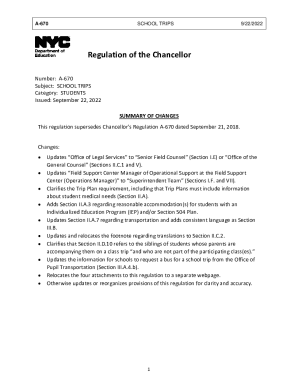
NY A-420 Form Versions
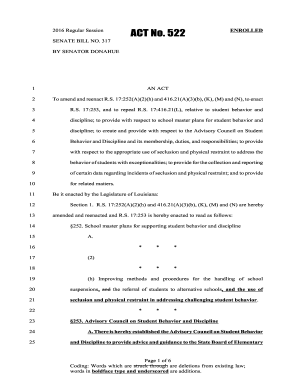
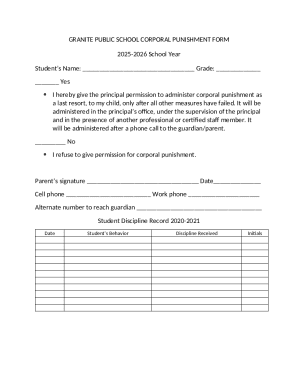
Related Forms



Get the latest insights from our blog


If you believe that this page should be taken down, please follow our DMCA take down process
here
.
This form may include fields for payment information. Data entered in these fields is not covered by PCI DSS compliance.