
Last updated on
Nov 12, 2026
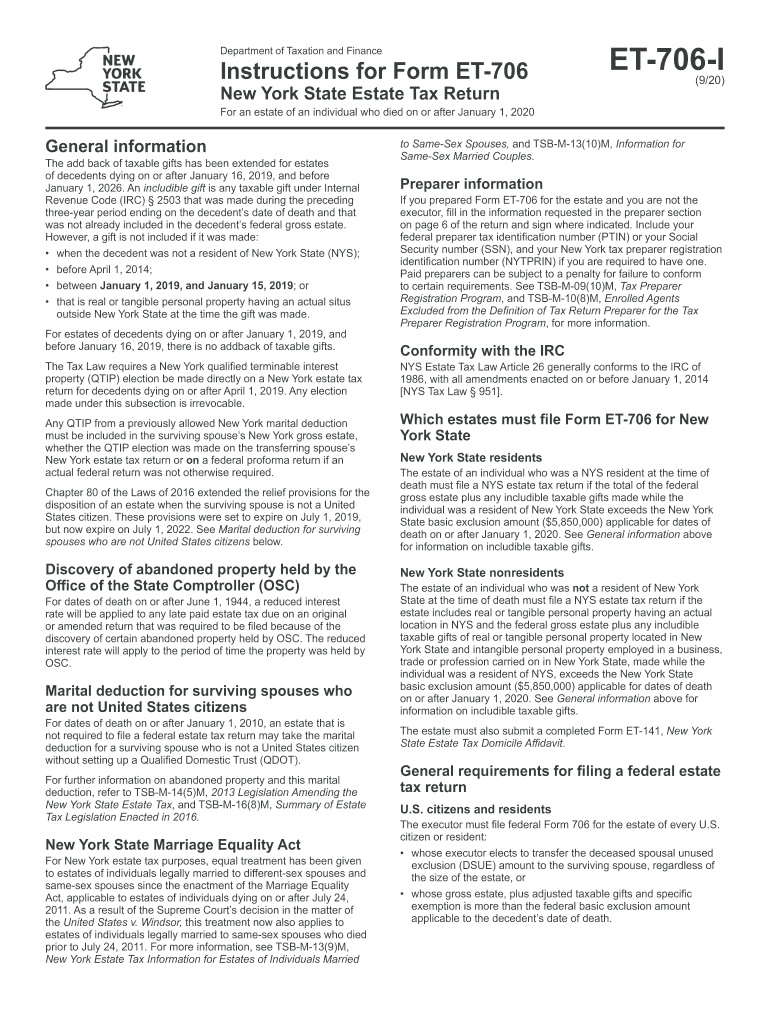
NY DTF ET-706-I 2020 free printable template
pdfFiller is not affiliated with any government organization

Fill out
Complete the form online in a simple drag-and-drop editor.

eSign
Add your legally binding signature or send the form for signing.

Share
Share the form via a link, letting anyone fill it out from any device.

Export
Download, print, email, or move the form to your cloud storage.
Why pdfFiller is the best tool for your documents and forms


End-to-end document management
From editing and signing to collaboration and tracking, pdfFiller has everything you need to get your documents done quickly and efficiently.
Accessible from anywhere
pdfFiller is fully cloud-based. This means you can edit, sign, and share documents from anywhere using your computer, smartphone, or tablet.
Secure and compliant
pdfFiller lets you securely manage documents following global laws like ESIGN, CCPA, and GDPR. It's also HIPAA and SOC 2 compliant.
What is NY DTF ET-706-I
The New York State Estate Tax Return (Form ET-706) is a tax document used by estates to report and pay estate taxes owed to New York State after an individual’s death.
pdfFiller scores top ratings on review platforms




Who needs NY DTF ET-706-I?
Explore how professionals across industries use pdfFiller.

NY DTF ET-706-I is needed by:
-
Executors of estates in New York
-
Tax preparers handling estate taxes
-
Individuals managing tax obligations for deceased relatives
-
Attorneys advising clients on estate matters
-
Estate administrators dealing with state tax filings
Comprehensive Guide to NY DTF ET-706-I
What is the New York State Estate Tax Return?
The New York State Estate Tax Return, commonly known as Form ET-706, is a crucial document for reporting estate tax liabilities in New York. This form is essential for estates where the total of the federal gross estate plus any includible taxable gifts surpasses the state's basic exclusion amount. Executors must ensure compliance by filing this form, as it establishes tax obligations for the deceased's estate.
Purpose and Benefits of the New York State Estate Tax Return
The primary purpose of the New York State Estate Tax Return is to avoid penalties or legal complications by adhering to state tax regulations. By accurately filing this return, executors can ensure that all tax obligations related to the deceased are correctly fulfilled. This process is vital for maintaining compliance and avoiding any unnecessary legal issues.
Who Needs the New York State Estate Tax Return?
This form must be filed by estates of individuals who passed away on or after January 1, 2020. Executors and tax preparers play a significant role in this process, as they are responsible for preparing and submitting the return on behalf of the estate. Understanding eligibility criteria is essential for ensuring compliance with state laws.
When and How to File the New York State Estate Tax Return
Filing the New York State Estate Tax Return is timely; the deadline is within nine months of the decedent's death. If more time is needed, an extension may be granted. Executors can submit the return through various methods, including online submissions or traditional mail, which allows for flexibility based on preferences.
Required Documents and Information for the New York State Estate Tax Return
To complete the New York State Estate Tax Return accurately, specific documentation is necessary. Key documents needed include the death certificate, asset valuations, and prior tax returns. A pre-filing checklist can assist in gathering all essential information needed to avoid delays or errors during the process.
How to Complete the New York State Estate Tax Return Online
Filling out the New York State Estate Tax Return online can streamline the process. Following step-by-step instructions, users can navigate the form efficiently. A field-by-field breakdown will ensure that all sections are accurately completed to facilitate a smooth submission.
Common Mistakes to Avoid When Filing the New York State Estate Tax Return
Several common errors can occur during the filing of the New York State Estate Tax Return. Common mistakes include incomplete information, incorrect valuations, and missed deadlines. Executors should double-check all information for accuracy to prevent unnecessary delays and ensure compliance with state tax regulations.
Signing and Submitting the New York State Estate Tax Return
Signature requirements for the New York State Estate Tax Return are vital for valid submissions. Both the executor and tax preparer must sign the form. It's essential to know the differences between digital and wet signature acceptance, as this can affect submission methods.
What to Expect After Submitting the New York State Estate Tax Return
After submission, executors will receive confirmation methods indicating the status of the return. Tracking submission status is crucial for understanding processing times and the potential outcomes of the filing. Being informed post-submission can aid in addressing any issues that may arise.
Utilizing pdfFiller for Your New York State Estate Tax Return Needs
pdfFiller offers a reliable solution for completing and submitting the New York State Estate Tax Return. Its cloud-based platform provides efficient editing and eSigning capabilities, ensuring data security and compliance. Users can confidently manage their estate tax filing needs while utilizing pdfFiller’s extensive toolset.
How to fill out the NY DTF ET-706-I
-
1.Access pdfFiller and search for 'New York State Estate Tax Return (Form ET-706)'. Select the form from the results to open it in the editing interface.
-
2.Navigate through the fields of the form, filling in each required section as prompted. Place your cursor in each field and enter the necessary information.
-
3.Before starting, gather documents such as the deceased's federal gross estate details and any taxable gifts, as these figures are needed to complete the form accurately.
-
4.Once you've filled in all required fields, review the information for accuracy. Ensure all details align with the estate records and tax obligations.
-
5.Finalize the form by signing it digitally. Look for the signature field and follow the prompts to complete this step.
-
6.After finalizing, save your work using the 'Save' option. Choose your preferred format if you wish to download or print the document.
-
7.Submit the form as required, either by mailing it to the stated address or submitting it online if available, following the guidelines provided on pdfFiller.

Who needs to file the New York State Estate Tax Return?
The New York State Estate Tax Return is required for estates where the total of federal gross estate and includible taxable gifts exceeds the state basic exclusion amount after an individual’s death.
What is the deadline for filing the form?
The return must be filed within nine months following the date of death of the individual. If needed, an extension can be requested.
Is there a signature requirement for the form?
Yes, both the executor and tax preparer must sign the New York State Estate Tax Return to validate the document.
What documents are needed to complete the form?
You will need details of the deceased's estate, including assets, gross estate calculations, and any taxable gifts made prior to death.
What are common mistakes to avoid when filing?
Common errors include inaccuracies in estate valuations, failure to include all taxable gifts, and missing the filing deadline which can result in penalties.
How can the filing fees be paid?
Typically, estate tax payments can be made through standard methods like checks, money orders, or electronic payment options specified by the New York State tax authority.
How long does it take to process the New York State Estate Tax Return?
Processing times can vary, but expect a few weeks after submission. Check with New York State for specific timelines and procedures.
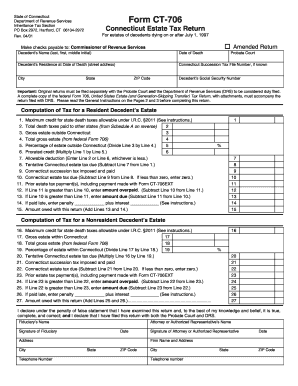
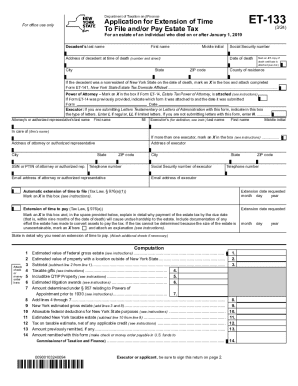
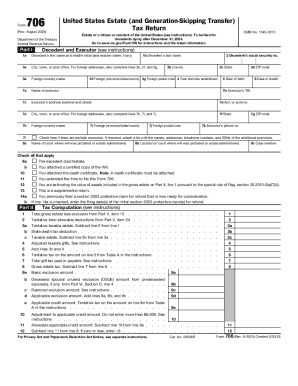
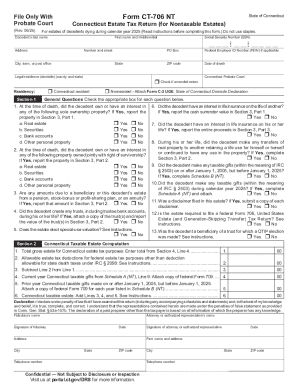
NY DTF ET-706-I Form Versions
Related Content
Related Forms



Get the latest insights from our blog


If you believe that this page should be taken down, please follow our DMCA take down process
here
.
This form may include fields for payment information. Data entered in these fields is not covered by PCI DSS compliance.