
Last updated on
Nov 12, 2026

NY DTF ET-706-I 2021 free printable template
pdfFiller is not affiliated with any government organization

Fill out
Complete the form online in a simple drag-and-drop editor.

eSign
Add your legally binding signature or send the form for signing.

Share
Share the form via a link, letting anyone fill it out from any device.

Export
Download, print, email, or move the form to your cloud storage.
Why pdfFiller is the best tool for your documents and forms


End-to-end document management
From editing and signing to collaboration and tracking, pdfFiller has everything you need to get your documents done quickly and efficiently.
Accessible from anywhere
pdfFiller is fully cloud-based. This means you can edit, sign, and share documents from anywhere using your computer, smartphone, or tablet.
Secure and compliant
pdfFiller lets you securely manage documents following global laws like ESIGN, CCPA, and GDPR. It's also HIPAA and SOC 2 compliant.
What is NY DTF ET-706-I
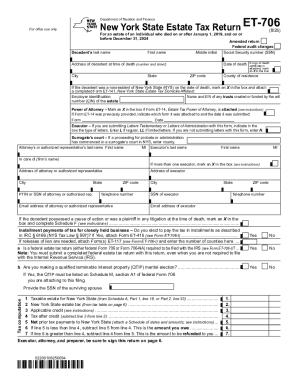
The New York State Estate Tax Return is a tax form used by the estate of a deceased individual to report estate taxes owed to New York State.
pdfFiller scores top ratings on review platforms




Who needs NY DTF ET-706-I?
Explore how professionals across industries use pdfFiller.

NY DTF ET-706-I is needed by:
-
Executors of estates for individuals who died on or after January 1, 2021.
-
Beneficiaries receiving assets from the estate.
-
Tax professionals assisting with estate filings.
-
Individuals managing estate assets exceeding the basic exclusion amount.
-
Lawyers handling estate planning and administration.
Comprehensive Guide to NY DTF ET-706-I
What is the New York State Estate Tax Return (Form ET-706)?
The New York State Estate Tax Return (Form ET-706) is an essential document used by the estate of individuals who died on or after January 1, 2021. It serves to report estate values when they exceed the New York State basic exclusion amount, which is critical for executors to understand. Timely filing is mandatory to comply with legal requirements and avoid penalties.
This form plays a vital role in determining estate tax liabilities and ensuring that estates are administered according to state laws. Executors must proactively file this return to manage any tax obligations efficiently.
Who Needs the New York State Estate Tax Return?
The responsibility to file the New York State Estate Tax Return typically falls upon the executor of the estate. Executors play a pivotal role in ensuring that estates are managed and settled according to legal requirements.
Estate representatives must file if the estate's total value exceeds the specified exclusion amount set by New York State tax guidelines. Understanding the criteria for filing is essential for meeting obligations and adhering to deadlines associated with the estate.
When to File the New York State Estate Tax Return?
Filing the New York State Estate Tax Return must occur within nine months of the decedent's death. This deadline is crucial for compliance and to avoid potential complications.
There are options available for filing extensions under specific conditions. However, executors must be aware that late filings can result in penalties and interest, making timely submission a priority.
Necessary Documents for Filing the New York State Estate Tax Return
To successfully file the New York State Estate Tax Return, several key documents must accompany the form:
-
Death certificate of the decedent.
-
The last will and testament.
-
Any prior gift tax returns.
-
Federal estate tax return, if applicable.
Accurate documentation is critical to avoid delays during processing. Executors must ensure that all required documents are submitted in the correct format as outlined by state regulations.
Instructions for Filling Out the New York State Estate Tax Return (Step-by-Step)
To accurately complete the New York State Estate Tax Return, follow these structured steps:
-
Gather all necessary documents and information regarding the decedent's estate.
-
Fill out each section of Form ET-706 carefully, ensuring accurate data entry.
-
Check for common errors, such as incorrect valuations or missing information.
-
Review the completed form to validate accuracy prior to submission.
By adhering to this step-by-step guide, executors can minimize errors and ensure compliance with filing requirements.
Submitting the New York State Estate Tax Return
There are various methods available for submitting the completed New York State Estate Tax Return:
-
Online submission through the New York State Department of Taxation and Finance.
-
Mailing the completed form to the designated tax office.
-
In-person submission at a local tax office.
Tracking submissions is recommended to confirm receipt and compliance. Executors should be mindful of submission deadlines and any associated fees that may apply.
Consequences of Not Filing or Late Filing the New York State Estate Tax Return
Failing to file or submitting the New York State Estate Tax Return late can result in significant consequences, including:
-
Accrued penalties for late filing and payments.
-
Interest on outstanding estate taxes.
-
Potential legal implications for the executor.
Executors are strongly advised to file on time to mitigate any issues related to non-compliance with tax obligations.
Ensuring Security and Compliance While Filing the New York State Estate Tax Return
When filing the New York State Estate Tax Return, it is imperative to prioritize the security of sensitive documents. pdfFiller provides robust security measures, including:
-
256-bit encryption for document protection.
-
Compliance with HIPAA and GDPR regulations.
-
Trusted handling of personal data throughout the filing process.
Choosing secure platforms for handling sensitive filings is essential to safeguarding personal information and ensuring compliance with applicable laws.
How pdfFiller Can Help with Your New York State Estate Tax Return
pdfFiller offers various features that facilitate the filling and management of the New York State Estate Tax Return, such as:
-
Editing capabilities for modifying existing forms.
-
E-signature options for quick approvals.
-
Cloud-based solutions for easy access and document management.
Utilizing pdfFiller can enhance the experience for users aiming to complete their estate tax return efficiently.
Next Steps for Filling Out the New York State Estate Tax Return
To initiate the filing process, executors should access the New York State Estate Tax Return through pdfFiller. The platform offers a user-friendly interface designed for ease of use.
Completing the form online streamlines the process, allowing for timely submissions. Executors should take action today to ensure compliance with estate tax obligations.
How to fill out the NY DTF ET-706-I
-
1.Access the New York State Estate Tax Return (Form ET-706) on the pdfFiller platform by visiting their website and searching for the form in the search bar.
-
2.Once opened, familiarize yourself with pdfFiller's interface, which allows for easy navigation and completion of the form using digital fields.
-
3.Before starting, gather all necessary information such as the death certificate, the decedent's last will, and details about the gross estate and any taxable gifts.
-
4.Begin filling the form by entering the required information directly into the fields, ensuring all relevant sections such as the decedent’s information and estate values are accurately completed.
-
5.After completing the form, review all entered data for accuracy, ensuring that all supporting documents are included as necessary.
-
6.Once finalized, utilize pdfFiller’s download or save options to keep a copy for your records, and follow the prompts to submit it online if applicable.

Who is required to file the New York State Estate Tax Return?
The New York State Estate Tax Return must be filed by the executor of the estate for any individual who died on or after January 1, 2021, when the estate's total value exceeds New York's basic exclusion amount.
What is the deadline for filing this estate tax return?
The estate tax return must be filed within nine months following the decedent's date of death. An extension for filing may be requested under specific conditions.
What types of documents are needed to complete this form?
You will need the death certificate, the decedent's last will, and a complete inventory of the estate's assets, including any includible taxable gifts.
How can I avoid common mistakes when filing this form?
To avoid mistakes, ensure all information is accurate, double-check calculations, and include required supporting documents. It's also advisable to consult with a tax professional if unsure.
What happens if I file the estate tax return late?
Late filing may result in penalties and interest charges. If you anticipate being late, it's important to request an extension as soon as possible.
How do I submit the New York State Estate Tax Return?
You can submit the estate tax return electronically if using a tax preparation software like pdfFiller or mail a completed paper form to the appropriate New York State tax authority.
Can I receive help in completing this form?
Yes, tax professionals and estate planning lawyers can offer assistance in filling out the New York State Estate Tax Return and ensuring compliance with state tax laws.
NY DTF ET-706-I Form Versions
Related Content
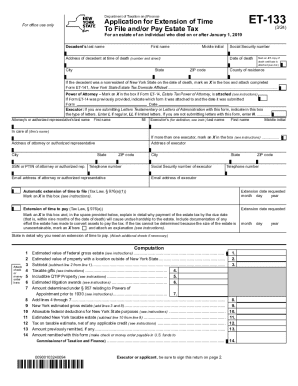
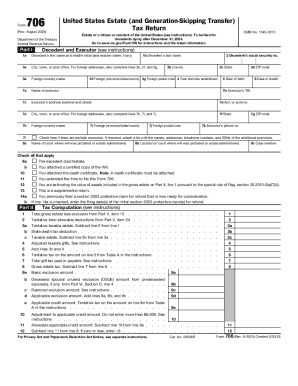
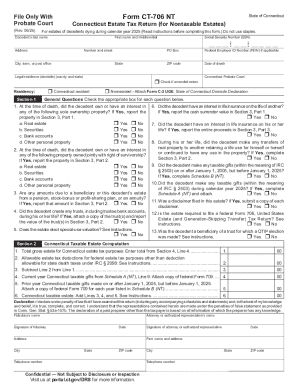
Related Forms



Get the latest insights from our blog


If you believe that this page should be taken down, please follow our DMCA take down process
here
.
This form may include fields for payment information. Data entered in these fields is not covered by PCI DSS compliance.