
Last updated on
Oct 19, 2026

CA EJ-150 2002 free printable template
pdfFiller is not affiliated with any government organization

Fill out
Complete the form online in a simple drag-and-drop editor.

eSign
Add your legally binding signature or send the form for signing.

Share
Share the form via a link, letting anyone fill it out from any device.

Export
Download, print, email, or move the form to your cloud storage.
Why pdfFiller is the best tool for your documents and forms


End-to-end document management
From editing and signing to collaboration and tracking, pdfFiller has everything you need to get your documents done quickly and efficiently.
Accessible from anywhere
pdfFiller is fully cloud-based. This means you can edit, sign, and share documents from anywhere using your computer, smartphone, or tablet.
Secure and compliant
pdfFiller lets you securely manage documents following global laws like ESIGN, CCPA, and GDPR. It's also HIPAA and SOC 2 compliant.
What is CA EJ-150
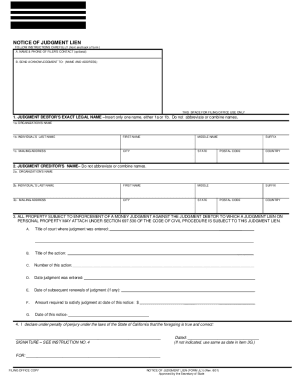
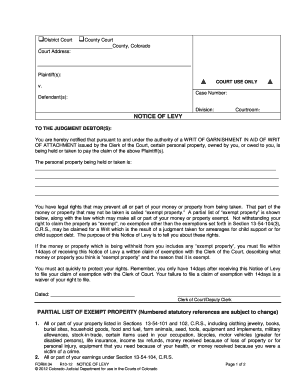
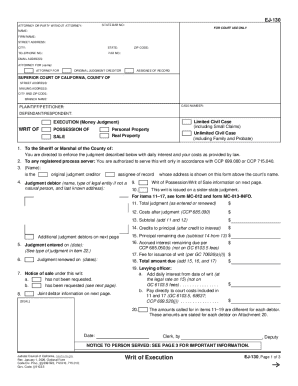
The California Notice of Levy is a legal document used by judgment creditors to notify a judgment debtor or others of the levy upon property in order to satisfy a money judgment.
pdfFiller scores top ratings on review platforms




Who needs CA EJ-150?
Explore how professionals across industries use pdfFiller.

CA EJ-150 is needed by:
-
Levying Officers who need to enforce court judgments
-
Registered Process Servers for legal document service
-
Judgment Creditors pursuing owed payments
-
Individuals facing asset levies due to debts
-
Attorneys representing clients in collection cases
-
Court officials managing legal filings
Comprehensive Guide to CA EJ-150
What is the California Notice of Levy (EJ-150)?
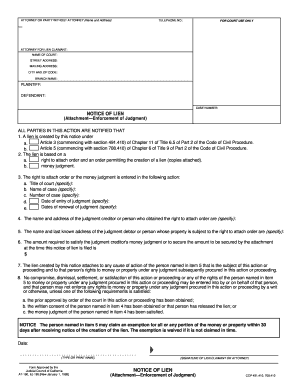
The California Notice of Levy (EJ-150) serves as a crucial legal document in the enforcement of a money judgment. This form notifies the judgment debtor and other relevant parties regarding the levy on property aimed at satisfying a judgment. The document outlines significant details about the judgment, including the property to be levied upon and any exemptions related to the process. It plays a vital role in ensuring that judgment creditors can collect outstanding debts efficiently.
Key components in the EJ-150 form encompass information about the judgment, specifics of the property involved, and guidelines on how to claim any applicable exemptions. Understanding these elements is essential for both creditors and debtors navigating the complexities of levies in California.
Purpose and Benefits of the California Notice of Levy
The California Notice of Levy is instrumental for judgment creditors looking to enforce their rights to collect debts owed. By utilizing this form, creditors can initiate the legal process necessary to access property that can be used to satisfy outstanding judgments. This mechanism is especially beneficial for ensuring that debts are collected in a timely manner.
For debtors, knowing their rights during a levy process is equally important. The California Notice of Levy delineates the responsibilities and rights of both parties, helping to foster clear communication and understanding. Overall, this form facilitates a structured approach to resolving financial obligations through legal channels.
Who Needs the California Notice of Levy?
Eligibility Criteria for Filing the California Notice of Levy
-
Valid judgment against the debtor
-
Proper identification of the property to be levied
-
Understanding of the exemptions that may apply
How to Fill Out the California Notice of Levy Online (Step-by-Step)
Filling out the California Notice of Levy (EJ-150) online is a straightforward process that can be accomplished using pdfFiller. Follow these step-by-step instructions to ensure accuracy:
-
Access the ej-150 form via pdfFiller.
-
Begin by entering your name and address in the 'ATTORNEY OR PARTY WITHOUT ATTORNEY' section.
-
Fill in your contact number under 'TEL NO.'
-
Provide the details of the property being levied.
-
Review any exemptions that might apply.
-
Double-check for completeness and accuracy before submission.
Common errors to avoid include omitting vital information, failing to check relevant boxes, and not reviewing your contact information for accuracy. Making sure to adhere to these steps will streamline the submission process.
Review and Validation Checklist for the California Notice of Levy
-
Ensure all required fields are filled out completely.
-
Check that the judgment details reflect accurate and complete information.
-
Verify the property details against public records.
-
Confirm that there are no typographical errors in contact information.
How to Submit the California Notice of Levy
Security and Compliance When Filing the California Notice of Levy
Sample or Example of a Completed California Notice of Levy
Empower Your Filing Process with pdfFiller
How to fill out the CA EJ-150
-
1.To start, access pdfFiller and use the search bar to find 'California Notice of Levy' or EJ-150 form.
-
2.Once you find the form, click on it to open in the pdfFiller environment for editing.
-
3.Before you begin filling out the form, gather all necessary information including the judgment amount and details about the property to be levied.
-
4.Navigate through the form using pdfFiller’s editing tools, filling out all required fields like 'ATTORNEY OR PARTY WITHOUT ATTORNEY' and providing your contact details.
-
5.Be sure to follow the instructions given on the form, including any necessary checkboxes or additional information that may be required.
-
6.After completing the form, review all entries for accuracy, ensuring that no fields are left blank and all necessary signatures are provided.
-
7.Utilize the review feature on pdfFiller to double-check your entries and make any needed adjustments.
-
8.Once satisfied with your form, save it to your pdfFiller account, download it to your device, or choose to submit it directly through the platform.

Who is eligible to use the California Notice of Levy?
The California Notice of Levy is intended for use by judgment creditors, levying officers, and registered process servers involved in enforcing court-ordered judgments. Anyone needing to collect a judgment through property levies can utilize this form.
Is there a specific deadline for submitting the Notice of Levy?
While there isn't a strict deadline for filing the California Notice of Levy, it should be submitted promptly after the judgment is awarded to prevent asset dissipation by the debtor. Timeliness is essential to effective debt collection.
How do I submit the California Notice of Levy?
The California Notice of Levy can be submitted at the appropriate local court or delivered as part of the legal process via a registered process server. Ensure all required signatures and information are completed before submission.
What supporting documents are needed with the Notice of Levy?
Typically, supporting documents may include a court judgment copy, identification, and any prior notices to the debtor. Always verify specific local court requirements to ensure compliance when filing.
What are common mistakes to avoid when completing the Notice of Levy?
Common mistakes include missing required fields, not including necessary signatures, or failing to attach supporting documents. It's crucial to review the form carefully before submission to avoid these issues.
What is the processing time for a Notice of Levy?
Processing times for a Notice of Levy can vary by jurisdiction but typically range from a few days to a couple of weeks, depending on court workload. Always check with your local court for specific timelines.
Can I edit the California Notice of Levy after submitting?
Once the California Notice of Levy is submitted and filed with the court, it generally cannot be altered. If changes are necessary, consult your attorney for guidance on the proper steps to take.
CA EJ-150 Form Versions
Related Content
Related Forms



Get the latest insights from our blog


If you believe that this page should be taken down, please follow our DMCA take down process
here
.
This form may include fields for payment information. Data entered in these fields is not covered by PCI DSS compliance.