Lecture Evaluation Form Templates

Get eSignatures done in a snap

Prepare, sign, send, and manage documents from a single cloud-based solution.

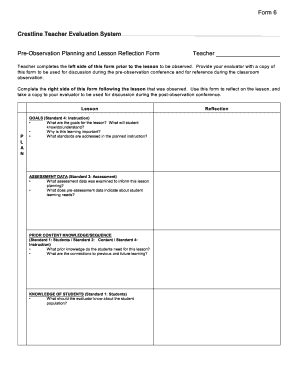
What are Lecture Evaluation Form Templates?

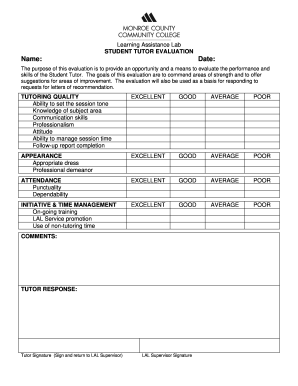
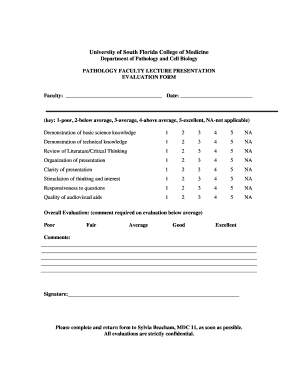
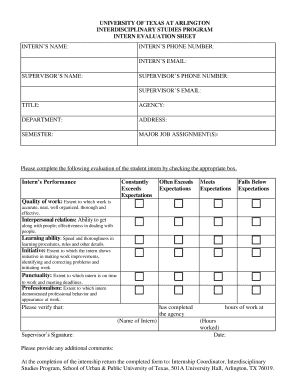
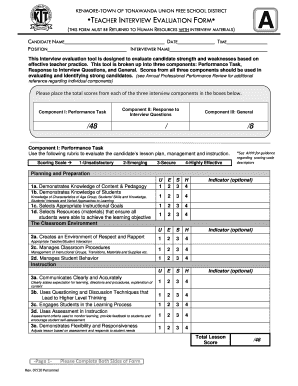
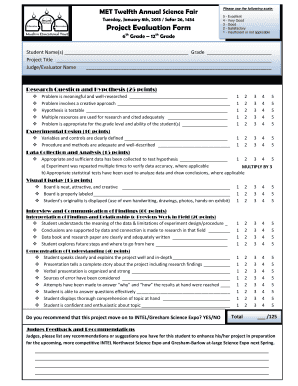
Lecture Evaluation Form Templates are standardized documents used to gather feedback and assess the effectiveness of a lecture or presentation. These forms typically include questions related to the content, delivery, and impact of the presentation.

What are the types of Lecture Evaluation Form Templates?

There are several types of Lecture Evaluation Form Templates designed to suit different presentation formats and evaluation criteria. Some common types include:

Traditional paper-based forms
Digital or online forms
Customized templates for specific subjects or industries

How to complete Lecture Evaluation Form Templates
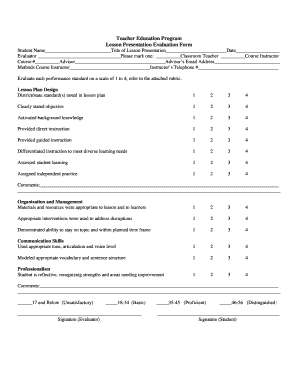
Completing a Lecture Evaluation Form Template is easy and straightforward. Here are some steps to guide you through the process:

01
Carefully read and understand each question on the form
02
Provide honest feedback based on your observations and experiences
03
Use clear and concise language to express your thoughts
04
Review your responses before submitting the form

Remember, pdfFiller empowers users to create, edit, and share documents online. Offering unlimited fillable templates and powerful editing tools, pdfFiller is the only PDF editor users need to get their documents done.

Video Tutorial How to Fill Out Lecture Evaluation Form Templates
Thousands of positive reviews can’t be wrong

Read more or give pdfFiller a try to experience the benefits for yourself
4.0
So far, it is excellent for moderately tweaking content.
So far, it is excellent for moderately tweaking content. It would be nice if I could select images and move them like Adobe but this is so rarely needed....
Brittany T.
5.0
Me ayuda de mucho en verdad gracias a los creadores de esta gran idea para resol...
Me ayuda de mucho en verdad gracias a los creadores de esta gran idea para resolver los problemas de modificaciones en la los documentos
anonymous S.
5.0
Very easy to use and expedite the.
Very easy to use and expedite the… Very easy to use and expedite the process of completing the form.
Damon L. Humphrey
5.0
Pdffiller Pdffiller makes it easy to add in information on a copy of something t...
Pdffiller Pdffiller makes it easy to add in information on a copy of something that is used widely throughout company for all employees. It saves the time, hassle and trees not having to print it out, fill it out and send it back in. There wasn't anything that i disliked about the software
Hannah B.

Questions & answers

How to write an employee evaluation Gather employee information. Gather required information related to the employee to get the full picture of their value to the company. List employee responsibilities. Use objective language. Use action verbs. Compare performance ratings. Ask open-ended questions. Use a point system.
A good evaluation form provides plenty of space for supervisor comments and suggestions and will include an easily understandable rating system.
A ratings scale—or grading system—is probably the most commonly used performance review method. This method is based on a set of employer-developed criteria—which can include behaviors, traits, competencies, or completed projects—against which employees are judged.
Watermark recommends using the following evaluation categories and criteria as an instructor evaluation checklist for a holistic view of your professor's teaching abilities: Knowledge and Enthusiasm for Subject Matter. Experience, Skill, and Creativity in the Classroom. Clear Student Expectations and Testing Practices.
An evaluation form is a tool professionals can use to give and receive feedback. It usually contains questions that help the person complete the form. They can use the questions as a prompt to evaluate or give feedback and opinions about another person.
A collaborative approach will feel less daunting than a traditional, one-sided performance evaluation form. Identify core competencies. Choose a rating scale. Set an evaluation cycle. Prepare a list of questions. Share questions in advance. Have the conversation. Create a goal-setting framework. Be open to feedback.