Compress Word Files for Easy Sharing
Compress Word files to reduce size for easier sharing and storage without losing quality.
What is the Compress Tool?
The Compress tool is designed to help you compress Word documents efficiently. This tool reduces file size while maintaining the quality of the text, making it ideal for small businesses that need to share documents quickly. Accessible directly in the pdfFiller editor, it allows you to optimize your documents without the complications often associated with traditional software. You can easily use this tool to ensure that your Word files are manageable and ready for sharing.
Why Compress Your Word Documents?
Reducing the size of your Word documents is essential for several reasons. First, compressing Word files allows for faster email sending, which is crucial for professionals who need to communicate efficiently. Additionally, it saves storage space on your devices, making document management simpler. This practice improves sharing efficiency, especially for remote work scenarios where large files can cause delays. Overall, compressing your documents is a straightforward solution to common file size issues.
How to Access the Compress Tool
You can easily locate the Compress tool in pdfFiller. It is available in the editor header, allowing you to access it directly while working on your documents. You can also find it from the All Tools dashboard, making it convenient to use without needing to upload documents first. The user-friendly interface ensures that you can navigate to the tool effortlessly, simplifying the process of document compression.
Steps to Compress a Word Document
- Select the Word document you want to compress.
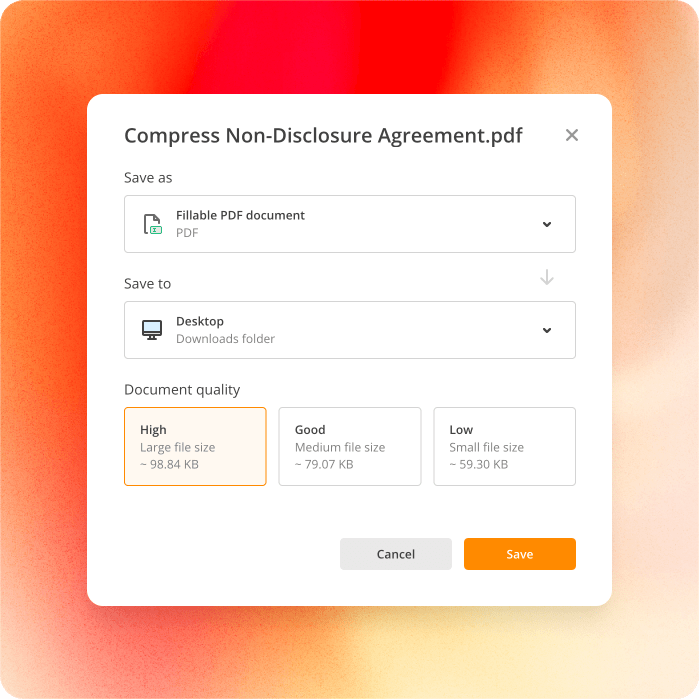
- Choose the desired compression level based on your needs.
- Download the compressed file once the process is complete.
- No IT setup is required, making it accessible for everyone.
Choosing the Right Compression Quality Level
When you compress Word files, you have several quality settings to choose from: high, medium, and low. Each setting impacts the fidelity of images within the document, so it's important to select based on your specific needs. For instance, if your document contains many images, you might want to opt for a medium or low setting to achieve a significant reduction in file size. Understanding these options helps you make informed decisions about how to reduce file size effectively.
What Changes After Compression?
After you compress your Word documents, some changes may occur. While the text remains intact and the structure of the document is preserved, images may lose some quality. This is particularly relevant for documents that rely heavily on visuals. However, form fields and other interactive elements will remain unaffected, ensuring that your document's functionality is maintained even after compression.
Expected File Size Reduction
The amount of file size reduction you can expect when you compress Word files varies based on the content type. For instance, image-heavy files typically see a more significant reduction compared to text-only documents, which may experience minimal changes. If your files are already optimized, you might find that compression yields little to no reduction in size. Setting realistic expectations is key to effectively managing your document sizes.
What to Do After Compression
Once you have compressed your Word document, there are a few important steps to follow. First, check the file size to ensure it meets your needs. You can then download the compressed file and share it via email or other platforms. If the file size is still larger than desired, consider re-compressing it with a different quality setting to achieve better results. These steps will help you manage your documents effectively after compression.
Comparing Compression Tools
When considering different tools for compressing Word files, it's helpful to understand how pdfFiller compares to others. For example, pdfFiller offers unique features such as an extensive template library, which Smallpdf lacks. While Adobe Acrobat is known for its robust features, it comes with a higher price tag, making it less accessible for small businesses. Foxit provides compression tools but does not match pdfFiller's ease of use and integration with other document management features.
Industry-Specific Scenarios for Compression
There are various scenarios where the Compress tool can be particularly beneficial. Freelancers often need quick file sharing to meet client demands, making compression essential. Small businesses managing client documents can benefit from reduced file sizes for easier storage and sharing. Remote teams collaborating on projects find that compressed documents streamline their workflows. Educators distributing materials can also use this tool to ensure their documents are easily accessible for students without compromising quality.