Create Calculation and Checkmark in PDF
Create calculations and checkmarks in your PDF documents easily using pdfFiller's Add Fields feature.
What is Add Fields Mode?
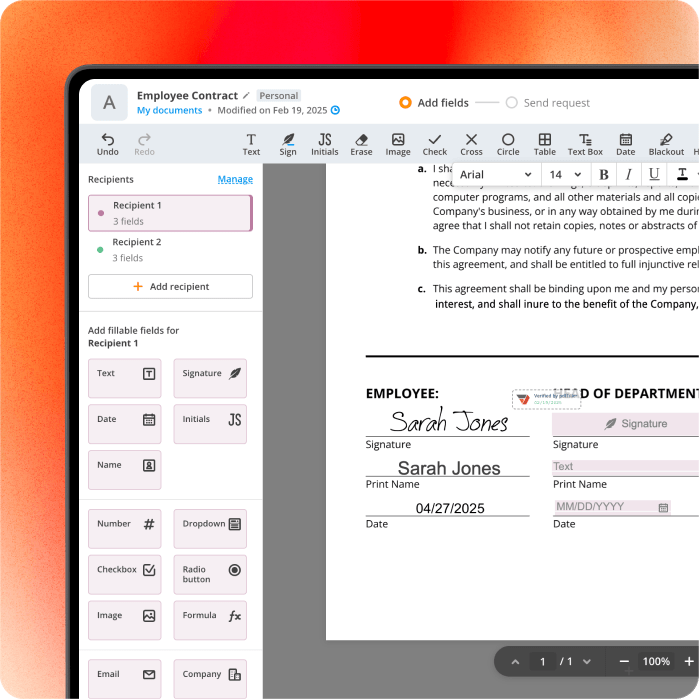
Add Fields mode is a feature that allows you to convert static PDFs into interactive forms. This mode can be accessed via the Add Fields toggle in the pdfFiller editor, making it easy for you to create dynamic documents. Unlike Edit Mode, which focuses on modifying existing content, Add Fields mode is specifically designed for adding interactive elements. It supports various field types, enabling you to customize your PDFs according to your needs.
Why Use Interactive Fields?
Utilizing interactive fields in your PDFs eliminates the need for printed forms, significantly reducing paper waste. This approach improves data accuracy and collection, ensuring that the information gathered is reliable. Additionally, interactive fields enhance user engagement with documents, making it easier for recipients to fill out forms. By streamlining document processes, you can save time and focus on more important tasks.
How to Access Add Fields Mode
- Locate the Add Fields button in the pdfFiller editor interface.
- Differentiate it from the Edit Mode pencil icon to avoid confusion.
- Ensure you are using supported browsers for optimal performance.
- Access Add Fields mode from any device, allowing flexibility in document management.
Uploading Documents to pdfFiller
To upload documents for editing, you need to be aware of the supported file formats, which include various PDF types. If you have non-PDF formats, you may need to convert them first. The upload paths and options are straightforward, allowing you to drag and drop files into the interface. Keep in mind that there may be file size limitations, so check your documents before uploading.
Full Field Library Overview
pdfFiller offers a comprehensive field library that includes various field types. Standard field types such as Text, Number, and Date allow for basic data entry. For identity verification, fields like Name, Email, and Phone are available. Selection fields, including Checkbox and Radio Button, enable users to make choices easily. Additionally, signature fields such as Initials and Signature are crucial for legal documents, ensuring authenticity.
Step-by-Step Instructions for Adding Fields
- Drag and drop the desired field types from the panel onto your document.
- Configure field properties in the right panel to match your requirements.
- Save changes to the document to ensure all modifications are preserved.
- Preview the document before finalizing to check for any errors or adjustments needed.
Configuring Field Properties
When configuring field properties, you can adjust the label and placeholder text to guide users effectively. Setting required fields and validation rules ensures that necessary information is collected. You can also change the font size and style to match your document's branding. Additionally, defining default values for fields can streamline the filling process for recipients.
Checkboxes vs. Radio Button Groups
Checkboxes allow multiple selections, making them ideal for options where users can choose more than one answer. In contrast, radio buttons are mutually exclusive, meaning users can select only one option from a group. Understanding the configuration differences in the editor is essential for effective form design. Each field type has specific use cases that can enhance user experience.
Adding Fields to Scanned PDFs
You can add fields to scanned PDFs by overlaying interactive fields without the need for OCR. However, there are limitations in handling scanned documents, so be aware of potential issues. Best practices for scanned documents include ensuring clarity in field placement to avoid confusion for users. This approach allows you to make scanned documents interactive without extensive editing.
Next Steps After Adding Fields
After adding fields, you can assign recipients for signing, ensuring that the document is legally binding. Saving the document as a template for future use can save time on repetitive tasks. You can also collect completions from recipients to track responses efficiently. Finally, tracking document status and history helps you manage your workflows effectively.