Compress PDF File Size Efficiently
Compress PDF files quickly and easily with pdfFiller's tool.
What Does the Compress Tool Do?
The Compress tool is designed to optimize PDF files by reducing their size without sacrificing essential content. It effectively compresses embedded images, ensuring that the visual quality remains intact while minimizing the file size. Additionally, the tool flattens annotation layers, which helps in maintaining the document's structure. By applying file-level compression, it is particularly beneficial for image-heavy PDFs, making them easier to share and store. This straightforward approach avoids the complexity often associated with similar tools, allowing you to manage your documents efficiently.
Why Compress Your PDF Files?
Reducing the size of your PDF files is crucial for several reasons. First, smaller files lead to faster uploads and downloads, which can significantly enhance your productivity. When sharing documents, especially via email, smaller file sizes improve sharing capabilities and ensure that recipients can access them without delay. Moreover, compressing PDFs saves valuable storage space, allowing you to manage your documents more effectively. Overall, the benefits of file size reduction are clear, as they contribute to a more efficient document management process.
How to Access the Compress Tool
To locate the Compress feature in pdfFiller, you can find it conveniently situated in the editor header. Additionally, it is available in the All Tools dashboard, making it easy to access whenever you need to compress a PDF file. This straightforward navigation ensures that you can quickly utilize the tool without any confusion, streamlining your document management process.
Upload Options for Compression
When preparing to compress your documents, it's essential to understand the upload options available. The Compress tool supports various file formats, ensuring flexibility in your document management. Before compression, the tool may convert certain file types to ensure compatibility, so be aware of the conversion behavior that may occur. This clarity on upload procedures helps you avoid any unsupported formats and ensures a smooth compression process.
Step-by-Step Instructions for Compression
- Open pdfFiller and log into your account.
- Navigate to the All Tools dashboard and select the Compress tool.
- Click on the "Upload" button to choose the PDF file you want to compress.
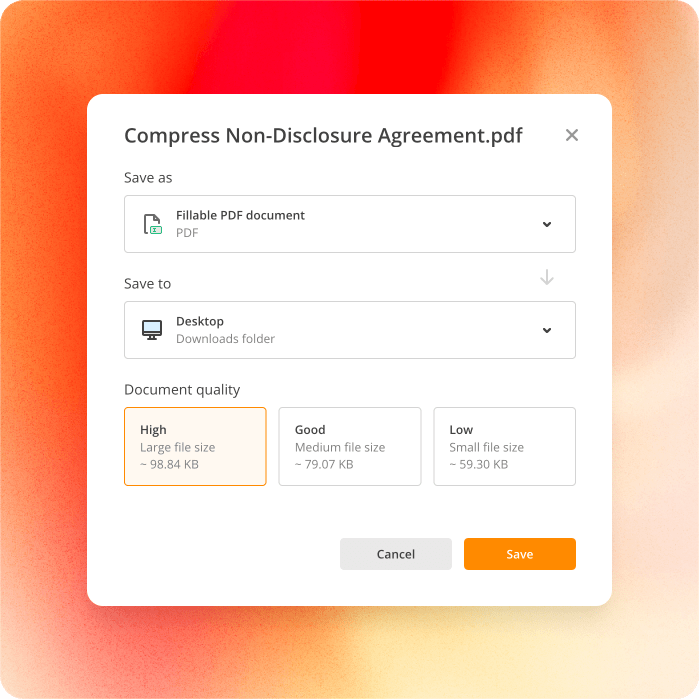
- Select the desired compression quality level: High, Medium, or Low.
- Review the file details and click on the "Compress" button to start the process.
- Wait for the compression to complete; this may take a few moments.
- Once done, download the compressed PDF file to your device.
- If the file is still too large, consider repeating the process with a lower quality setting.
Choosing a Compression Quality Level
When using the Compress tool, you have the option to select between High, Medium, and Low quality settings. Choosing a higher quality level will maintain better image fidelity but result in a larger file size. Conversely, selecting a lower quality may significantly reduce the file size but could impact the clarity of images. Understanding the impact of each quality setting on both file size and image quality is crucial for achieving the desired balance between compression and content integrity.
What Changes After Compression?
After compressing a PDF file, you can expect that the text and overall structure of the document will remain intact. However, there may be some effects on images and annotations. While the text will be preserved, images may experience a reduction in quality depending on the chosen compression level. It's important to review the compressed file to ensure that it meets your expectations and retains the necessary content integrity.
Expected File Size Reduction
When compressing a PDF, it's essential to set realistic expectations for file size reduction. The degree of size reduction can vary significantly based on the document's content. For instance, image-heavy PDFs may see more substantial reductions compared to text-based documents. However, there are limitations to how much a file can be compressed, and it's important to understand that exact percentage promises are not feasible. This variability should be considered when planning your document management strategy.
Next Steps After Compression
Once you have compressed your PDF file, the next step is to download the compressed version to your device. If you find that the file is still too large, you may want to consider compressing it again with a lower quality setting. This follow-up action ensures that you can effectively manage your document sizes and maintain efficiency in your workflows.
Comparing Compression Methods
The Compress tool stands out from other methods like deleting pages or splitting documents. While those methods serve specific purposes, the Compress tool uniquely focuses on reducing file size without losing essential content. This targeted approach offers distinct benefits, making it an ideal choice for those looking to optimize their PDF files efficiently.
How Compression Fits into Sharing Workflows
Compression plays a vital role in enhancing document sharing workflows. By reducing file sizes, it connects seamlessly with email and sharing features, allowing for quicker and more efficient distribution of documents. Smaller files are easier to send and receive, which is particularly beneficial for professionals who frequently share large files. Integrating compression into your document management process can significantly improve your overall efficiency.
Real-World Scenarios for Compression
Compression is particularly beneficial in various real-world scenarios. For small businesses, compressing invoices and contracts can streamline the sharing process with clients and partners. Roles such as administrative assistants and project managers can greatly benefit from using the Compress tool to manage project documentation effectively. These specific use cases illustrate how compression can enhance productivity and facilitate smoother workflows.
Supported Formats and Export Options
The Compress tool supports a variety of input file types, ensuring that you can work with different document formats. After compression, you can export your files in commonly used formats, allowing for flexibility in how you share and manage your documents. Understanding the compatibility of formats helps you avoid any issues during the compression process.
Browser and Device Compatibility
pdfFiller's Compress tool is compatible with a range of browsers, ensuring that you can access it from your preferred platform. Additionally, mobile device access allows you to manage your PDFs on the go, making it convenient for busy professionals. This compatibility across platforms enhances the overall user experience, allowing for seamless document management.
Limitations of the Compress Tool
While the Compress tool offers many benefits, it's important to be aware of its limitations. Certain plan-tier restrictions may affect the level of compression available to you. Additionally, some content types may yield minimal size reduction, which could limit the effectiveness of the tool in specific scenarios. Being informed about these limitations helps you set realistic expectations for your compression needs.
Security and Compliance of Compressed Files
Security is a top priority when using the Compress tool. During the compression process, your files are encrypted to protect sensitive information. Furthermore, pdfFiller holds compliance certifications that ensure your documents meet industry standards for security. This emphasis on security and compliance provides peace of mind when managing your documents digitally.
Comparison with Other Compression Tools
pdfFiller's Compress tool stands out when compared to alternatives like Smallpdf, ilovepdf, and Adobe Acrobat. Unlike some competitors, pdfFiller offers a user-friendly interface and efficient compression without sacrificing quality. These unique advantages make pdfFiller a preferred choice for those seeking effective PDF compression solutions.
Free vs. Paid Access for PDF Compression
Compression is available on both free and paid plans, allowing users to access this essential feature. However, there may be limits on file size or the number of compressions allowed on the free plan. Understanding these differences in access levels helps you choose the best option for your document management needs.
Next Steps and Broader Workflow Connection
Integrating compression into your overall document management workflow can lead to significant benefits. By streamlining the compression process, you can enhance your document workflows and improve efficiency. This connection between compression and broader document management practices ensures that you can manage your files effectively and maintain productivity.