Compress Word File Size to 1 MB
Compress your Word file size to 1 MB effortlessly with pdfFiller's tool.
What is the Compress Tool?
The Compress tool is designed to help you Compress Word File Size efficiently. It is available in pdfFiller's editor and the All Tools dashboard, making it easily accessible. This tool optimizes embedded images and flattens layers, ensuring that your document maintains its integrity. Importantly, it preserves text and form data integrity, allowing you to compress files without losing essential information. You can access the Compress tool without needing any IT setup, making it user-friendly for everyone.
Why Compress Your Word Files?
Compressing your Word files offers several benefits. First, it improves upload speed for email and sharing, making your workflow more efficient. Additionally, it reduces storage space usage, which is crucial for managing documents effectively. By compressing files, you can avoid file size limits on various platforms, ensuring that you can share your documents without hassle. Finally, it enhances document accessibility, allowing you to share files more easily with colleagues or clients.
How to Access the Compress Tool
To locate the Compress tool, simply look in the editor header toolbar. It is also available in the All Tools dashboard, so you can access it without having any document open. This feature is compatible with all browsers, ensuring that you can use it regardless of your preferred platform.
Steps to Compress Your Word File
- Open your document in pdfFiller to begin the compression process.
- Click the Compress button located in the toolbar to initiate compression.
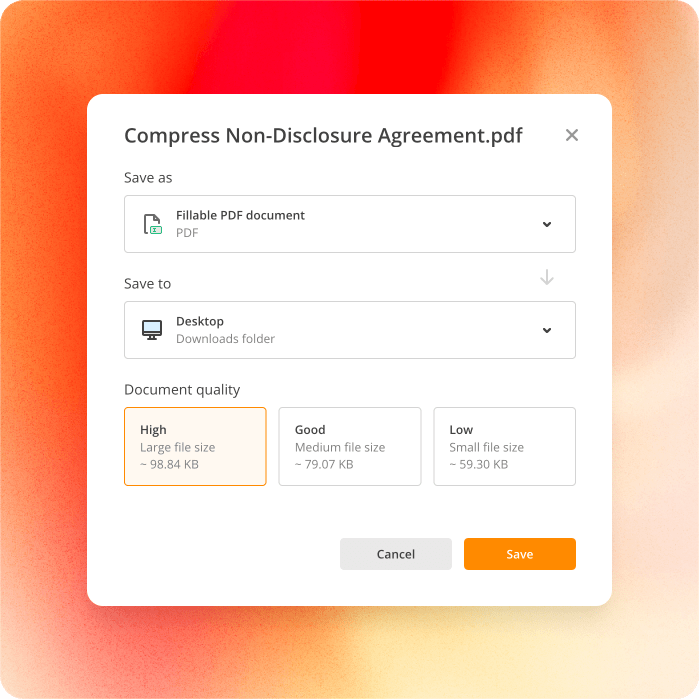
- Select your desired quality level to balance size and fidelity.
- Download the compressed file to your device for use.
Choosing a Compression Quality Level
When using the Compress tool, you can choose from different quality levels. The high-quality setting offers minimal change to your document while achieving a modest reduction in file size. The medium quality strikes a balance between size and quality, making it suitable for most needs. The low-quality option maximizes reduction but may result in visible quality loss. Keep in mind that the quality level you choose will affect both the file size and its appearance.
What Changes After Compression?
After compression, some changes may occur in your document. Images may lose quality depending on the settings you selected during compression. However, the text and form data will remain intact, ensuring that the core content of your document is preserved. The overall structure and annotations will also be preserved, and compression does not alter the document's functionality.
Expected File Size Reduction
The amount of size reduction you can expect varies depending on the content of your document. For example, image-heavy files typically compress significantly, while text-only files may see minimal reduction. If your file has already been optimized, you might not notice much change in size after compression. Understanding these variations can help set realistic expectations.
After Compression: What’s Next?
Once you have compressed your file, the next steps are straightforward. First, download the compressed file to your device. After downloading, check if the file size meets your needs. If the file is still too large, you may want to consider further compression. Finally, integrate the compressed file into your sharing workflow to enhance efficiency.
Compress vs. Other Size-Reduction Methods
When comparing compression with other size-reduction methods, it's essential to understand their unique purposes. For instance, compressing a file differs from deleting pages, as the former reduces size while maintaining content. Similarly, compressing is different from splitting a document, which is useful when you need to separate sections. Additionally, using the Save As function can affect file quality, whereas compression focuses on reducing size without altering the document's core content.
Industry Scenarios for Compression
Compression is beneficial in various real-world scenarios. For example, marketing teams often need to share large presentations quickly, making compression essential for efficient collaboration. Legal professionals sending contracts via email can also benefit from reduced file sizes, ensuring timely communication. Freelancers submitting work to clients can streamline their submissions by compressing files, while small businesses managing document storage can save space and improve organization through effective compression practices.
Supported Formats and Export Options
The Compress tool supports multiple file formats, including DOCX, DOC, and PDF. You can export your compressed files in both PDF and Word formats, ensuring compatibility with various document types. It is crucial to ensure that the formats you are using are suitable for compression to achieve the best results.
Browser Compatibility for Compression
pdfFiller's Compress tool works seamlessly on popular browsers such as Chrome, Firefox, Safari, and Edge. It is also accessible on mobile devices, allowing you to compress files on the go. No installation is required, making it easy to use across different platforms.
Limitations of the Compress Tool
While the Compress tool is effective, it has some limitations. The effectiveness of compression can vary by file type, meaning not all documents will see significant size reduction. Additionally, plan-tier restrictions may apply, affecting the features available to you. It's important to note that compression does not alter the document content, so you should not expect changes to the information within your files.
Security and Compliance of Compressed Files
Security is a priority when using the Compress tool. Encryption is applied during the compression process to protect your files. pdfFiller complies with industry standards, ensuring secure file handling practices. This commitment helps safeguard sensitive information throughout the compression process.