Create Formula and Calculation in PDF
Create formulas and calculations in PDFs using pdfFiller's intuitive interface.
What is Add Fields Mode?
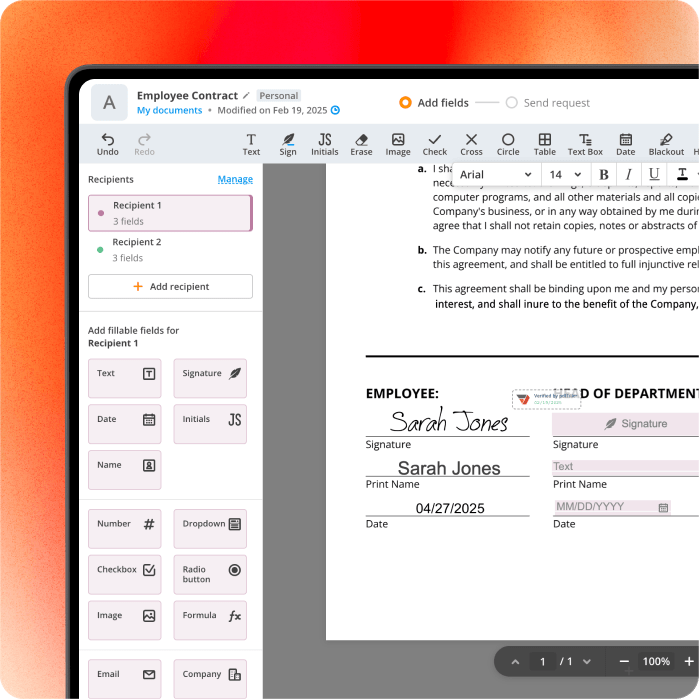
Add Fields mode is a feature that allows you to create interactive forms in PDF documents. This mode converts static PDFs into interactive forms, making it easier for you to collect information without the need for traditional PDF editing tools. You can access Add Fields mode via the Add Fields toggle, which is prominently displayed in the pdfFiller interface. This mode supports various field types, including text fields, checkboxes, and signature fields, enabling you to customize your forms according to your needs.
Why Use Interactive Fields?
Using interactive fields offers several advantages over traditional methods of document handling. First, it eliminates the need for printing and scanning, which can be time-consuming and inefficient. Interactive fields enhance the user experience by allowing individuals to fill out forms digitally, leading to faster document processing. Additionally, these fields save time in document workflows, making it easier for small and medium-sized businesses to manage their paperwork effectively.
How to Access Add Fields Mode
- Log in to your pdfFiller account.
- Open the document you want to edit.
- Locate the Add Fields button on the toolbar.
- Click on the Add Fields button to switch from Edit Mode to Add Fields mode.
- Familiarize yourself with the user-friendly navigation options available in this mode.
Uploading Documents to pdfFiller
To upload documents for editing in pdfFiller, you need to know the supported file formats. pdfFiller allows you to upload various formats, including PDF, DOCX, and images. If you have a non-PDF format, simply follow the steps to upload it. Ensure your documents are prepared correctly, as this will facilitate a smoother editing process. Avoid uploading unsupported file types to prevent errors during the upload.
Types of Fields Available
- Text Fields: Used for collecting written responses from users, such as names and addresses.
- Checkboxes: Ideal for yes/no questions or multiple-choice selections.
- Radio Buttons: Allow users to select one option from a set of choices.
- Signature Fields: Enable users to sign documents electronically, ensuring legal compliance.
- Date Fields: Automatically capture the date when the form is filled out.
- Dropdown Lists: Provide users with a list of options to choose from, streamlining data entry.
- Calculated Fields: Automatically perform calculations based on user input in other fields.
- File Upload Fields: Allow users to attach files directly within the form.
Step-by-Step Instructions for Adding Fields
- Select the type of field you want to add from the toolbar.
- Click on the area of the document where you want to place the field.
- Adjust the size and position of the field as needed.
- Configure the properties of the field, such as making it required or setting default values.
- Repeat the process for each additional field you want to add.
- Preview the document to ensure all fields are correctly placed and functional.
- Save your changes to finalize the document.
Configuring Field Properties
Customizing field properties is crucial for ensuring your forms function as intended. You can configure options such as making fields required, which ensures users cannot submit the form without filling out those fields. Additionally, you can set default values for fields to streamline the user experience. Validation settings can also be applied to ensure that the data entered meets specific criteria, enhancing the accuracy of the information collected.
Checkboxes vs. Radio Buttons
Checkboxes and radio buttons serve different purposes in forms. Checkboxes allow users to select multiple options, making them suitable for questions where more than one answer is possible. In contrast, radio buttons are designed for single-choice questions, ensuring that only one option can be selected at a time. Understanding these differences is essential for effective form design and user experience.
Using Formula Fields
Formula fields in PDF documents allow you to perform calculations automatically based on user input. To create formula fields, you simply define the calculation you want to perform, such as summing values from other fields. For example, if you have fields for quantity and price, you can create a formula field that calculates the total cost. However, be aware of the limitations of formula fields, as they may not support complex calculations or external data sources.
Assigning Fields to Multiple Signers
When working with documents that require signatures from multiple recipients, it’s important to assign fields correctly. You can tag fields for specific recipients, ensuring that each signer knows where to sign. Managing the signing order is also crucial, as it dictates the sequence in which recipients will receive the document. Understanding the roles of each recipient helps streamline the signing process and ensures clarity in document management.
Adding Fields to Scanned PDFs
To add fields to scanned PDFs, you will overlay the fields onto the document. This process can be challenging due to the limitations of scanned documents, which may not support certain interactive features. For best results, ensure that the scanned document is clear and legible. Avoid technical OCR details that might complicate the process, focusing instead on practical steps for overlaying fields effectively.
Fillable Fields vs. Annotation Tools
Fillable fields and annotation tools serve different functions in document editing. Fillable fields allow users to enter data directly into the form, making them ideal for collecting information. In contrast, annotation tools are used for adding comments or notes without altering the original content. Understanding the benefits of using fillable fields can enhance the efficiency of your document workflows.
Industry-Specific Scenarios
Field usage scenarios vary across industries, showcasing the versatility of interactive forms. In finance, for example, fillable fields can streamline loan applications by collecting necessary information efficiently. In healthcare, patient intake forms benefit from interactive fields that allow for quick data entry. Real estate documents often utilize signature fields to facilitate agreements between parties. Each scenario highlights the specific field types used and the advantages of adopting interactive fields in professional tasks.
Browser and Device Compatibility
pdfFiller is compatible with a range of browsers, ensuring that you can access your documents from various devices. Supported browsers include Chrome, Firefox, and Safari, among others. The behavior of pdfFiller may differ slightly between mobile and desktop versions, so it’s important to test functionality on your preferred device. For optimal performance, keep your browser updated to the latest version.
Limitations of Adding Fields
While adding fields in pdfFiller is straightforward, there are limitations to consider. Each document has a maximum number of fields that can be added, which varies based on your subscription plan. Additionally, scanned PDFs may have restrictions that affect how fields can be applied. Being aware of these limitations helps you plan your document workflows more effectively.
Security and Data Handling
Security measures are in place to protect your data when using pdfFiller. Documents are secured with TLS encryption during transit, ensuring that your information remains confidential. pdfFiller also adheres to document retention policies and complies with relevant regulations, providing peace of mind regarding data handling security.
Comparison with Other Tools
pdfFiller stands out when compared to competitors like Adobe Acrobat and DocuSign. Unlike Adobe, pdfFiller offers a more intuitive interface that simplifies document management for small and medium-sized businesses. Additionally, pdfFiller provides advantages over JotForm by integrating document editing and signing in one platform. While each tool has its strengths, pdfFiller's focus on ease of use and affordability makes it a compelling choice for professionals.
Next Steps with pdfFiller
After learning about the Add Fields feature, consider saving templates for future use to streamline your workflows. Collecting completions from your forms is essential for efficient data management. Explore other features of pdfFiller to enhance your document workflows further, ensuring you make the most of this powerful tool.