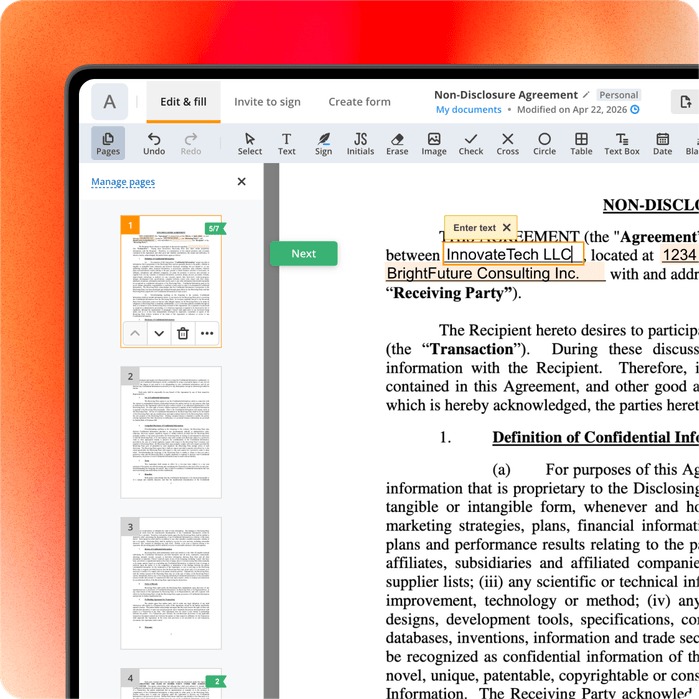
Delete Data from PDF in Google Drive
Delete sensitive data from your PDF documents stored in Google Drive easily. Use pdfFiller's editing tools to ensure your documents remain accurate and secure.
What is PDF Data Deletion?
Deleting data from PDFs refers to the process of removing specific information from a PDF document. This is crucial for maintaining data accuracy, especially in professional settings. Common scenarios for deletion include removing outdated information, correcting errors, or ensuring compliance with privacy regulations. Understanding how to delete data from PDF files helps businesses manage sensitive information effectively while ensuring document integrity.
Why Delete Data from PDFs?
There are several reasons to delete data from PDFs. First, protecting sensitive information is essential for maintaining client trust and meeting legal requirements. Second, compliance with regulations such as GDPR necessitates the removal of personal data from documents. Lastly, maintaining document integrity is vital for ensuring that the information presented is accurate and relevant. Therefore, knowing how to delete data from PDF files is a necessary skill for professionals.
How to Access PDF Editing in Google Drive
- Open Google Drive and locate the PDF document you want to edit.
- Right-click on the PDF file and select "Open with."
- Choose "pdfFiller" from the list of available applications.
- If prompted, grant the necessary permissions for pdfFiller to access your document.
- Wait for the pdfFiller interface to load, allowing you to edit your PDF.
- Ensure your browser is compatible with pdfFiller for optimal performance.
Steps to Delete Data from a PDF
- Click on the "Edit" button within the pdfFiller interface.
- Select the text or data you wish to delete from the PDF document.
- Press the "Delete" key or click on the delete icon to remove the selected content.
- Confirm the deletion if prompted by the application.
- Review the document to ensure all necessary data has been removed.
- Save your changes to finalize the deletion process.
Common Issues When Deleting Data
When deleting data from PDFs, users may encounter several common issues. One challenge is deleting locked content, which requires unlocking the document first. Additionally, handling scanned PDFs can be problematic, as text may not be editable without OCR (Optical Character Recognition) software. Lastly, users may need to undo mistakes if they accidentally delete the wrong information, which can complicate the editing process.
How to Ensure Data is Permanently Deleted
To confirm that data is permanently deleted from a PDF, first, save your changes after editing. Next, check the document properties to ensure no residual data remains. Finally, consider using secure deletion methods to prevent data recovery, ensuring that sensitive information is completely removed from the document.
Scenarios for Deleting Data from PDFs
- Accountants removing financial data from tax documents to protect client confidentiality.
- Lawyers editing sensitive client information from legal contracts before sharing.
- Businesses updating contracts by deleting outdated terms and replacing them with current information.
- Healthcare professionals removing patient identifiers from medical records for compliance.
- Marketers deleting old campaign data from reports to present accurate metrics.
Limitations of PDF Data Deletion
There are limitations to consider when deleting data from PDFs. Restrictions on scanned documents may prevent editing unless OCR technology is used. Locked PDFs can pose challenges, as they require permission to edit. Additionally, there are risks associated with data recovery, where deleted information may still be retrievable through certain software.
Security Measures When Editing PDFs
When editing PDFs, it is essential to implement security measures. Use secure connections to protect your data during transmission. Document encryption can safeguard sensitive information from unauthorized access. Regular audits of document access and editing history can help maintain security and ensure compliance with data protection regulations.
How Does pdfFiller Compare?
Adobe Acrobat offers comprehensive features but can be costly for small businesses. Tradeoff: Higher price for advanced functionality.
Foxit provides a lightweight alternative with essential features. Tradeoff: May lack some advanced editing capabilities.
Nitro is known for its user-friendly interface, but limited in cloud integration. Tradeoff: Easier to use but less versatile in cloud environments.