Compress Word Documents to 15 KB
Compress Word documents effortlessly to reduce file size for easy sharing.
What Does the Compress Tool Do?
The Compress tool is designed to optimize Word documents by reducing their file size, making them easier to share and store. This tool effectively compresses embedded images and annotations, ensuring that the visual elements of your document are optimized without compromising the integrity of the text and form data. You can find the Compress tool conveniently located in the editor header and the All Tools dashboard, making it accessible whenever you need it. It is particularly beneficial for image-heavy documents, allowing you to maintain quality while achieving significant size reductions.
Why Compress Your Word Files?
Reducing the size of your Word files is crucial for several reasons. First, it significantly decreases upload and download times, which is especially important when sharing documents via email or cloud services. Compressing your files also facilitates easier email sharing, as many email platforms impose strict file size limits. Additionally, smaller files save valuable storage space on your devices and cloud accounts, allowing you to manage your documents more effectively. By avoiding file size limits on various platforms, you ensure that your documents can be shared without hassle.
How to Access the Compress Tool
Accessing the Compress tool is straightforward. You can easily find it via the button in the editor header, allowing you to compress your document directly while editing. Alternatively, the tool is also available in the All Tools section, which you can access without needing to open a specific document. Keep in mind that an active editing session is required to use the Compress tool, ensuring a user-friendly interface that simplifies the compression process.
Steps to Compress a Word Document
- Open your Word document in the editor.
- Locate the Compress tool in the editor header or All Tools dashboard.
- Click on the Compress button to initiate the compression process.
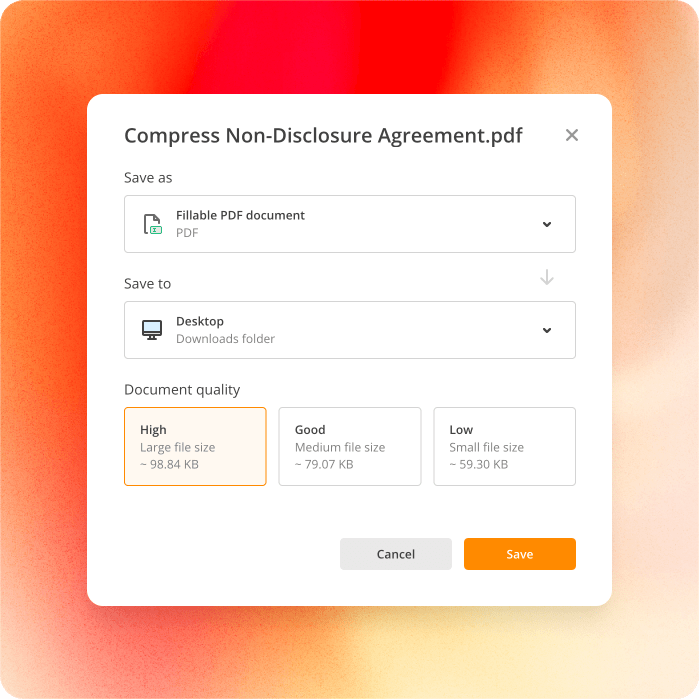
- Select your preferred compression quality level from the options provided.
- Review the preview of the compressed document to ensure quality is maintained.
- Click the 'Compress' button to finalize the process.
- Download the compressed file to your device or share it directly.
- Check the file size to confirm the reduction achieved.
Choosing a Compression Quality Level
When using the Compress tool, you will encounter different quality settings: High, Medium, and Low. Each setting impacts the file size and image quality differently. The High setting retains the best quality but results in a larger file size, while the Low setting significantly reduces the file size at the cost of image fidelity. Medium strikes a balance between size and quality, making it suitable for most documents. Depending on the type of document you are compressing, you may want to choose a setting that best fits your needs, keeping in mind that some features may depend on your plan.
What Changes After Compression?
After compressing your Word document, certain content types are preserved while others may be affected. Text and form data remain intact, ensuring that your document's essential information is not lost. However, images may undergo changes in quality, which is why it is important to test the document after compression to ensure it meets your standards. Understanding what content is preserved and what may change helps you make informed decisions when compressing your files.
Expected File Size Reduction
The amount of file size reduction you can expect from compression varies based on the content of your document. For example, documents with numerous images may see a more significant reduction compared to text-heavy files. Typical reductions can range from 20% to 80%, depending on the original file size and the chosen compression quality. Factors influencing compression success include the types of content within the document and the settings selected during the process. Always test the results to gauge the effectiveness of the compression.
After Compression: Next Steps
Once you have compressed your document, the next steps involve downloading the compressed file to your device. You can choose to edit or share the file as needed. If the file is still too large after compression, consider revisiting the quality settings or removing unnecessary content. Additionally, the Compress tool integrates well with other features, allowing for a smooth workflow in managing your documents.
Compress vs. Other Size-Reduction Methods
The Compress tool offers distinct advantages over other size-reduction methods like Delete Pages, Split, or Save As. While Delete Pages removes content entirely, the Compress tool optimizes existing content without loss. Splitting a document can be useful but may not address file size issues directly. Save As can create a new version of the document, but it does not necessarily reduce the file size. Each method has its best-use scenarios, and understanding these differences helps you choose the right approach based on your specific needs.
Industry Scenarios for Compression
Compression is particularly beneficial in various professional scenarios. For small businesses needing to share documents quickly, reducing file size can facilitate faster communication and collaboration. Self-employed professionals, such as consultants or freelancers, often face file size limits when submitting proposals or reports. In remote work environments, where sharing large files can be cumbersome, compression ensures that documents are easily transmitted. Additionally, situations with strict file size limits, such as submitting applications or proposals, highlight the necessity of effective compression tools.
Supported Formats and Export Options
The Compress tool supports a variety of input formats, primarily focusing on Word documents. After compression, you can export your files in several formats, ensuring compatibility with various document types. It is essential to be aware of any restrictions that may apply to specific formats, as this can affect your ability to share or edit the compressed files later on.