Reduce the Size of a Word to 38 MB
Reduce Word file size quickly with pdfFiller's easy-to-use compression tool. Perfect for small businesses needing efficient document management.
What Does the Compress Tool Do?
The Compress tool is designed to help you reduce Word file size effectively. It optimizes images within the document, ensuring that they maintain quality while taking up less space. Additionally, it flattens annotations, which can often add unnecessary bulk to a file. The tool preserves text integrity, so your content remains intact after compression. You can access this feature directly within the editor, making it a convenient option for anyone looking to manage their documents efficiently. Avoid complicated software solutions that can overwhelm you; the Compress tool is straightforward and user-friendly.
Why You Need to Reduce File Size
Reducing Word file size is essential for improving sharing efficiency. Large files can be cumbersome to send via email or upload to cloud services, leading to frustration and delays. By minimizing file sizes, you save valuable storage space, which is particularly important for small businesses that need to manage multiple documents. Additionally, smaller files are essential for email attachments, as many email services impose size limits. Without addressing file size, you risk encountering issues that can disrupt your workflow and hinder effective document management.
How to Access the Compress Tool
To access the Compress tool, navigate to the editor header button within pdfFiller. From there, you can find the All Tools dashboard, which houses various features, including compression. You do not need to have a document open to locate this tool, making it incredibly user-friendly. The interface is designed to be intuitive, allowing you to find the Compress tool quickly and easily without any confusing navigation.
Uploading Your Word Documents for Compression
When you're ready to reduce Word file size, uploading your documents is straightforward. The Compress tool supports various formats, so you can drag and drop your files directly into the interface. This functionality ensures a smooth upload process, allowing you to convert your documents efficiently. Make sure to use supported file types to avoid any issues during the upload. The ease of the upload process is a significant advantage for those looking to share documents quickly.
Step-by-Step Guide to Compressing a Word File
- Open pdfFiller and navigate to the Compress tool in the All Tools dashboard.
- Upload your Word document by dragging and dropping it into the designated area.
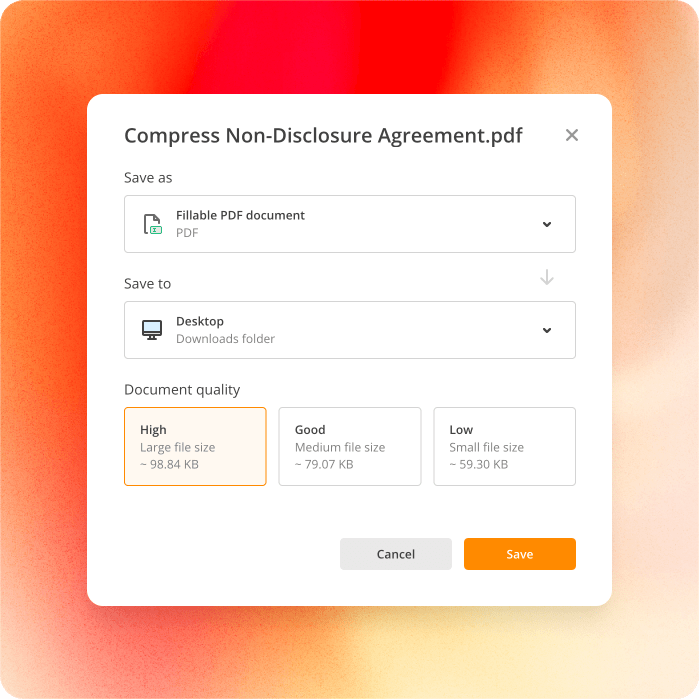
- Select your preferred compression quality settings: High, Medium, or Low.
- Review the preview of your compressed document to ensure it meets your needs.
- Click the "Compress" button to initiate the compression process.
- Once the compression is complete, download the compressed file to your device.
- Share your newly compressed document via email or upload it to your preferred platform.
- Consider further editing if necessary, using pdfFiller's editing tools.
Choosing the Right Compression Quality Level
When you reduce Word file size, selecting the right compression quality level is crucial. You have three options: High, Medium, and Low. The High setting maintains the best image quality but results in a larger file size. The Medium setting offers a balanced approach, while the Low setting significantly reduces file size but may impact image clarity. Your choice will depend on your specific needs and the type of content in your document. Consider your audience and how they will interact with the file when making this decision.
What Changes After Compression?
After you compress a Word file, several changes occur. Image quality may be affected, especially if you select a lower compression setting. However, the text in your document is preserved, ensuring that your content remains readable and intact. The overall structure of the document is retained, including any form fields you may have included. This means that while the file size is reduced, the essential elements of your document stay functional and accessible.
Expected File Size Reduction
When you reduce Word file size, the amount of reduction can vary based on the content type. For instance, image-heavy documents typically see a more significant decrease in size compared to text-only files. It's important to set realistic expectations; while compression will help, there are no guarantees regarding the exact percentage of size reduction. Understanding the nature of your document will help you anticipate the results of the compression process.
Next Steps After Compression
Once you have compressed your Word file, you have several options for what to do next. You can download the compressed file directly to your device for immediate use. If you need to share the document, consider using email or cloud storage services for easy access. Additionally, you may want to make further edits using pdfFiller's editing tools. If you encounter any issues with large files in the future, refer back to the Compress tool for assistance.
Comparing Compression with Other Methods
Understanding how compression differs from other size-reduction methods is important. For example, deleting pages can reduce file size but may remove critical content. Splitting a document into smaller files can also help, but it may complicate document management. Using the Save As feature can create a smaller file, but it may not optimize images or annotations. Each method has its pros and cons, and choosing the right approach depends on your specific needs and the context of your document.
Industry Scenarios for File Size Reduction
File size reduction is crucial in various industry scenarios. Small businesses often need to share documents quickly with clients or partners, making compression essential. Freelancers may require fast sharing of proposals or reports without delays caused by large files. Professionals managing extensive reports benefit from reduced file sizes to facilitate email communication. In each case, effective document management relies on the ability to reduce Word file size efficiently.
How Does pdfFiller Compare?
Smallpdf offers a simple interface for file compression, but lacks the extensive template library of pdfFiller.
ilovepdf provides basic compression features, yet does not support advanced document editing like pdfFiller.
Adobe Acrobat is known for comprehensive PDF tools, but can be complex and costly for small businesses compared to pdfFiller's straightforward solution.